

Key Points
Wall Street entered the new year on uneasy footing, as a Wall Street losing streak early 2026 unsettled investors who had just closed out one of the strongest multiyear runs in recent history. After three straight years of double-digit gains, the major U.S. stock indexes opened 2026 with four consecutive sessions of losses, breaking the optimistic momentum that typically accompanies the start of a new calendar year.
The pullback comes despite broadly positive long-term sentiment and expectations for new highs later in the year. For businesses, investors, and consumers, the early stumble is less about panic and more about recalibration—forcing markets to reassess valuation, leadership transitions, and structural shifts across industries.
What Happened on Wall Street
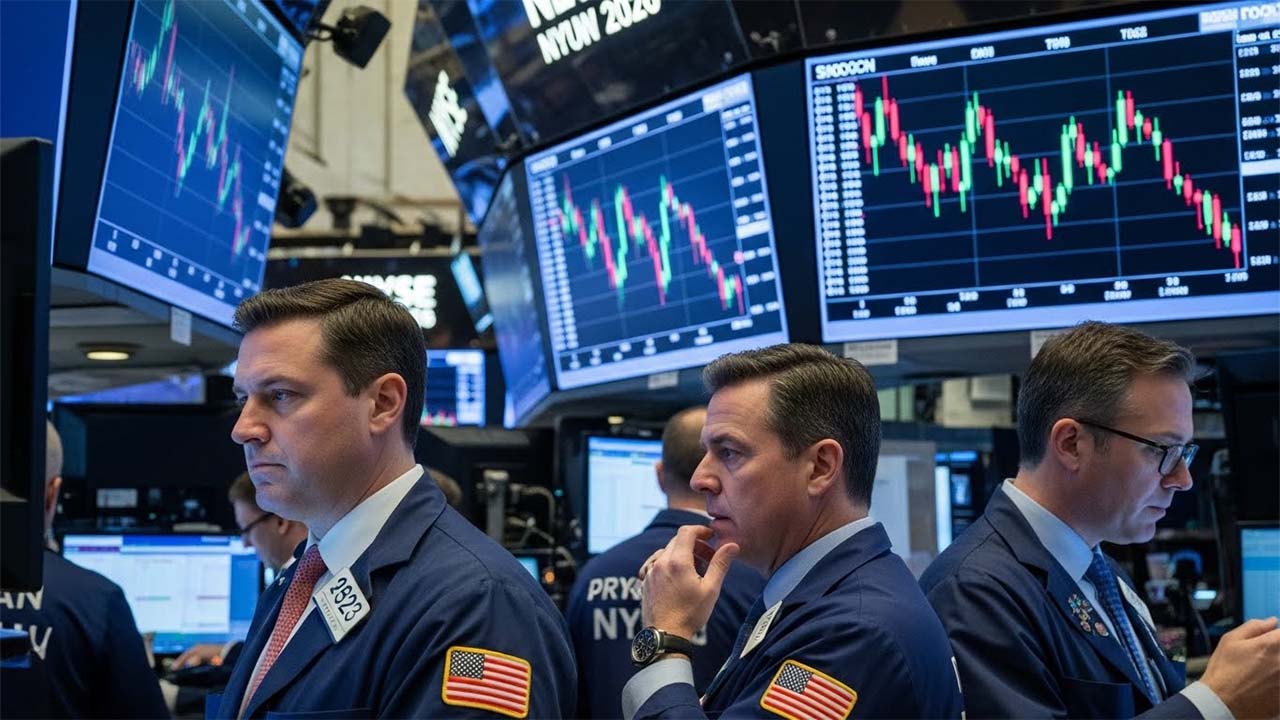
During the final trading days of the holiday-shortened first week of 2026, all three major U.S. indexes—the Dow Jones Industrial Average, S&P 500, and Nasdaq Composite—extended a four-session losing streak. Each index was on pace to finish the week down more than 1%, marking an uncharacteristically weak start to the year.
This reversal followed a robust 2025, when all three indexes posted double-digit annual gains for a third consecutive year. Yet even during that banner year, U.S. markets lagged several international peers, highlighting underlying questions about valuation and growth sustainability.
Some individual stocks still delivered standout performances. Alphabet and General Motors each recorded their strongest one-year gains in more than a decade. But broad-based strength failed to carry into early January trading, raising concerns that markets may be pausing to digest past gains rather than accelerating forward.
Why the Timing Matters Now
A Wall Street losing streak early 2026 carries outsized psychological weight. The first trading days of the year often shape investor sentiment, portfolio positioning, and risk appetite for months ahead. While a four-day decline is modest in absolute terms, its timing magnifies its impact.
Markets are emerging from a period of unusually strong returns driven by large-cap technology, easy financial conditions, and resilient corporate earnings. That success has left valuations elevated, making investors more sensitive to leadership changes, policy uncertainty, and capital-intensive expansion strategies—particularly in technology and infrastructure.
The weak start also follows a year-end rally that already showed signs of fatigue. Instead of signaling a structural downturn, the losing streak suggests investors are becoming more selective, rotating capital rather than buying broadly across the market.
Business Impact: Strategy Over Speed
For U.S. businesses, the early market pullback underscores the importance of disciplined capital allocation. Companies that benefited from bullish equity markets in recent years—through stock issuance, acquisitions, or high-growth investments—may face greater scrutiny from shareholders in 2026.
Leadership credibility is also under the microscope. The transition at Berkshire Hathaway, where Warren Buffett officially stepped down as CEO after six decades, is emblematic of a broader shift. While Buffett remains chairman and voiced confidence in Berkshire’s long-term future, investors are watching closely to see how the conglomerate’s massive equity portfolio is managed under new leadership.
Such moments matter more during periods of market hesitation. When stock prices are rising, investors often overlook governance questions. When markets stall, leadership continuity and capital discipline quickly become decisive factors.
Market and Economic Signals Beneath the Surface
Despite the early losses, market strategists continue to expect new all-time highs later in 2026. That optimism reflects confidence in corporate earnings durability and the broader U.S. economic backdrop. Still, the early stumble hints at a market that may be transitioning from momentum-driven gains to fundamentals-driven performance.
The U.S. market’s underperformance relative to international counterparts in 2025 adds another layer to the analysis. Global investors are increasingly weighing geographic diversification, especially as capital-intensive industries—such as artificial intelligence infrastructure—reshape domestic investment flows.
The expansion of massive AI data centers across the United States illustrates this shift. Companies including Meta, OpenAI, and Microsoft are transforming farmland into energy-hungry computing hubs, largely funded through borrowing. While these projects promise long-term productivity gains, they also raise concerns about leverage, electricity demand, and regulatory scrutiny—factors markets cannot ignore during periods of volatility.
Investors: From Celebration to Caution
For investors, the Wall Street losing streak early 2026 serves as a reminder that strong annual returns rarely move in straight lines. The market’s hesitation reflects a shift from celebration to caution rather than a wholesale reversal of outlook.
Portfolio managers are increasingly focused on balance-sheet strength, pricing power, and realistic growth assumptions. The days of indiscriminate buying—particularly in high-multiple stocks—appear to be fading, at least temporarily.
The uncertainty surrounding Berkshire Hathaway’s future investment leadership exemplifies this dynamic. While Greg Abel is set to succeed Buffett as CEO, questions remain about who will ultimately guide the conglomerate’s roughly $300 billion equity portfolio. In a market that is no longer moving straight up, such questions carry real weight.
Consumer and Industry-Level Implications
Beyond Wall Street, early market weakness can influence corporate behavior that ultimately reaches consumers. Companies facing share-price pressure may delay expansion, adjust pricing strategies, or prioritize profitability over growth.
This recalibration is already visible in sectors like transportation and manufacturing. Stellantis, for example, announced the return of its gas-powered Ram TRX pickup at a roughly $100,000 price point. The move reflects looser emissions regulations and a focus on “halo” products that strengthen brand perception, even if volumes remain limited.
In the airline industry, the divide between premium and budget travel continues to widen. JetBlue Airways is pushing into higher-margin business-class offerings, while Southwest Airlines has begun charging for checked bags. At the other end of the spectrum, Spirit Airlines is fighting for survival after its second bankruptcy in less than a year.
These strategic shifts are not isolated from broader market sentiment. When equity markets become less forgiving, companies gravitate toward predictable revenue streams and defensible margins—changes consumers feel directly.
Why This Losing Streak Matters More Than the Numbers
The significance of Wall Street’s early 2026 losses lies less in the percentage decline and more in what it reveals about market psychology. After years of rapid gains, investors are demanding clearer justification for growth, stronger leadership accountability, and more disciplined use of capital.
This environment does not signal an end to the bull market narrative, but it does suggest a transition. Markets are becoming more selective, more analytical, and less tolerant of uncertainty.
Forward-Looking Insight
As 2026 unfolds, the early weakness may ultimately serve a constructive role. Periods of consolidation often reset expectations, reduce excess speculation, and create healthier conditions for long-term growth.
For businesses, the message is clear: execution and transparency matter more than ever. For investors, patience and selectivity are replacing broad optimism. And for consumers, the ripple effects—from pricing strategies to product offerings—will reflect a corporate landscape adjusting to a more disciplined market reality.
The Wall Street losing streak early 2026 is not a verdict on the year ahead, but it is a reminder that even strong markets pause to reassess. How companies and investors respond to that pause will shape the next phase of the cycle.