

Key Points
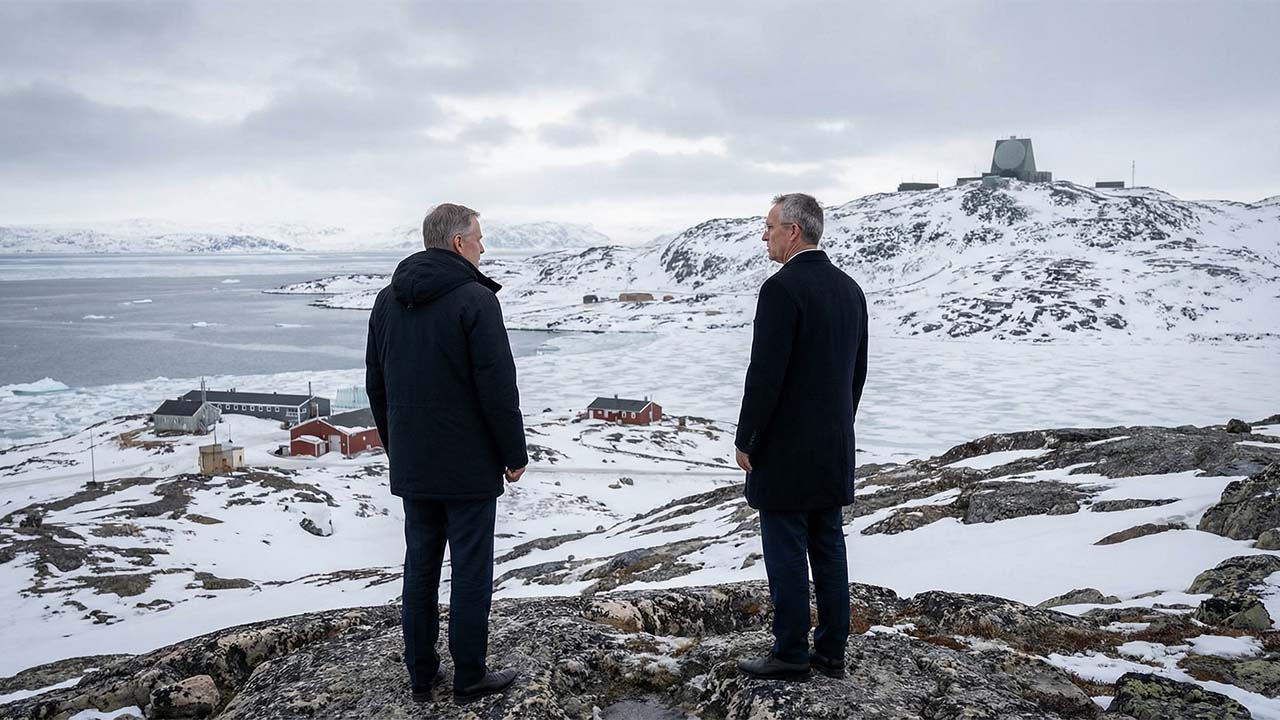
Trump Denmark Greenland tensions have escalated into a broader diplomatic flashpoint, exposing strains between the United States and some of its closest European allies at a moment when global security anxieties are already running high. What began as rhetoric about acquiring Greenland has now drawn sharp rebukes from Nordic leaders, underscoring concerns that U.S. foreign policy signals may be unsettling long-standing alliances rather than strengthening them.
Speaking at a defense conference in the Swedish town of Sälen, Swedish Prime Minister Ulf Kristersson delivered an unusually direct message to Washington: Denmark deserves gratitude, not threats. His remarks were aimed squarely at comments from Donald Trump, who has revived and intensified talk of taking over Greenland, a self-governing territory within the Kingdom of Denmark.
For businesses, investors, and policymakers, the episode matters not because a territorial transfer is likely, but because the tone and direction of U.S. diplomacy carry real economic and strategic consequences. Alliances underpin trade flows, defense cooperation, and investment confidence. When those alliances appear strained, markets and governments take notice.
What Happened: Rhetoric That Crossed a Diplomatic Line
The immediate trigger for the latest round of Trump Denmark Greenland tensions was President Trump’s renewed insistence that the United States needs Greenland for national security reasons. On Friday, he said he preferred to strike a deal “the easy way” to acquire the vast Arctic island but added he was prepared to pursue it “the hard way” if necessary.
That phrasing reverberated across Europe. While U.S. interest in Greenland is not new — the island occupies a strategic position in the Arctic and hosts U.S. military infrastructure — the suggestion of coercion toward a NATO ally marked a notable departure from diplomatic norms.
At the Sälen conference, Kristersson responded by reminding audiences that Denmark has been among Washington’s most reliable partners. More than 50 Danish soldiers, he noted, lost their lives fighting alongside U.S. forces in Iraq and Afghanistan. Those sacrifices, he argued, reflect a depth of alliance that should not be dismissed lightly.
“The U.S. should thank Denmark,” Kristersson said, criticizing what he described as threatening rhetoric toward both Denmark and Greenland. His comments resonated with a broader European unease about the current trajectory of American foreign policy.
Why This Matters Now: Alliances Under Pressure
The timing of this dispute is critical. European leaders are increasingly concerned about a global environment in which larger powers are perceived to be exerting pressure on smaller states. Kristersson warned that the world order is “more threatened than it has been in many decades,” with rising risks of major conflict and of smaller nations being sacrificed in the process.
From a geopolitical perspective, Trump Denmark Greenland tensions tap into deeper anxieties about the Arctic. Melting ice is opening new shipping lanes and access to natural resources, making the region more strategically valuable. Both Russia and China have stepped up their Arctic engagement, heightening Western security concerns.
Against that backdrop, European governments see unity within NATO and respect for sovereignty as essential. Any hint that alliance commitments are conditional or transactional risks weakening the collective front that underpins regional stability.
Business Impact: Confidence, Contracts, and Cooperation
For multinational businesses, especially those operating across the U.S. and Europe, diplomatic friction among allies can have indirect but meaningful effects. Defense contractors, energy companies, and logistics firms all rely on predictable cooperation frameworks.
Denmark and Sweden play important roles in European defense and technology ecosystems. Danish firms are deeply integrated into transatlantic supply chains, while Nordic countries are often viewed as stable, rules-based environments for long-term investment. Public disputes tied to Trump Denmark Greenland tensions may not disrupt contracts overnight, but they can complicate regulatory coordination and political goodwill.
In sectors tied to Arctic development — including shipping, mining, and energy — uncertainty around governance and sovereignty can delay projects or raise risk premiums. Companies evaluating Arctic opportunities closely monitor diplomatic signals, and confrontational rhetoric can act as a deterrent to investment.
Market and Economic Implications: Risk Perception Over Reality
Financial markets tend to respond less to rhetoric itself than to what it implies about future policy direction. Still, episodes like this can influence how investors perceive geopolitical risk.
Europe’s irritation with Washington adds to a narrative of fragmented Western leadership. For currency and bond markets, that fragmentation can translate into volatility if it raises questions about coordinated responses to global crises. While Trump Denmark Greenland tensions have not triggered immediate market moves, they contribute to a broader backdrop of uncertainty that investors factor into asset allocation decisions.
For smaller economies like Denmark’s, maintaining strong alliances is part of their economic resilience. Any perception that those alliances are under strain can affect investor sentiment, even if underlying fundamentals remain strong.
The Nordic Perspective: Loyalty and Limits
From Stockholm and Copenhagen, the message has been consistent: partnership with the United States is valued, but it is not unconditional. Nordic countries have historically punched above their weight in international coalitions, contributing troops and resources to U.S.-led operations.
Kristersson’s remarks were notable not only for their substance but for their tone. Publicly calling out Washington is not a step European leaders take lightly. That he did so reflects a belief that the rhetoric has crossed from provocative into destabilizing.
This response also highlights how Trump Denmark Greenland tensions are being interpreted as part of a wider pattern, rather than an isolated comment. European leaders increasingly view such statements through the lens of global power politics, where respect for smaller nations is seen as a cornerstone of stability.
Implications for Investors: Reading the Diplomatic Signals
For investors, the key takeaway is not whether Greenland will change hands — it will not — but how U.S.-European relations evolve. Stable alliances reduce geopolitical risk, support open markets, and encourage cross-border investment.
Persistent friction could accelerate European efforts to pursue greater strategic autonomy, particularly in defense and technology. That, in turn, could reshape procurement decisions and create both risks and opportunities for investors exposed to transatlantic industries.
Monitoring Trump Denmark Greenland tensions offers insight into how assertive U.S. rhetoric might influence allied cooperation in other areas, from trade policy to security commitments.
Official Reactions and Broader European Concern
While Kristersson’s comments were among the most direct, they align with a broader mood in Europe. Leaders across the continent are signaling discomfort with what they see as expansionist language, especially when it comes from within the Western alliance.
The concern is less about Greenland itself and more about precedent. If powerful nations openly discuss acquiring territory from allies under the banner of security, it complicates efforts to criticize similar behavior elsewhere.
Looking Ahead: Stability Depends on Restraint
The episode underscores a fundamental reality of modern geopolitics: alliances are built as much on trust and language as on treaties. For businesses, markets, and consumers, stability depends on major powers exercising restraint and clarity in their messaging.
While Trump Denmark Greenland tensions are unlikely to produce immediate policy shifts, they serve as a reminder that diplomatic tone can have far-reaching consequences. How Washington chooses to engage with its allies going forward will shape not only security arrangements but also the economic environment in which global commerce operates.
For now, Nordic leaders are drawing a clear line — loyalty has limits, and respect remains the currency of durable alliances.