

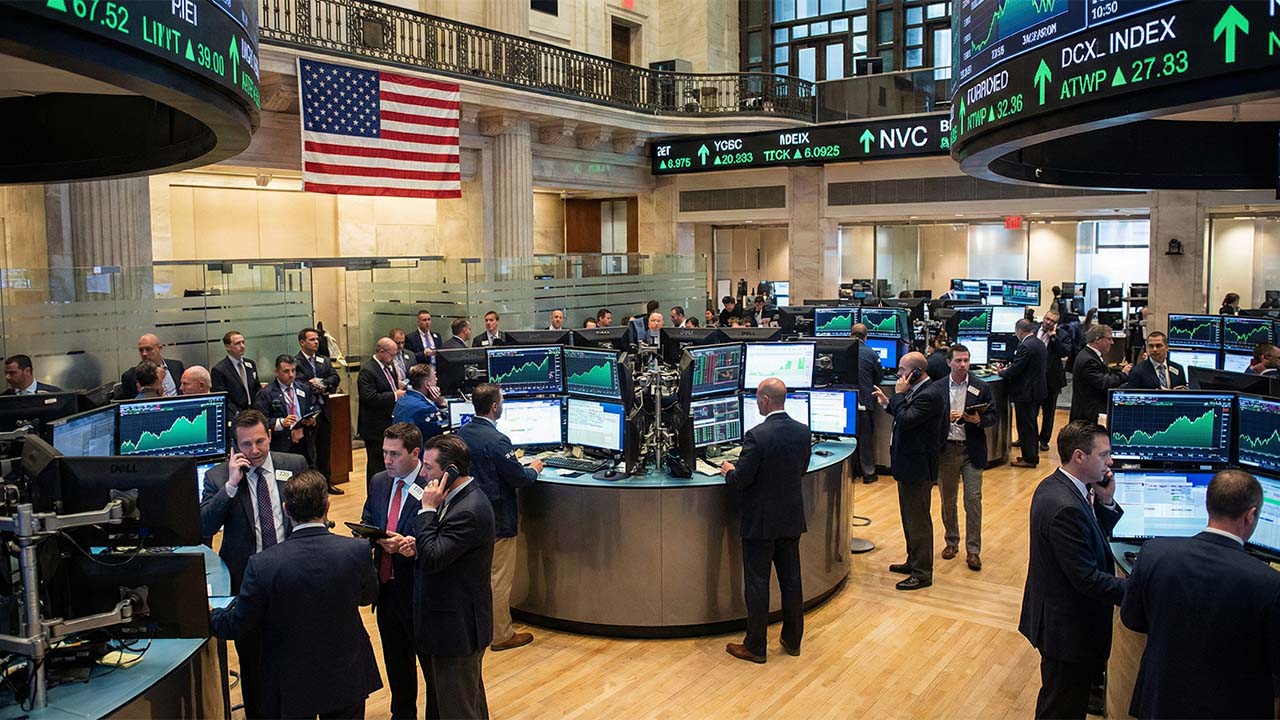
The S&P 500 market reaction to Trump remarks delivered a clear message to investors: tone matters as much as policy. After one of Wall Street’s sharpest selloffs since October, U.S. stocks rebounded, bond markets stabilized, and the dollar weakened slightly, signaling a broad recalibration of risk rather than a rush back into speculative assets.
The S&P 500 rose 0.8%, pushing the index back into positive territory for 2026. At the same time, the yield on 10-year Treasuries was little changed at 4.28%, while the dollar slipped 0.2%. Together, these moves reflected a market relieved by what was not said during President Donald Trump’s high-profile remarks at the World Economic Forum in Davos.
This was not a rally driven by new economic promises or fresh stimulus signals. Instead, it was a reaction to reduced uncertainty—an important distinction for businesses, investors, and consumers navigating a year shaped by geopolitical sensitivity and policy risk.
What Happened: Markets Reset After a Volatile Stretch
In the days leading up to Trump’s speech, markets had been rattled by a cross-asset selloff. Bond yields surged, equities retreated, and the dollar strengthened as investors priced in the possibility of renewed trade tensions, aggressive foreign policy stances, and tighter financial conditions.
That anxiety eased after Trump avoided reiterating several market-sensitive threats. He did not repeat earlier warnings about tariffs on Europe, did not signal the use of force related to Greenland, and stopped short of proposing direct executive action on capping credit card interest rates—deferring that issue to Congress instead.
The immediate market response was telling:
- More than 400 stocks in the S&P 500 advanced
- Equity volatility dropped sharply from its highest level since November
- Small-cap stocks outperformed large-cap peers for a 13th consecutive session
- Big technology stocks lagged the broader market rebound
The S&P 500 market reaction to Trump remarks underscored how quickly sentiment can shift when perceived policy risks recede, even temporarily.
Why This Matters Now
Markets are particularly sensitive to political messaging at the start of a new year. After strong gains in late 2025, valuations remain elevated, leaving little room for surprises that could disrupt earnings expectations or global trade flows.
Trump’s appearance in Davos came at a moment when investors were already on edge following turmoil in Japanese government bonds and U.S. Treasuries. The fear was not just about rates, but about confidence—whether policymakers would act to calm markets or amplify volatility.
By dialing down rhetoric without formally changing policy, Trump effectively lowered the immediate risk premium priced into U.S. assets. That helped restore a sense of balance across stocks, bonds, and currencies, even as longer-term questions remain unresolved.
For market participants, the episode reinforced a familiar lesson: political communication can move markets as powerfully as economic data.
Market Impact: Stocks, Bonds, and the Dollar
The S&P 500 market reaction to Trump remarks played out across multiple asset classes, offering insight into how investors are positioning for the months ahead.
Equities:
The rebound was broad but uneven. Small-cap stocks led gains, suggesting renewed confidence in domestic economic activity and reduced concern over global trade disruptions. Large technology stocks, by contrast, underperformed, indicating a shift toward cyclical and value-oriented segments rather than growth-heavy leadership.
Bonds:
Treasuries stabilized after the prior session’s selloff. The 10-year yield holding near 4.28% suggested that investors were no longer aggressively pricing in higher inflation or fiscal shocks tied to new policy announcements. Shorter-term yields edged lower, reflecting modest relief in expectations for near-term volatility.
Currencies:
The dollar’s decline for a fourth straight session signaled easing demand for safe-haven assets. Currency markets appeared to interpret Trump’s remarks as reducing the likelihood of abrupt policy escalations that could disrupt global capital flows.
Taken together, these moves pointed to normalization rather than exuberance—a reset from panic to cautious engagement.
Business Impact: Planning in a Less Volatile Environment
For U.S. businesses, the calmer market response provides near-term breathing room. Elevated volatility can raise borrowing costs, complicate capital planning, and weigh on consumer confidence. The pullback in yields and volatility offers some relief on all three fronts.
Companies with exposure to international trade were among the beneficiaries, as reduced tariff rhetoric lowered the immediate risk of supply-chain disruptions or retaliatory measures from key partners. Meanwhile, small and mid-sized firms—often more sensitive to financing conditions—gained support from improved risk sentiment.
However, executives are unlikely to view this as a green light for aggressive expansion. The episode highlighted how quickly conditions can change based on political communication alone. Strategic flexibility remains essential.
Investor Impact: Risk Management Over Risk Taking
From an investor perspective, the S&P 500 market reaction to Trump remarks reinforced the importance of diversification and discipline.
The rally did not erase underlying concerns about geopolitical tensions, fiscal policy direction, or global economic alignment. Instead, it showed how quickly markets can swing when worst-case scenarios fail to materialize.
For portfolio managers, the message was clear:
- Political risk remains a key driver of short-term volatility
- Market calm can return quickly, but it may be fragile
- Asset allocation decisions should account for communication risk, not just policy outcomes
This environment favors balanced exposure rather than concentrated bets on a single narrative.
Consumer Impact: Indirect but Meaningful Effects
While consumers may not follow bond yields or equity volatility closely, the ripple effects are real. Stabilizing markets help keep mortgage rates, auto loans, and credit conditions from tightening further.
Trump’s decision to defer action on credit card rate caps to Congress also reduced the risk of abrupt changes to consumer lending markets. That clarity, even without immediate policy resolution, helped support financial stocks and eased concerns about sudden regulatory shifts.
In practical terms, calmer markets reduce the likelihood of abrupt changes in borrowing costs and employment plans—key factors for household financial confidence.
Global Context: Allies Watching Closely
Internationally, Trump’s remarks did little to resolve tensions around Greenland or transatlantic relations, but they avoided escalation. That restraint mattered for global investors already wary of fractured alliances and shifting trade dynamics.
European markets were relatively steady, reflecting cautious optimism but continued vigilance. Global investors appear willing to re-engage with U.S. assets as long as policy uncertainty does not intensify further.
Conclusion: Calm, Not Confidence, Drives the Rally
The S&P 500 market reaction to Trump remarks was less about optimism and more about relief. Markets responded to a reduction in perceived risk rather than a surge in economic confidence.
For businesses, investors, and consumers alike, the episode highlighted how sensitive financial conditions remain to political tone. Stability returned quickly—but it rests on fragile ground.
As 2026 unfolds, markets are likely to remain responsive to words as much as actions. Understanding that dynamic may be just as important as tracking earnings or economic data in the months ahead.