

Key Points
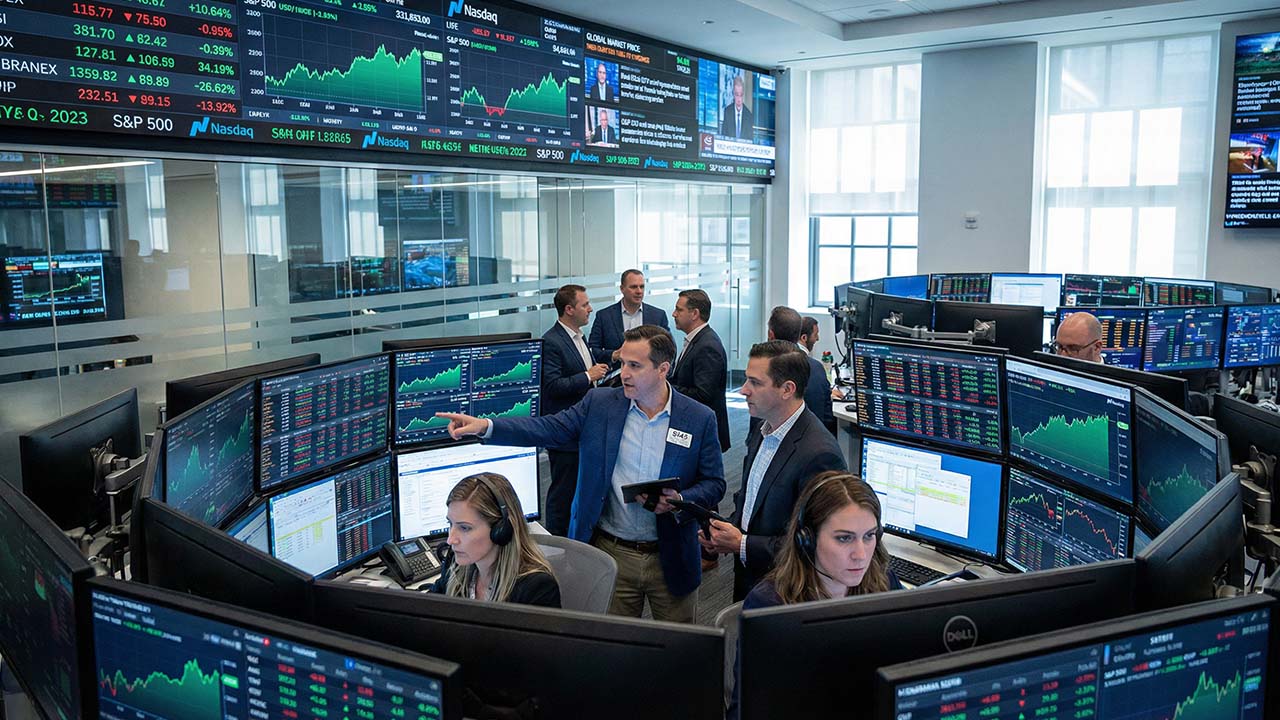
The US stock market today is being shaped by a renewed surge in technology shares, even as momentum in small-cap stocks shows early signs of easing. Futures tied to major U.S. equity benchmarks pointed higher on Friday, driven primarily by strength in chipmakers and artificial-intelligence-linked names, while investors continue to reassess leadership across the market as earnings season gathers pace.
This shifting balance highlights a market environment where optimism around innovation and corporate earnings remains strong, but diversification and valuation discipline are becoming more prominent considerations for investors.
Tech Stocks Lead as Futures Climb
In early trading, futures linked to the Nasdaq 100 rose 0.5%, outperforming contracts tied to the S&P 500, which advanced more modestly. The move followed another record session for a U.S. index of chipmakers, reinforcing confidence that demand tied to artificial intelligence remains robust.
Pre-market activity underscored this trend. Shares of Micron Technology and Advanced Micro Devices both climbed more than 2%, reflecting sustained investor appetite for companies positioned at the center of AI infrastructure spending.
The technology rally was not limited to the United States. A key Asian gauge of tech stocks reached an all-time high, signaling that enthusiasm for the sector is increasingly global rather than narrowly U.S.-centric.
Small-Cap Momentum Begins to Cool
While large-cap technology stocks regained traction, smaller companies showed signs of slowing after a strong start to the year. Futures tied to the Russell 2000 rose just 0.1% after trimming earlier gains.
Despite the pause, small caps remain standout performers in 2026 so far. The Russell 2000 has rallied 7.8% year-to-date, significantly outpacing the S&P 500’s 1.5% gain. That divergence reflects investor optimism around improving economic growth prospects, which tend to benefit domestically focused and economically sensitive firms.
However, the cooling pace suggests investors are becoming more selective, weighing strong macro signals against company fundamentals and financing conditions.
AI Optimism Rekindled by Semiconductor Outlook
The latest upswing in tech stocks followed upbeat spending and revenue guidance from Taiwan Semiconductor Manufacturing Co., which helped revive confidence in the long-term economics of artificial intelligence.
Earlier concerns over lofty valuations and uncertain returns had dampened enthusiasm, particularly for companies tied to capital-intensive AI investments. TSMC’s outlook, however, reassured markets that customer demand remains resilient, supporting a broader ecosystem of chipmakers, equipment suppliers, and software firms.
In Europe, the technology rally was more subdued, but sentiment improved after Morgan Stanley raised its price target on ASML Holding NV by 40%, highlighting confidence in long-term demand for advanced chip manufacturing tools.
Market Leadership Is Broadening — Slowly
Despite Friday’s bounce, the Nasdaq 100 remained slightly lower for the week. This reflects a market that is no longer relying solely on mega-cap technology stocks for gains.
Investors have increasingly rotated toward companies expected to benefit from steady U.S. economic expansion, including industrials, financials, and select consumer businesses. According to BNY, there is growing scope for diversification away from concentrated positioning in a handful of high-growth names.
The broader implication for the US stock market today is a healthier, more balanced rally—one where leadership can rotate without undermining overall confidence.
Bonds, Dollar, and Volatility Signals
Beyond equities, cross-asset signals remain relatively calm. The U.S. dollar was little changed, while Treasury yields edged higher across the curve. The 10-year yield posted a modest increase but remained on track for a fifth straight week of minimal net movement.
Bond investors appear to be waiting for clearer guidance on economic momentum and how pressure from the Trump administration on the Federal Reserve may influence policy decisions.
Notably, the ICE BofA MOVE Index has fallen to its lowest level since 2021, indicating subdued expectations for near-term bond market volatility. While calming, this has also prompted warnings from major asset managers about investor complacency.
Earnings Season Off to a Strong Start
Corporate earnings have provided a key tailwind for equities. Of the 28 companies that have reported results so far this season, 89% have exceeded expectations—a notably strong start.
Banks dominated early releases, offering insight into the health of consumers, capital markets, and deal activity. According to KBC Global Services, results suggest consumers remain resilient, earnings revisions are positive, and capital markets activity is holding up well.
Next week, attention will shift to results from major non-financial companies, including Netflix, Johnson & Johnson, and 3M, which should offer a clearer picture of broader economic conditions.
Credit Markets Flash a Caution Signal
While equity investors have welcomed falling volatility, credit markets are sending a more cautious message. Yield premiums on corporate debt have narrowed to their lowest levels since 2007, according to Bloomberg data.
At the same time, companies issued approximately $435 billion in bonds in the first half of January—a record for the period and more than one-third higher than last year’s pace. The surge reflects both strong investor demand and companies’ eagerness to lock in funding.
For investors, these trends underscore the importance of risk assessment. Compressed spreads can signal confidence, but they also reduce compensation for holding lower-quality debt.
Commodities and Global Market Moves
In commodities, oil rebounded after suffering its biggest drop since June. West Texas Intermediate rose 1.1% to $59.85 a barrel, while gold and silver declined, reflecting reduced demand for traditional safe havens.
Globally, equity performance was mixed. European stocks edged lower, while the MSCI World Index was little changed, reinforcing the theme of selective, region-specific optimism rather than broad risk-on exuberance.
Why This Matters for Businesses and Investors
The US stock market today reflects a nuanced environment rather than a one-directional rally. For businesses, strong equity markets and active bond issuance provide favorable conditions for fundraising and investment, particularly for firms tied to technology and innovation.
For investors, the message is more complex. While AI-driven growth remains compelling, leadership is broadening, and valuation sensitivity is increasing. Markets appear supportive of diversification across sectors rather than heavy concentration in a single theme.
Looking Ahead
As earnings season unfolds and economic data accumulates, the balance between technology leadership and broader market participation will remain a defining feature of the market. Stable bond yields and low volatility provide a supportive backdrop, but tightening credit spreads and elevated issuance suggest vigilance is warranted.
For now, the US stock market today continues to reward resilience, earnings strength, and selective exposure—offering opportunity, but also demanding discipline.