
Key Points
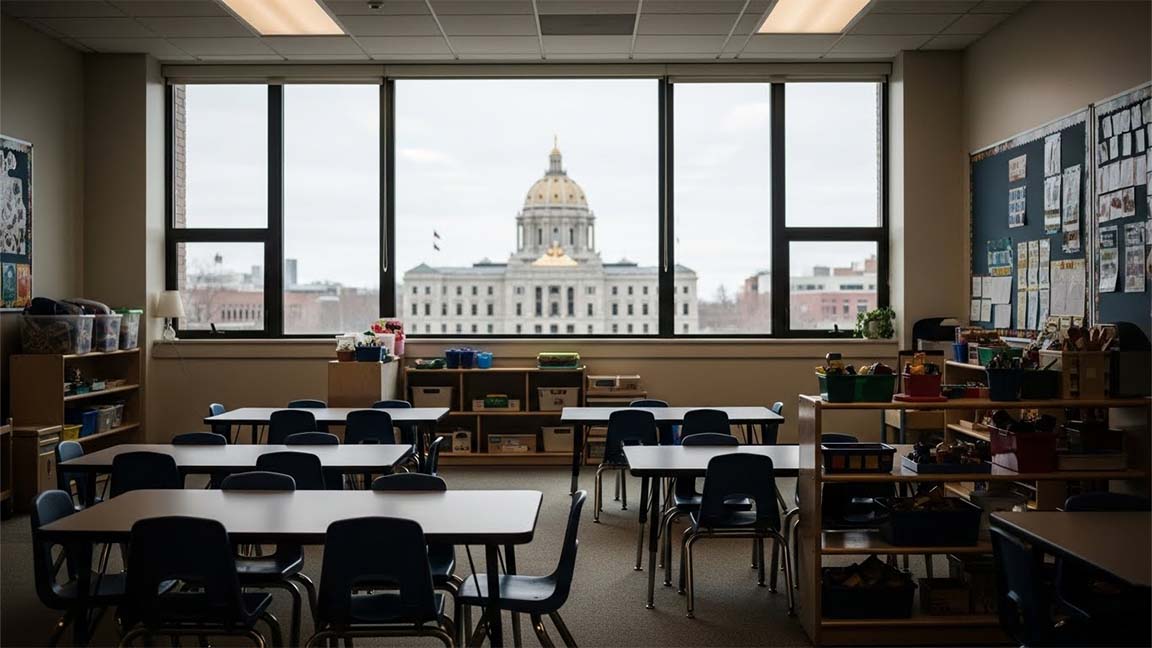
The decision by the federal government to halt childcare funding to Minnesota marks a significant escalation in a broader confrontation over alleged misuse of public money — and it carries consequences that extend well beyond the state’s daycare system. When the US freezes childcare payments to Minnesota, it disrupts a critical funding pipeline relied upon by thousands of families, small businesses, and care providers, while signaling a tougher federal stance on oversight, compliance, and accountability in social programs.
The move, announced this week by senior officials in Washington, underscores how fraud allegations — whether fully proven or still under investigation — can rapidly translate into real-world financial pressure for states, especially those already navigating thin margins in childcare and social services.
What Happened: Federal Payments Halted, Audit Demanded
The Department of Health and Human Services, under the Trump administration, confirmed it has frozen all childcare payments to the state of Minnesota. The announcement came via social media from Jim O’Neill, deputy secretary at HHS, who said the action was prompted by claims that Minnesota had “funneled millions of taxpayer dollars to fraudulent daycares” over the past decade.
O’Neill also formally demanded that Minnesota conduct a comprehensive audit of childcare centers across the state. The requested review spans attendance records, licensing documentation, complaints, inspections, and investigative files — a sweeping scope that could take months to complete and require significant administrative resources.
At the center of the dispute is the federal government’s assertion that existing oversight failed to prevent abuse of childcare subsidies, and that continued funding without deeper scrutiny would expose taxpayers to further risk.
Minnesota Governor Tim Walz rejected the framing, arguing that his administration has already invested years in tightening controls and prosecuting wrongdoing. In public statements, Walz accused the White House of politicizing enforcement mechanisms rather than collaborating with the state to strengthen safeguards.
Why This Matters Now
The timing of the decision is particularly consequential. Childcare providers nationwide are still grappling with rising labor costs, staff shortages, and post-pandemic financial strain. In many states, including Minnesota, federal childcare payments are not supplemental — they are foundational to keeping facilities open.
When the US freezes childcare payments to Minnesota, the immediate risk is operational. Providers that depend on reimbursements to meet payroll, rent, and compliance standards may be forced to reduce services or shut down temporarily. For families, especially low- and middle-income households, disruptions could translate into fewer childcare slots and higher out-of-pocket costs.
Beyond childcare, the move reflects a broader enforcement strategy by the Trump administration, which has repeatedly used funding freezes as leverage in disputes with Democratic-led states. Last week, the US Small Business Administration similarly halted $5.5 million in annual funding to Minnesota pending a review tied to alleged loan fraud.
Taken together, the actions suggest a more aggressive federal posture toward program compliance — one that prioritizes audits and funding suspensions over negotiated reforms.
Business Impact: Childcare Providers Caught in the Middle
From a business perspective, childcare centers operate on tight margins, often functioning as small enterprises with limited access to capital. Federal and state reimbursements are frequently delayed even under normal conditions; a complete freeze introduces immediate cash-flow stress.
Operators now face several practical challenges:
- Liquidity pressure: Without federal payments, many centers may struggle to meet short-term obligations.
- Compliance costs: Preparing for audits requires time, legal support, and administrative staffing that small providers may lack.
- Uncertainty: The absence of a clear timeline for restoring funds complicates planning and investment decisions.
The risk is not confined to centers accused of wrongdoing. Even fully compliant providers are exposed to system-wide disruptions caused by the freeze, raising concerns about collateral damage from enforcement actions.
Market and Economic Implications
While childcare funding does not typically move financial markets, the broader implications are economic. Childcare availability is closely tied to labor-force participation, particularly among parents of young children. Prolonged disruptions can ripple into workforce shortages, reduced productivity, and higher employer costs.
For Minnesota, the freeze also complicates budget planning. State agencies may need to reallocate funds temporarily to prevent service gaps, potentially crowding out other priorities. For investors and businesses watching state-level risk, the episode highlights how regulatory and political disputes can introduce sudden fiscal uncertainty.
Nationally, the case may prompt other states to reassess compliance frameworks for federally funded programs, anticipating stricter audits or enforcement.
Political and Regulatory Context
President Donald Trump and his allies have focused particular attention on Minnesota, citing past fraud cases and linking them to broader immigration and enforcement narratives. The scrutiny intensified after a viral video circulated online alleging widespread daycare fraud.
Federal officials have also connected the childcare freeze to a larger push to investigate fraud across government programs. White House Press Secretary Karoline Leavitt described fraud enforcement as a top priority, noting that other states, including New York and California, are also under review.
The Department of Homeland Security has gone further, auditing immigration cases and raising the prospect of denaturalization for individuals found to have obtained citizenship fraudulently — a position that has drawn sharp criticism from civil rights advocates and state officials.
The Shadow of Past Fraud Cases
The federal government’s posture is informed by high-profile cases, most notably the scandal involving Feeding Our Future, which prosecutors have described as the largest pandemic relief fraud charged in US history. Dozens of individuals have been charged in connection with that case, reinforcing Washington’s argument that stronger controls are necessary.
For policymakers, the challenge lies in distinguishing between targeted enforcement and blanket measures that disrupt legitimate services. For businesses and investors, the lesson is that compliance risk is no longer theoretical — it can translate quickly into funding freezes with operational consequences.
What Comes Next: Oversight Without Resolution
The immediate path forward depends on Minnesota’s response to the audit demand and the federal government’s willingness to restore payments during the review process. So far, no timeline has been provided for when funds might resume.
For childcare providers and families, the lack of clarity is itself a risk. For other states, the episode serves as a cautionary example of how federal-state tensions, when combined with fraud allegations, can escalate into funding standoffs.
As the US freezes childcare payments to Minnesota, the case underscores a broader shift in how Washington enforces accountability — with real implications for businesses, state governments, and consumers who rely on public programs not just as policy tools, but as everyday infrastructure.