

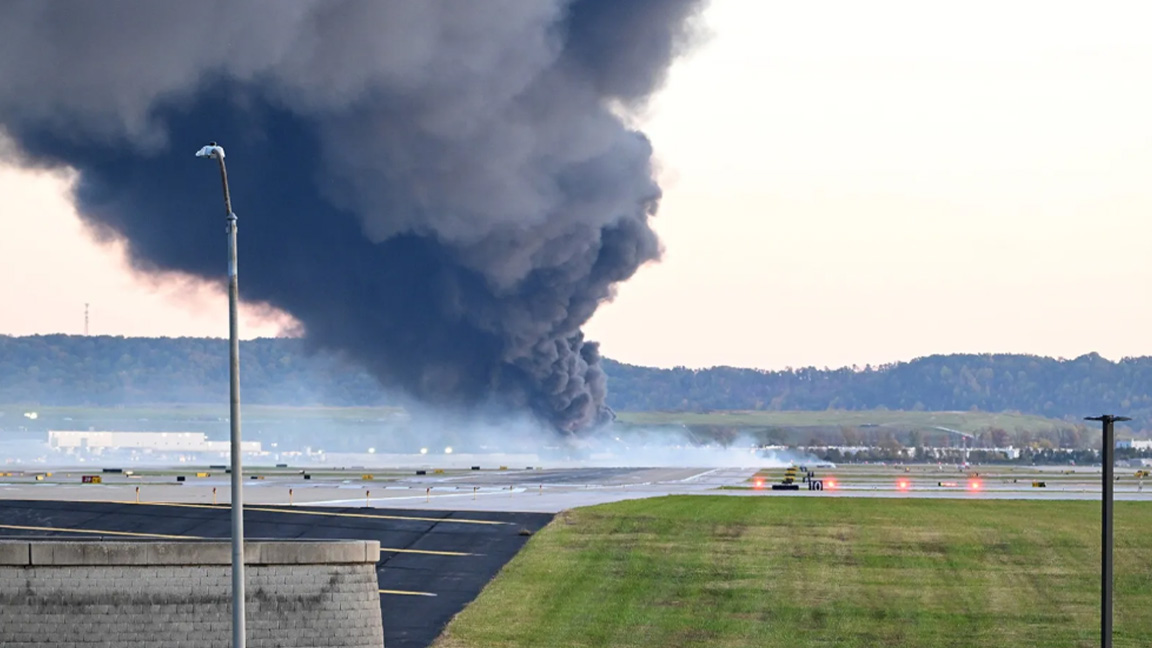
UPS plane crash Kentucky has added to a mounting tally of fatal and near-catastrophic incidents worldwide, intensifying concerns in a year already tracking among the deadliest for civil aviation over the past decade.
Key Points
Authorities said a United Parcel Service Inc. freighter exploded shortly after takeoff near Louisville Muhammad Ali International Airport on Nov. 4, killing three crew members and at least four people on the ground, with at least 11 others injured. Officials warned the casualty count could rise as emergency crews continue to work the scene. The aircraft was a McDonnell Douglas MD-11, a tri-jet model long out of passenger service and now used only for cargo.
The crash comes amid a run of high-profile events across the industry. More than 400 people have died in aviation accidents this year, according to Bloomberg calculations, compared with a 10-year average of 284 fatalities cited by German safety consultancy Jacdec. The stark reversal follows a 2023 that set a modern benchmark for safety, with no fatal crashes involving large commercial airliners.
What we know about the UPS plane crash Kentucky
Local officials said the UPS jet went down soon after departure from Louisville, igniting a fire that sent smoke plumes over neighborhoods near the airfield. Emergency responders moved quickly to contain the blaze and secure the area. Investigators have not identified a cause.
The aircraft involved in the UPS plane crash Kentucky was an MD-11 freighter, a widebody design that stopped production in the early 2000s. Data from aviation analytics firm Cirium shows UPS operates more than two dozen MD-11s, while FedEx owns over 60, with more than half in storage. Most MD-11 freighters in service today are over 30 years old, reflecting the workhorse role older widebodies play in global cargo networks.
Officials emphasized that it is too early to draw conclusions about mechanical issues, weather factors, crew decisions, or air-traffic procedures. As with any major air accident, a multidisciplinary inquiry is expected to examine flight data, maintenance records, and operational conditions around the time of the crash.
Main details from Louisville
- Time and place: The UPS plane crash Kentucky occurred shortly after takeoff from Louisville Muhammad Ali International Airport on Nov. 4.
- Impact: Authorities confirmed at least seven fatalities, including three crew members and at least four people on the ground, with additional injuries reported.
- Aircraft: McDonnell Douglas MD-11 freighter, no longer in passenger use, widely deployed in cargo fleets.
- Response: Fire and rescue teams contained the blaze, secured the crash perimeter, and began recovery and evidence-preservation work for investigators.
UPS expressed condolences to those affected and said it would support the inquiry. Local authorities are coordinating with federal agencies to manage the investigation and community impacts.
A deadly year for air travel
The UPS plane crash Kentucky adds to an already heavy global toll in 2025. Bloomberg’s tally puts worldwide aviation fatalities above 400 this year, a sharp departure from the unusually safe 2023. The Jacdec figures show the deadliest years of the past decade were 2018 and 2015, each with more than 500 fatalities.
Several high-profile incidents have dominated headlines since early 2024, underscoring how quickly outcomes can turn in a sector where safety margins are typically robust. Authorities worldwide continue to stress that commercial aviation remains one of the safest modes of transport by distance traveled, even when individual events are tragic.
The MD-11 in focus
The MD-11 is a long-haul tri-jet introduced in the 1990s and widely used by cargo carriers. As a class, older freighters are subject to intensive maintenance regimes and recurrent checks to remain airworthy. While the model has a distinct handling profile compared with newer twin-engine widebodies, investigators caution against linking any single aircraft type to causes without data.
In the UPS plane crash Kentucky, the airframe’s age and maintenance history will be part of the probe, alongside factors like weather conditions, flight path, thrust settings, and crew communications. Investigators typically review cockpit voice and flight-data recorders to reconstruct the timeline.
How the UPS plane crash Kentucky fits a broader pattern
- Rising exposure: Air traffic has climbed as travel and cargo demand recovered from the pandemic. More cycles can increase exposure even as safety rates remain strong.
- Fleet mix: Cargo carriers often operate older widebodies under stringent maintenance programs. Analysts note that age alone does not determine risk, but it shapes inspection priorities.
- Infrastructure and procedures: Investigations often assess runway conditions, navigational aids, and air-traffic control communications to clarify situational factors.
The UPS plane crash Kentucky underscores the need to avoid premature conclusions. Accident inquiries can take months, sometimes longer, to deliver factual findings and safety recommendations.
Community impact and response
Families affected by the UPS plane crash Kentucky are receiving support from local agencies as authorities work to identify victims and notify next of kin. Louisville officials said counselors and community services are being made available to those directly impacted.
First responders described a complex scene with structural damage and active fire hazards. Utility crews moved to secure power and gas lines while investigators preserved evidence. Authorities asked residents to avoid the area to keep routes clear for emergency vehicles and to ensure safety.
Reactions and updates
UPS and civic leaders issued statements of sympathy and pledged cooperation with investigators. Aviation stakeholders, including pilot associations and safety analysts, called for patience until factual evidence is compiled and verified.
Officials reiterated that no causal chain has been established in the UPS plane crash Kentucky. Further updates are expected as recovery operations proceed and as federal investigators analyze flight data and wreckage. Authorities also cautioned that the casualty count could change as teams complete their work.
Context: a shifting safety narrative
- 2023 baseline: Last year saw no fatal crashes involving large commercial airliners, reinforcing long-run gains in safety.
- 2025 trajectory: This year’s string of severe incidents has already pushed fatalities above recent averages, according to Bloomberg calculations and Jacdec benchmarks.
- Lessons learned: Major accidents typically lead to technical bulletins, procedural updates, and training enhancements that help prevent recurrence.
Safety experts emphasize that systemic improvements often follow tragedy, from design updates to operational checklists. The aim is to translate investigative findings into practical defenses in depth.
What investigators will examine
- Flight recorders: Cockpit voice and flight-data recorders can reveal system status, crew inputs, and alarms in the final minutes.
- Maintenance records: Inspection logs, component histories, and service bulletins provide a picture of the aircraft’s technical health.
- Operations: Dispatch decisions, load planning, and performance calculations matter for takeoff profiles, particularly for heavy freighters.
- Environment: Weather, visibility, and wind shear assessments are standard parts of the analysis.
- Human factors: Crew training, rest, communication, and coordination are reviewed to understand workload and decision-making.
These steps apply broadly across modern accident inquiries. The UPS plane crash Kentucky will be no exception.
Market and logistics implications
UPS is a critical node in global supply chains, with Louisville serving as a major air hub. While the company has redundancy built into its network, the UPS plane crash Kentucky may prompt short-term routing adjustments and capacity shifts while authorities secure the site, and as the fleet review proceeds.
Cargo customers typically see limited disruption after isolated events, but stakeholders will watch for any temporary constraints on certain aircraft types or routes pending inspections. FedEx and other carriers operating MD-11s may also evaluate schedules as a precaution, even absent specific directives.
What to watch next
- Official briefings: Expect staged updates as investigators validate data. Early briefings often clarify timelines before addressing technical hypotheses.
- Safety recommendations: Interim advisories can precede final reports if investigators identify immediate risks that warrant mitigation.
- Community support: Local agencies will continue to assist affected families and residents near the crash area.
As details of the UPS plane crash Kentucky evolve, authorities will prioritize verified facts over speculation. Media and market observers should take the same approach.
Conclusion
The UPS plane crash Kentucky is a sobering reminder that aviation’s margin for error remains narrow, even in an era of exceptional safety. With at least seven lives lost and more injured, the focus now turns to supporting families, protecting the community, and uncovering facts that can prevent future tragedies.
Investigators will look across aircraft systems, operations, and environmental conditions to piece together a full account. Until then, the responsible path is to track official updates, avoid premature assumptions, and let the data guide conclusions. Even in a difficult year for aviation safety, rigorous inquiry and transparent communication remain the industry’s strongest tools for learning and improvement.
FAQ’s
What caused the UPS plane crash Kentucky?
The cause is under investigation by federal and local authorities. Early updates are preliminary; a full report can take 12–24 months, with interim findings released sooner.
What aircraft was involved, and is the MD-11 safe?
The jet was a McDonnell Douglas MD-11 freighter. Safety depends on maintenance and operations; investigators will analyze flight data, records, and conditions before any conclusions.
How many casualties were reported in the UPS plane crash Kentucky?
Authorities confirmed at least seven fatalities and multiple injuries, with numbers subject to change as recovery and identification proceed. Officials will provide verified updates.
Will UPS deliveries be disrupted or MD-11s grounded?
UPS’s network has redundancy, so broad disruptions should be limited, though routing tweaks are possible. Any grounding would come from regulators or the airline after assessments.
Article Source: Bloomberg
Image Source: