

Key Points
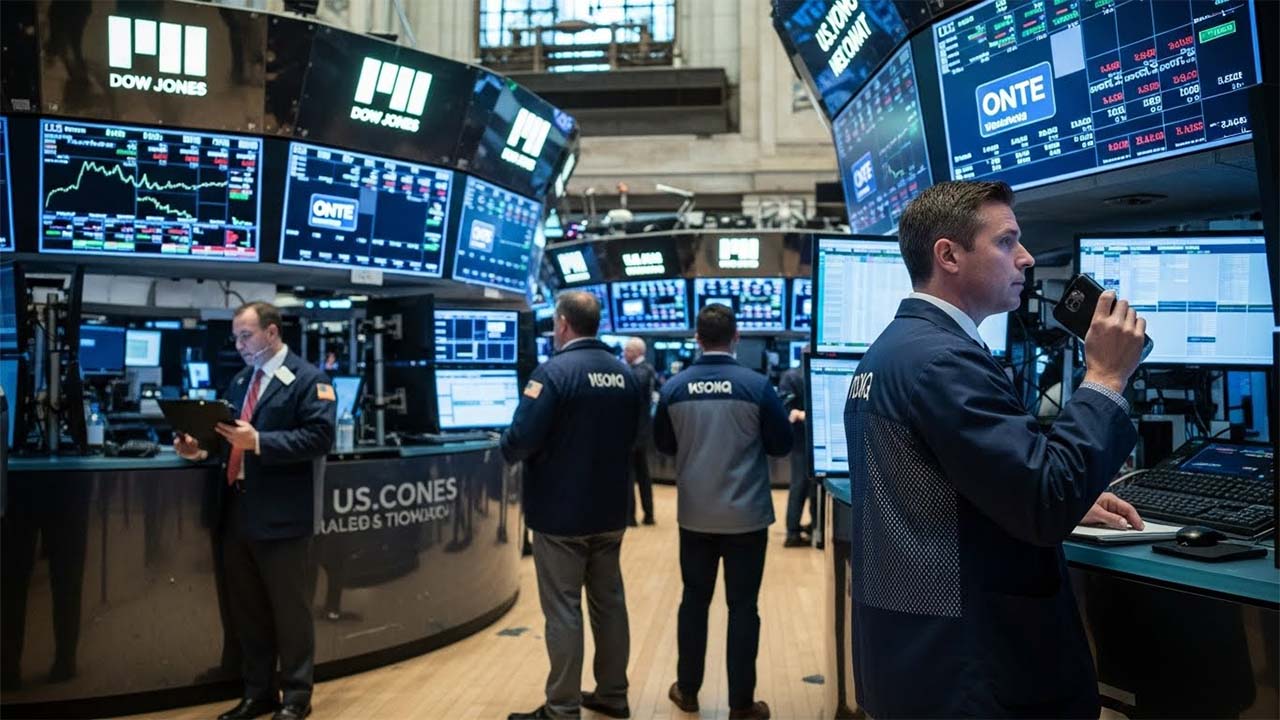
The U.S. stock market opens 2026 with cautious optimism as investors look to reset after a strong yet uneven finish to last year. Following double-digit gains across major indexes in 2025, Wall Street enters the new year balancing renewed risk appetite with lingering macro and policy uncertainties that continue to shape capital allocation decisions.
Futures tied to major benchmarks pointed higher ahead of the opening bell, signaling an attempt to regain momentum after a four-day losing streak closed out 2025. The early tone reflects not just a technical rebound, but a broader reassessment of growth expectations, interest rate stability, and sector-specific developments that could define trading patterns in the weeks ahead.
This opening session matters because it sets the narrative tone for how investors, businesses, and consumers interpret the economic runway for 2026—particularly after a year where markets climbed despite tighter financial conditions and shifting global dynamics.
Market Snapshot: A Strong 2025 Sets a High Bar
As the U.S. stock market opens 2026, investors are doing so on the heels of substantial gains. The Nasdaq Composite surged roughly 20% in 2025, the S&P 500 advanced about 16%, and the Dow Jones Industrial Average climbed close to 13%. These returns were driven by resilient corporate earnings, sustained enthusiasm around artificial intelligence, and expectations that borrowing costs would stabilize.
However, the late-year pullback reminded markets that valuations remain sensitive to policy signals and liquidity conditions. The final trading days of 2025 saw profit-taking and repositioning, particularly in technology-heavy portfolios, as investors locked in gains and adjusted exposure ahead of the new calendar year.
With futures rising—Dow futures up about 0.4%, S&P 500 futures up 0.6%, and Nasdaq futures leading with a 1% gain—the early message is clear: investors are not retreating from equities, but they are becoming more selective.
Why This Opening Matters More Than Usual
The opening of 2026 carries more weight than a typical first trading day. Markets are transitioning from a year defined by recovery and expansion into one expected to demand discipline and differentiation.
Several forces converge at this moment:
- Elevated equity valuations compared to historical averages
- Persistent sensitivity to interest rates and bond yields
- Increasing divergence between winners and laggards across sectors
The 10-year U.S. Treasury yield, holding near 4.15%, continues to influence equity pricing, loan demand, and corporate investment decisions. For businesses, this environment reinforces the importance of capital efficiency. For investors, it underscores the need to balance growth exposure with downside protection.
Corporate Signals: Tesla and the Focus on Execution
Individual company developments are also shaping sentiment as the U.S. stock market opens 2026. Shares of Tesla moved higher in premarket trading ahead of the company’s expected release of fourth-quarter delivery numbers.
Tesla is forecast to report approximately 422,850 vehicle deliveries for the quarter, marking a decline from the prior period when buyers rushed purchases ahead of an expiring federal EV tax credit. Analysts expect full-year 2025 deliveries of around 1.64 million vehicles, below the roughly 1.8 million units delivered in both 2023 and 2024.
Despite slowing delivery growth, Tesla’s stock rose more than 11% in 2025 as investors increasingly focused on the company’s non-EV businesses, including software, energy storage, and automation-related initiatives.
For markets broadly, Tesla’s performance highlights a key theme for 2026: execution quality matters more than headline growth. Investors are showing greater willingness to reward companies with diversified revenue streams and long-term strategic optionality.
Policy Developments Lift Consumer-Facing Stocks
Government policy also played a role in shaping early market moves. Furniture and home goods stocks rose after the White House announced a one-year delay in scheduled tariff increases on upholstered furniture, kitchen cabinets, and vanities.
The tariffs, originally set at 25% by President Donald Trump in September and slated to rise at the start of 2026, will now remain unchanged until 2027. The delay comes amid ongoing negotiations with trading partners and offers short-term relief to import-dependent retailers.
Shares of RH, Wayfair, MillerKnoll, and Williams-Sonoma all moved higher in response.
For businesses, the tariff delay provides breathing room to stabilize pricing, manage inventory, and preserve margins. For consumers, it reduces the immediate risk of higher prices on big-ticket household items at a time when discretionary spending remains sensitive to financing costs.
Global Tech Signals: Baidu’s Strategic Shift
International developments are also influencing U.S. investor sentiment. Shares of Baidu surged after the company announced plans to spin off its Kunlunxin artificial intelligence chip unit and pursue a listing on the Hong Kong Stock Exchange.
The move underscores the growing strategic importance of AI infrastructure and semiconductor independence within China’s tech ecosystem. Baidu’s U.S.-listed shares rose about 10% in premarket trading after gaining more than 50% in 2025.
For U.S. markets, Baidu’s announcement reinforces two important dynamics:
- AI investment remains a global priority.
- Capital markets are increasingly rewarding companies that unlock value through focused, standalone business units.
These signals support continued interest in AI-linked equities but also suggest greater scrutiny around execution, governance, and regulatory exposure.
Commodities and Crypto: Risk Hedging Comes Back Into Focus
As the U.S. stock market opens 2026, movements outside equities are providing insight into investor psychology.
Gold futures climbed about 1.4% to around $4,400 per ounce, while silver jumped roughly 4% to $73.45 an ounce. The rebound follows a pullback triggered by margin requirement increases from CME Group, which forced some traders to reduce leveraged positions.
Precious metals continue to function as a hedge against economic and geopolitical uncertainty, particularly for institutional investors seeking portfolio balance after a strong equity rally.
Meanwhile, Bitcoin traded near $89,500 after briefly dipping below $88,000. While crypto remains volatile, its resilience near recent highs suggests sustained interest from investors viewing digital assets as an alternative store of value alongside traditional risk assets.
Market Impact: What Businesses, Investors, and Consumers Should Watch
The way the U.S. stock market opens 2026 offers several practical takeaways:
For businesses:
Capital markets remain open, but selective. Companies with clear profitability paths, disciplined cost structures, and defensible growth narratives are better positioned to attract investment.
For investors:
Broad index gains may be harder to replicate in 2026. Portfolio performance is likely to depend more on sector allocation, balance sheet strength, and earnings visibility rather than multiple expansion alone.
For consumers:
Policy decisions—such as tariff delays—can directly affect prices, particularly for durable goods. At the same time, borrowing costs tied to Treasury yields will continue to influence spending behavior.
Forward View: A Year That Demands Precision
The opening session of 2026 does not signal a dramatic shift in market direction, but it does highlight a transition in mindset. After a year of strong returns, markets are entering a phase where precision, patience, and adaptability matter more than momentum.
As earnings reports, policy updates, and global developments unfold, investors will be watching closely to see whether early optimism is supported by fundamentals. The tone set today suggests confidence remains intact—but no longer unconditional.