

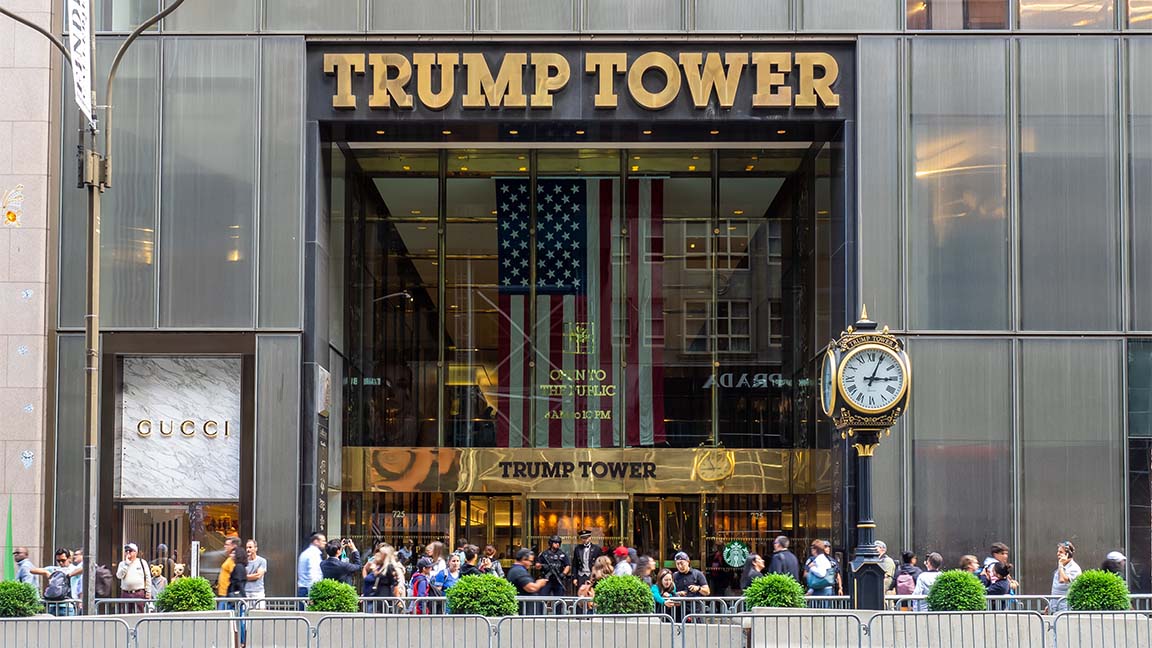
Trump Tower Belgrade plans have drawn thousands of students and citizens into the streets of Serbia’s capital, focusing national attention on a $500 million development proposed for the ruins of the former Yugoslav army headquarters. The site, damaged during NATO airstrikes in 1999, is viewed by many as a protected cultural landmark—turning a high-profile real estate deal into a flashpoint over law, identity, and power.
Key Points
Local media showed large crowds gathering around the site on Tuesday, chanting and holding signs in defense of heritage protections. Demonstrators say the development would replace a potent symbol of recent history with luxury towers that bypass standard planning rules. Officials backing the project argue it will bring jobs, tourism, and global investment to Belgrade’s city center.
Why Trump Tower Belgrade Is Facing Pushback
At the heart of the dispute is where, and how, the project would be built. Plans call for the redevelopment of the former military complex across from the Serbian government’s headquarters—one of the most visible addresses in Belgrade. Early designs unveiled by Jared Kushner’s Affinity Partners in March 2024 envision at least two skyscrapers, including a 175-room hotel and roughly 1,500 luxury apartments.
Opponents say the location is not just another parcel. It is a symbol, scarred by conflict and shaped by collective memory. Heritage advocates argue it qualifies for the highest level of cultural protection, and any work should be handled with conservation principles in mind. Students leading the demonstrations contend the project would shift Belgrade toward high-end, investor-led transformation at the expense of public space and historical memory.
Legal Debate Over the Fast-Track Law Behind Trump Tower Belgrade
Lawmakers last week passed legislation granting the development “priority” status, clearing the way to sidestep some urban planning procedures that might otherwise slow or block construction. Supporters, including President Aleksandar Vucic, frame the special status as a practical move to unlock investment and speed job creation. They argue Belgrade needs a signature project to attract capital and signal stability.
Critics, however, call the measure a dangerous precedent. “The special law is illegal as it runs against the law on cultural heritage,” said Desimir Tanovic, an art conservationist and advisor at Serbia’s state office for the protection of cultural monuments, in comments to broadcaster N1 TV. “Culture cannot be part of the market, cannot be traded with — and the state should protect it.”
Legal experts say the courts may ultimately decide whether the fast-track framework meets Serbia’s heritage and planning statutes. If judges agree with opponents, the law could be partially struck down or fail to apply to key portions of the site. If the law stands, it could permanently accelerate the timeline for the development—and potentially be used as a template for other large projects.
What the Trump Tower Belgrade Project Includes
- Scale and scope: Early renderings suggest at least two towers combining hospitality and residential uses.
- Hospitality: A roughly 175-room luxury hotel that would carry the Trump brand under a licensing arrangement.
- Residential: Around 1,500 high-end apartments designed to attract both local buyers and international investors.
- Location: Downtown Belgrade, directly across from the seat of government, on the ruins of the former Yugoslav army HQ.
- Investment: A project budget near $500 million, according to materials linked to Affinity Partners.
Backers say the mix of a marquee hotel and premium residences could drive foot traffic, tourism, and tax revenue while reshaping the city’s skyline. For real estate professionals, the address alone adds value. For opponents, the project’s scale raises concerns about infrastructure strain, access, and the loss of a historically significant urban space.
Political and Historical Context
The controversy surrounding Trump Tower Belgrade is unfolding amid a broader period of civic activism in Serbia. Student-led mass protests have persisted for more than a year, catalyzed by the collapse of part of a rail station in the northern city of Novi Sad that killed 16 people. The movement has since widened, with demonstrators voicing concerns over governance, corruption, and accountability.
The proposed development also touches the nation’s postwar narrative. The ruins trace directly back to NATO’s 1999 air campaign—an event that continues to shape public perception and politics. For many, preserving the site is about more than bricks and mortar; it is about how a country remembers, and what it chooses to build over memory.
The project’s high-profile backers add another dimension. Affinity Partners is led by Jared Kushner, son-in-law of U.S. President Donald Trump. President Vucic has signaled support for closer ties with the Trump administration, and his government has promoted foreign investment as a strategic priority. That political context has sharpened public scrutiny and transformed a development plan into a national debate.
Government Stance and Economic Arguments
Officials aligned with the project say Serbia must compete for global capital, tourism, and brand attention. They argue that a flagship project like Trump Tower Belgrade could signal a more investor-friendly environment and position Belgrade as a regional hub for business travel and luxury living. Proponents point to potential construction jobs, hospitality employment, and related service-sector growth.
Economists note that large-capex urban projects can have meaningful ripple effects—from supply chains to local vendors. Yet they also stress that outcomes depend on execution: transparent procurement, robust urban planning, and infrastructure investment to support added density. A central question for Belgrade is whether the benefits are broadly shared or confined to a narrow corridor of the city center.
Heritage Advocates and Academic Voices
Cultural institutions and conservation experts have raised alarms about the speed and scope of the plan. They argue that any future for the site must begin with a comprehensive heritage assessment, public consultation, and an open competition for redevelopment that respects historical context.
Students, who have organized marches and sit-ins, say the site should serve as a place of remembrance or civic use—not a luxury enclave. Their critique is not only about Trump Tower Belgrade; it is about the rules of urban change, and whether powerful stakeholders can reshape the city faster than communities can respond.
What Kushner’s Affinity Partners Has Envisioned
Affinity Partners, which unveiled the early designs in 2024, has presented the concept as a modern, skyline-defining project featuring hospitality and residential space. The brand power of Trump hotels is a key part of the commercial proposition, potentially attracting international visitors and investment.
While the company has emphasized the economic upside, it will likely face ongoing questions about heritage compliance, community engagement, and the specific legal path chosen for approvals. Those factors could influence lenders, contractors, and global partners assessing reputational risk.
Public Reaction, On the Record and Online
Protests in Belgrade drew several thousand people on Tuesday, according to local media broadcasts, with more demonstrations expected if site work progresses. The movement has attracted a wide cross-section of residents—students, academics, architects, and civic groups—united by concerns over process and place.
Public figures have begun to weigh in. Heritage experts like Desimir Tanovic have questioned the legality of the special law and the very idea of trading away cultural landmarks. Government allies highlight investment and urban renewal. On social media, debate has ranged from calls to turn the site into a museum or memorial to arguments that fresh development can coexist with memory when thoughtfully designed.
International Considerations for an EU Candidate
Serbia’s bid to join the European Union adds a layer of scrutiny to major public decisions. EU standards on governance, rule of law, and cultural heritage preservation are not strictly prescriptive in domestic urban planning—but they shape expectations. Observers say the handling of Trump Tower Belgrade could be read as a signal of institutional maturity, transparency, and respect for cultural assets.
International media attention—driven by the project’s brand, location, and political links—means decisions in Belgrade will likely resonate beyond Serbia’s borders. That visibility could attract additional investors or complicate the path forward, depending on how legal and heritage issues are resolved.
What Happens Next
- Legal challenges: Activists and heritage advocates may file suits contesting the scope or validity of the special law.
- Regulatory steps: Even with priority status, key permits, environmental reviews, and design approvals will be required.
- Public consultation: Officials could open structured consultations to ease tensions and refine the plan.
- Project timeline: If the fast-track framework stands, early site work could begin sooner than a standard process would allow.
Realistically, the timeline will hinge on court calendars, agency reviews, and the outcome of dialogue between the developer, government, and community groups. Markets and lenders will watch for clarity, especially on legal risk.
Outlook for Belgrade’s City Center
Belgrade is deciding what story it wants its center to tell. Trump Tower Belgrade could become a new economic anchor for tourism and high-end housing—or it could remain a symbol of unresolved questions about heritage, law, and who gets to shape a city’s future. For now, thousands of protesters have made clear that process and place both matter. The next chapter will be written not only in project renderings and investment term sheets, but in courtrooms, public squares, and the steps of government buildings across the street.
FAQ’s
What is the Trump Tower Belgrade project?
It’s a proposed $500 million complex by Jared Kushner’s Affinity Partners featuring at least two towers, a 175-room hotel, and about 1,500 luxury apartments on the former Yugoslav army HQ site.
Why are there protests against Trump Tower Belgrade?
Students and heritage groups say the site is a protected cultural landmark. They oppose a special “priority” law, which they argue bypasses urban-planning rules and undermines cultural protections.
Who supports Trump Tower Belgrade?
Serbian President Aleksandar Vucic backs the plan, and it’s linked to the Trump brand via Kushner’s firm. Lawmakers recently granted the project priority status to speed preparations.
What happens next for Trump Tower Belgrade?
Legal challenges are likely. Even with fast-track status, permits, reviews, and potential court decisions will determine the timeline and whether construction can proceed.
Article Source: Bloomberg
Image Source: Ajay Suresh from New York, NY, USA, CC BY 2.0, via Wikimedia Commons