

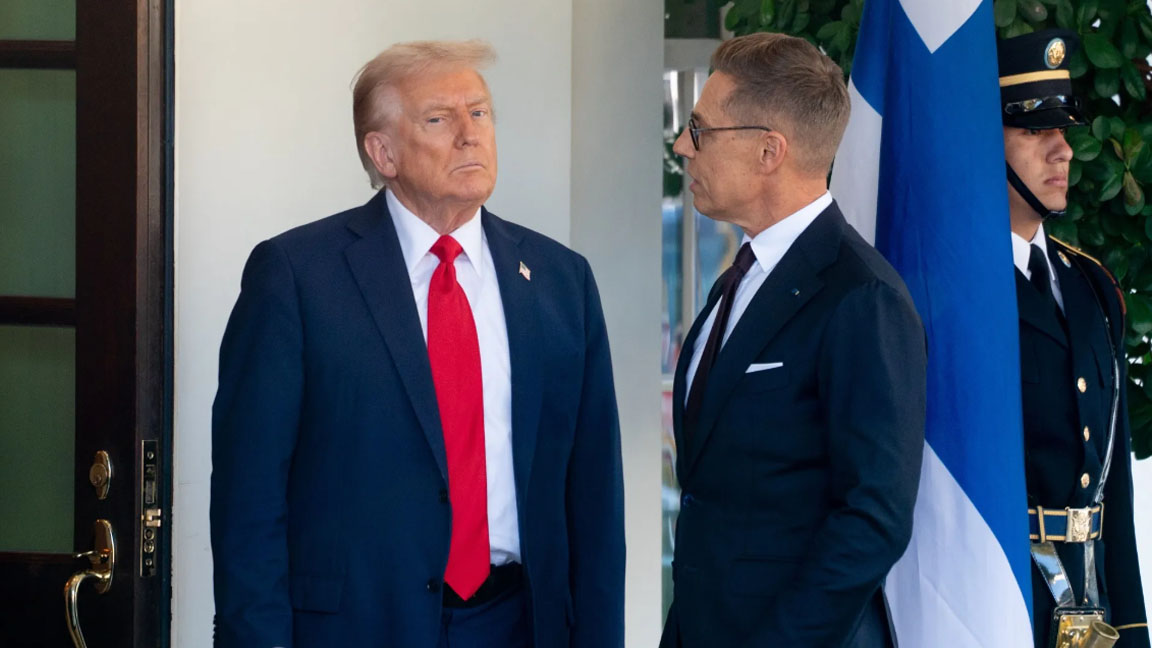
The Trump Ukraine peace plan is now at the center of urgent behind-the-scenes diplomacy, as European leaders race to shape its final form.
Key Points
Finnish President Alexander Stubb revealed that he and Italian Prime Minister Giorgia Meloni spoke directly with US President Donald Trump about the US 28-point proposal to end Russia’s war on Ukraine. The conversation took place around the Group of 20 leaders’ summit in Johannesburg, where concerns over the plan were already spreading among Kyiv’s allies.
Stubb, who is seen as having a solid working relationship with Trump, declined to disclose specific details of the call. But in an interview with Bloomberg TV at the G-20, he made clear that the Trump Ukraine peace plan is now subject to active talks between the US and a group of key partners.
He also stressed one immediate priority: securing a ceasefire.
Stubb’s quiet call with Trump on the Trump Ukraine peace plan
Speaking on the sidelines of the Johannesburg summit, Stubb confirmed that he and Meloni joined forces to speak directly to Trump about the proposal.
He described the call as “quite spontaneous,” suggesting it came together quickly rather than being scheduled far in advance. Despite that, he emphasized that he expects the lines of communication with Trump to remain open, saying, “I am sure we will stay in touch.”
Stubb said that while he would not share what was said on the call, the broader process around the Trump Ukraine peace plan is now moving into a more structured phase. According to him, negotiations involving 11 “concerned nations” — including Canada and Japan — are underway with the US over the details of the proposal.
He underlined that, from his perspective, it remains in the strategic interest of the US to support Ukraine.
Ceasefire first, then negotiation
In his remarks, Stubb returned several times to the idea that any realistic path forward has to begin with a halt in the fighting.
“The key right now would be to get a ceasefire,” he said. That goal, he suggested, is the necessary starting point for any further talks based on the Trump Ukraine peace plan or alternative frameworks.
Stubb also noted that peace negotiations “need patience,” signaling that he does not expect a fast or simple resolution. His comments hinted at a longer process in which multiple countries, including smaller European states such as Finland and Italy, play defined roles when dealing directly with Trump.
How the plan landed in Europe
Trump’s decision to unveil the 28-point proposal took European partners and Ukraine by surprise.
According to Stubb, European nations were not aware of the Trump Ukraine peace plan before it was publicly presented. That lack of prior consultation contributed to the alarm in Kyiv and in European capitals once the details began to filter through.
In its current form, the plan would see Russia retain large areas of Ukrainian territory and would impose constraints on Ukraine’s armed forces. Those elements triggered anxiety among Ukraine’s supporters, who fear the proposal could lock in significant territorial losses for Kyiv and weaken its ability to defend itself.
Over the weekend, European leaders and other allies responded by telling the US that the 28-point text needs “additional work.” That phrase suggests that while allies are not rejecting the Trump Ukraine peace plan outright, they are pushing for meaningful changes.
Stubb and Meloni’s roles in talks with Trump
Stubb has previously described how he and Meloni divide responsibilities when Europeans sit down with Trump to discuss Ukraine.
In his telling, the larger European nations lead the broader talks. Meloni, the Italian prime minister, steps in if or when a conversation “takes a bad turn,” working to steer it back on track.
Stubb’s self-described role is to summarize and highlight the essential points at the end of discussions to ensure they stick in Trump’s mind. His task is to condense complex positions into a clear message that leaves a lasting impression.
This framework appears to have carried over into their latest engagement with the White House on the Trump Ukraine peace plan. While Stubb offered few specifics about Sunday’s call, his comments suggest that the informal division of labor with Meloni remains in place as they try to influence the US position.
European allies seek changes to the 28-point proposal
The initial reaction from Europe and other partners has centered on reshaping, rather than discarding, the Trump Ukraine peace plan.
Stubb confirmed that discussions are now underway between the US and a group of 11 nations, including Canada and Japan. These talks are focused on working through the elements of the 28-point document that most concern Ukraine’s supporters.
The request for “additional work” on the text reflects unease over both substance and process: the territorial concessions to Russia, the limits on Ukraine’s military, and the surprise nature of the plan’s release.
Despite the alarm, Stubb signaled that many leaders are still willing to engage with Washington on the proposal, rather than walking away from it entirely.
Angola talks and the “Coalition of the Willing”
European Union leaders will next take up the Trump Ukraine peace plan in Angola.
On Monday, they are set to gather there for a summit between the EU and the African Union. Stubb said the US proposal will be on the agenda as European leaders compare notes and work out a more coordinated response.
Then, on Tuesday, discussions may continue within what Stubb described as the “Coalition of the Willing” format. While he did not spell out which countries this grouping includes, the label suggests a smaller circle of states that are prepared to engage more actively with the US on the terms of the plan.
These back-to-back meetings highlight how quickly the Trump Ukraine peace plan has become a focal point for European diplomacy — and how much work remains before any consensus is reached.
Trump’s final say and Stubb’s cautious outlook
For all the consultations and side meetings, Stubb was clear about where the final decision lies.
“President Trump is the person who decides on what the parameters of the document will be,” he said. “At the end of the day, nothing will pass without the green light coming from President Trump.”
That assessment underscores the central role the White House will play in determining whether the Trump Ukraine peace plan is revised, accepted, or ultimately abandoned. Allies can suggest edits, raise objections, and call for changes — but the final shape of the proposal will be set in Washington.
Asked about his own expectations, Stubb offered a measured view. “I am carefully optimistic but realistic,” he said.
His words capture the mood among many European leaders: hopeful that they can influence the Trump Ukraine peace plan through quiet diplomacy, but fully aware of the limits of their leverage.
For now, the effort continues on multiple tracks — private calls with Trump, consultations among 11 concerned countries, and upcoming meetings in Angola and within the Coalition of the Willing — as Europe tries to shape a proposal that arrived unannounced, but can no longer be ignored.
FAQ’s
What is the Trump Ukraine peace plan?
The Trump Ukraine peace plan is a 28-point proposal from the U.S. outlining terms to end Russia’s war on Ukraine. In its current form, it would leave Russia in control of significant Ukrainian territory and place limits on Ukraine’s armed forces.
Why are European leaders worried about the Trump Ukraine peace plan?
European leaders and Ukraine were alarmed because they were not consulted beforehand and believe the plan is too favorable to Russia. Many argue it risks cementing territorial losses for Kyiv and weakening Ukraine’s long-term security.
What role do Alexander Stubb and Giorgia Meloni play in talks on the Trump Ukraine peace plan?
Finnish President Alexander Stubb and Italian Prime Minister Giorgia Meloni act as key intermediaries in conversations with President Trump. Larger states lead the talks, Meloni steps in if talks go off track, and Stubb summarizes key points to leave a clear impression on Trump.
What happens next with the Trump Ukraine peace plan?
The plan is now being discussed between the U.S. and 11 concerned nations, including Canada and Japan. EU leaders will review it at an EU–AU summit in Angola, and further talks may continue in a “Coalition of the Willing” format, but any final changes still need Trump’s approval.