

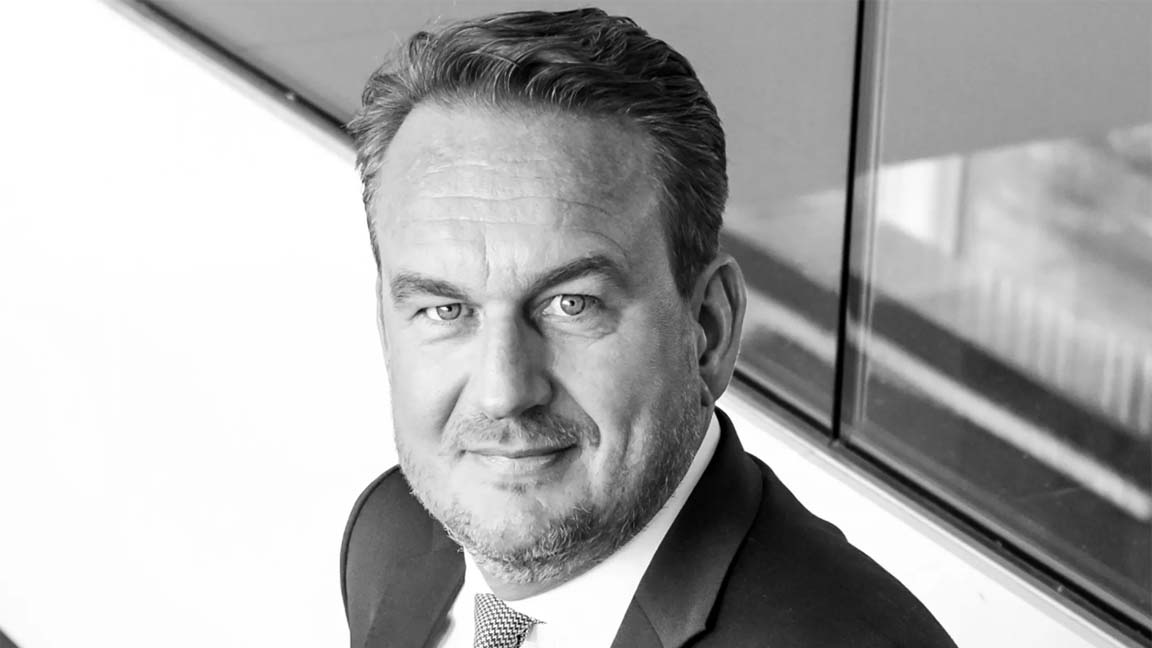
SFO Alliance new CEO, Jeroen Vetter, is stepping into one of private wealth’s fastest‑growing networks as the invite‑only club scales across continents and professionalizes its leadership.
Key Points
The London‑based organization, co‑founded by ex‑Goldman Sachs proprietary trader Lex Van Dam, named Vetter as chief executive as it accelerates membership and events for single‑family offices. Van Dam moves to executive chairman, while co‑founder Keith Johnston departs after guiding the group since launch.
The move caps a rapid ascent for a platform built in 2020 that now counts more than 1,100 member firms. Each firm must oversee at least $400 million in assets, putting the club’s combined reach well into the hundreds of billions of dollars.
Inside the Club: Who SFO Alliance Serves
SFO Alliance targets investment organizations that manage the wealth of a single fortune, known as single‑family offices.
Membership is free. Revenues come from partnerships and sponsorships tied to curated gatherings, including small‑format dinners and a flagship annual conference in London.
In 2025, the calendar has featured events in Monaco, New York, and Switzerland, reflecting the global footprint of its audience and the deal pipelines they pursue.
Why the SFO Alliance New CEO Move Matters
For members and counterparties, the SFO Alliance new CEO decision signals a push toward scale and structure at a time when family offices are more active in direct deals and co‑investments.
The club is increasingly a waypoint for private equity opportunities, venture flow, hedge strategies, and private credit conversations. A seasoned CEO adds a focal point for governance, partner selection, and programming quality.
Institutionalizing operations without diluting exclusivity is the key challenge—and the central reason the SFO Alliance new CEO appointment is drawing attention across wealth circles.
Who Is Jeroen Vetter
Before becoming the SFO Alliance new CEO, Vetter built an eclectic resume across institutional investing and private wealth.
- He was a money manager at Dutch insurer Aegon, later heading its investment office.
- He served about four years as CEO of a single‑family office managing the fortune of Dutch entrepreneur Rudolf Booker, according to public filings.
- Earlier, he founded and led a fund platform for nearly a decade, giving him hands‑on experience with manager selection, operations, and risk.
That combination of allocator pedigree and family‑office leadership aligns with the platform’s mix of investment debate and peer‑to‑peer problem‑solving.
Lex Van Dam’s Evolving Role
Van Dam, a Goldman Sachs veteran from the 1990s who later sourced deals for a family office linked to the founders of navigation‑tech firm TomTom, shifts to executive chairman.
The handoff to the SFO Alliance new CEO allows Van Dam to concentrate on strategy, quality control, and high‑level relationships while a full‑time chief executive runs the engine room.
The founder remains the brand’s figurehead. But the operational center of gravity moves toward a modern CEO structure that sponsors and members often expect.
Governance and Business Model
The club’s core proposition blends discretion with connectivity.
- Eligibility: Firms must manage at least $400 million in assets to join, a filter designed to keep the network relevant for large check writers.
- Monetization: The SFO Alliance new CEO inherits a partnership‑driven revenue model tied to events and curated introductions rather than member dues.
- Programming: Small‑room dialogues, regional salons, and the annual London summit are the primary touchpoints.
The goal is to combine scale with intimacy—enough members to surface proprietary ideas, but tight enough to preserve trust.
What to Expect Under the SFO Alliance new CEO
The SFO Alliance new CEO is likely to prioritize several practical upgrades as the community expands:
- Tighter curation: Clearer tracks for private equity, credit, venture, and real assets, matching members by deal interests and ticket sizes.
- Measurable outcomes: Post‑event follow‑ups, opt‑in data rooms, and compliance‑aware information sharing that translate discussions into pipelines.
- Regional depth: More frequent programming in the U.S., the Gulf, and Asia, while keeping London as the annual anchor.
- Risk and governance: Best‑practice sessions on custody, cyber, valuation, and manager oversight—topics rising up family‑office agendas.
- Next‑gen engagement: Tracks for heirs and operating executives, a growing constituency inside multi‑generational wealth platforms.
As the SFO Alliance new CEO, Vetter also inherits the balancing act of sponsor alignment. The right partners can enrich content; the wrong ones can erode trust. Expect stricter sponsor vetting and clearer guardrails.
The Family Office Boom, in Context
Family offices have multiplied over the past two decades as global fortunes surged in technology, finance, energy, and industrials.
Roughly one‑fifth of the world’s 500 richest individuals are served by a dedicated family office, according to Bloomberg data, overseeing several trillion dollars in assets.
With that growth has come sophistication. Many family offices now run direct deal teams, co‑invest alongside private equity sponsors, and deploy “war chests” to lean into market dislocations. The SFO Alliance new CEO takes the helm amid this shift from passive allocator to active principal investor.
What Members Say They Want
Conversations with allocators often surface the same wishlist:
- Proprietary deal flow without auction‑style processes.
- Trusted manager introductions that cut diligence time.
- Peer benchmarks on fees, structures, and GP alignment.
- Operational playbooks for risk, tax, and cross‑border issues.
The SFO Alliance new CEO will be judged on whether programming reliably delivers those outcomes while maintaining confidentiality.
Leadership Transition: Keith Johnston’s Exit
Co‑founder Keith Johnston, who served as chief executive since launch, is stepping down.
He plans to remain in the family‑office arena and has already drawn interest from potential employers, he told Bloomberg, without naming specific firms.
A clean handover—paired with Van Dam’s move to executive chairman—positions the new structure to operate without losing institutional memory.
Market Reactions and Timeline
Since the announcement, the SFO Alliance new CEO has become a talking point among service providers and deal sponsors who see the club as a gateway to concentrated capital.
Near‑term markers to watch include the cadence of new event announcements, the range of partner names attached to agendas, and early signals on data‑sharing tools for members.
If those threads firm up quickly, expect attendance lists to lengthen and cross‑border introductions to increase.
The Global Expansion Lens
The family‑office market is not evenly distributed. The United States remains the largest pool of private wealth, but Europe and the Middle East host a dense cluster of cross‑border investors. Asia’s founder class is expanding fastest.
For a network effect business, geography matters.
- U.S.: New York, Miami, and Austin continue to pull dealmakers.
- Europe: London is still the hub for capital and advisory talent.
- Middle East: The Gulf’s sovereign and family capital are increasingly active partners.
- Asia: Singapore and Hong Kong anchor regional flows.
The SFO Alliance new CEO will decide where to deepen roots and how to avoid event fatigue—a real risk when calendars are crowded.
What Success Looks Like
Clear metrics can help members judge progress:
- Higher match rates between members’ mandates and introductions.
- More co‑investment announcements traceable to the network.
- Enhanced governance content that turns into policy upgrades inside member offices.
- Stronger diversity of member types by geography and strategy.
If those markers move in the right direction, the SFO Alliance new CEO will have turned momentum into durability.
Risk Factors to Monitor
Even well‑run networks face headwinds.
- Selectivity versus scale: Growth can dilute quality if not curated.
- Sponsor alignment: Over‑commercialization risks undermining trust.
- Compliance: Global KYC, data privacy, and marketing rules vary by region.
- Market cycles: Risk‑off periods may curb deal appetite even as “war chests” provide dry powder.
How the SFO Alliance new CEO navigates these tensions will shape the platform’s long‑term credibility.
Conclusion: A Turning Point for a Fast‑Growing Network
The leadership change formalizes what many members already sensed: the platform is graduating from a founder‑driven club to a professionally managed institution.
For allocators seeking signal over noise, that shift could be decisive. For sponsors, it may raise the bar for access and alignment.
The bottom line for the SFO Alliance new CEO is straightforward: keep the rooms small, the ideas big, and the outcomes measurable. Execution on those three fronts will determine whether the next chapter matches the ambition of a network that sits at the nexus of private capital and global opportunity.
FAQ’s
What is SFO Alliance, and who can join?
SFO Alliance is an invite‑only network for single‑family offices. Member firms are typically required to oversee at least $400 million in assets; membership is free, and the platform partners with sponsors for events.
Who is the SFO Alliance New CEO, Jeroen Vetter?
Vetter is a Dutch investment executive with roles at Aegon and as CEO of a single‑family office tied to entrepreneur Rudolf Booker. He also founded a fund platform and brings allocator and operator experience.
What is changing for Lex Van Dam after the leadership shift?
The Goldman Sachs veteran becomes executive chairman, focusing on strategy and relationships while day‑to‑day operations move to the new CEO structure.
Why are single‑family offices growing rapidly?
Surging founder wealth, desire for privacy and control, and flexible mandates drive growth. Many now pursue direct deals, co‑investments, and maintain “war chests” to act during market swings.
Article & Image Source: Bloomberg