

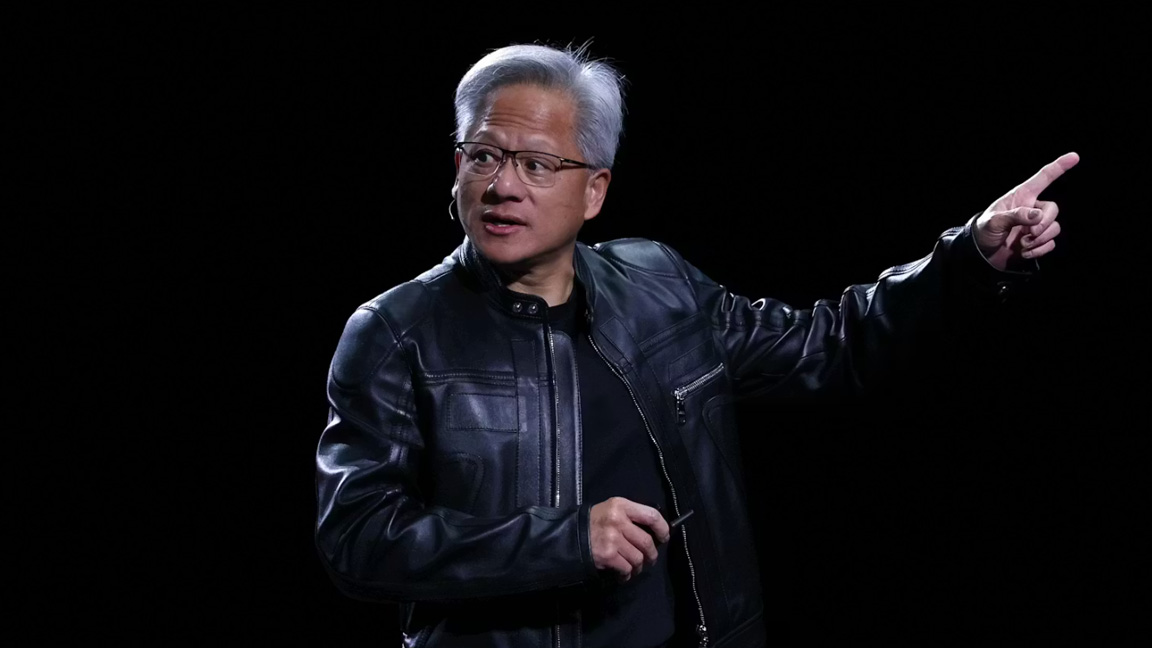
Nvidia stock rally drove another powerful advance in U.S. equity futures Thursday, as traders rushed back into artificial-intelligence winners and put some of their worries about the Federal Reserve on hold.
Key Points
The tech-fueled upswing came even as investors digested a mixed U.S. jobs report that did little to clarify whether the Fed will cut interest rates at its December meeting — and with no additional major labor data due before policymakers gather.
Instead, a fresh wave of confidence in the AI boom, anchored by Nvidia’s latest earnings and outlook, set the tone across equity markets and overshadowed lingering questions about the path of monetary policy.
Nvidia Stock Rally Drives Nasdaq 100 Futures Higher
The latest Nvidia stock rally followed a new earnings report and outlook that reassured investors about ongoing demand for AI hardware. The chipmaker pushed back against talk that the AI trade has already morphed into a speculative bubble, and its upbeat forecast quickly became the focus for markets.
Nasdaq 100 futures climbed about 2%, outpacing broader benchmarks as investors piled into large-cap technology and semiconductor names linked to the AI theme. S&P 500 futures rose roughly 1.6%, while contracts on the Dow Jones Industrial Average gained 1%.
The ripple effects of the Nvidia stock rally extended overseas. In Europe, the Stoxx Europe 600 advanced around 1%, and the MSCI World Index edged higher by about 0.2%, highlighting how central AI-linked sentiment has become to the global risk mood.
Treasury markets moved more cautiously. Two-year Treasury yields — which are particularly sensitive to expectations for near-term Fed decisions — slipped two basis points to 3.57%. The 10-year yield dipped a basis point to 4.12%, and 30-year yields were little changed near 4.75%.
The dollar was broadly steady, with the euro holding close to $1.1529. The British pound ticked up about 0.2% to $1.3089, while the Japanese yen weakened around 0.3% to 157.68 per dollar.
In commodities, West Texas Intermediate crude added roughly 1.1% to trade near $60.10 a barrel. Spot gold was little changed.
Bitcoin hovered around $90,588.79 and Ether eased 0.7% to about $2,969.15, reflecting a quieter session in cryptocurrencies even as equity markets cheered the Nvidia stock rally.
Jobs Data Muddy Outlook for Fed’s December Meeting
While the Nvidia stock rally captured most of Wall Street’s attention, investors were also forced to parse a jobs report that offered a murky picture of the U.S. labor market.
Nonfarm payrolls increased by 119,000 in September after declining in the prior month, signaling that hiring picked up modestly. At the same time, the unemployment rate rose to 4.4%, and average hourly earnings rose just 0.2% from the previous month.
The data suggested a labor market that is cooling but not collapsing, and one that appeared to be stabilizing before a government shutdown. Yet several strategists stressed that the report is backward-looking and may not carry enough weight to sway the Fed decisively toward a December cut.
Seema Shah of Principal Asset Management noted that markets seemed to pick their favorite parts of the report. Equity traders liked the firmer payroll growth because it implied that the broader economy is still on a solid footing. Bond investors, however, were more focused on the uptick in unemployment and slower wage gains, which could keep the possibility of a December rate cut “just alive enough” to matter.
Even so, Shah concluded that in the face of persistent hawkish messaging from Fed officials — and with no more major employment reports before the next meeting — Thursday’s numbers are unlikely to tip the central bank strongly toward an imminent cut.
Weekly data painted a similar picture of resilience with pockets of softness. Initial jobless claims slipped to 220,000, pointing to employers largely holding on to workers despite economic uncertainty.
To Kay Haigh at Goldman Sachs Asset Management, the higher unemployment rate still leaves room for the Fed to consider easing in December if labor-market softness continues. David Russell at TradeStation countered that with jobless claims still reflecting a generally healthy market, Fed officials may see little urgency to reduce rates next month.
Florian Ielpo at Lombard Odier Asset Management described the release as a “non-event” for markets but more meaningful for policymakers, calling it another argument for the Fed to maintain the current stance rather than make sudden shifts.
AI Narrative Outshines Macro Jitters
Even as investors debated the implications of the labor data, the Nvidia stock rally turned the day’s main story back to artificial intelligence.
Bret Kenwell at eToro argued that Nvidia’s latest earnings “stole the show,” overshadowing the jobs report in the eyes of many traders. If Nvidia can reassert its leadership over the coming days, he suggested, that could revive the broader AI trade and give the wider market a fresh lift.
For market participants worried about an AI bubble, the company’s tone was deliberately reassuring. Chief Executive Jensen Huang emphasized that from Nvidia’s vantage point, the industry is experiencing strong, tangible demand rather than speculative hype. The firm’s results, which have become an informal barometer for the health of the AI ecosystem, encouraged investors to keep treating AI as a durable growth story.
The Nvidia stock rally also influenced sentiment among skeptics. Short-seller Carson Block of Muddy Waters Capital said this is not the environment to bet aggressively against the largest U.S. technology names. In his view, traders who try to short Nvidia and similar giants risk being pushed out of the market quickly, given the strength of the current trend.
Alexander Guiliano at Resonate Wealth Partners said the latest jobs data show the labor market is not as weak as some had feared, which supports the idea that the AI story can continue alongside a reasonably stable economy. He described the pullback in stocks earlier in November as a mild correction that may increase the odds of a stronger finish to the year if the Nvidia stock rally and other tech gains persist.
Corporate Moves Add to Busy Market Session
Beyond the Nvidia stock rally and the macro debate, investors also sifted through a wave of corporate headlines across sectors, from retail to energy and health care.
Walmart Inc., the world’s largest retailer, raised its full-year sales outlook. The move suggested it is continuing to draw price-sensitive shoppers even as it prepares for cost increases in the months ahead. In a separate shift with symbolic weight for markets, Walmart said it will transfer its stock listing to Nasdaq — a milestone that marks the biggest departure from the New York Stock Exchange in its history.
Verizon Communications Inc. unveiled extensive layoffs that could shrink its non-union workforce by as much as 20%. The reductions form a key step in a turnaround effort under its new chief executive, Dan Schulman, as the telecom company seeks to streamline operations.
FedEx Corp. chief executive Raj Subramaniam said that major changes to global trade and supply chains — driven by technological shifts and geopolitical risks — are likely to endure over the long term, signaling that companies and investors may need to adapt to a new baseline rather than a temporary disruption.
In health care, Abbott Laboratories agreed to buy cancer-screening firm Exact Sciences Corp. in a deal valued at about $21 billion. Moderna Inc. secured access to as much as $1.5 billion in loan financing as it works through a slowdown in its Covid-related business and looks to stabilize its balance sheet.
Bath & Body Works Inc. cut its full-year outlook and announced a turnaround strategy that aims to refocus on its core home-products business after recent challenges.
Energy markets had their own catalysts. Exxon Mobil Corp. is lifting a force majeure on its Rovuma liquefied natural gas project in Mozambique as security concerns ease, opening the door to renewed operations. Siemens Energy AG rolled out its largest share buyback since going public five years ago, encouraged by rising demand from data-center investments.
Elsewhere in Europe, BNP Paribas SA announced a new share repurchase program and outlined plans to hit a capital-strength target earlier than expected, as CEO Jean-Laurent Bonnafe works to turn around a recent slide in the bank’s stock. Novartis AG raised its sales targets for two key cancer medicines, underscoring confidence in its oncology pipeline.
In autos and technology, Stellantis NV continued its rivalry with BYD Co., noting that Chinese partner Leapmotor is selling more electric vehicles in Europe’s biggest EV market. And in a sign of how the AI theme reaches far beyond U.S. borders, Tata Consultancy Services Ltd. obtained $1 billion from TPG Inc. to accelerate its push into AI data centers, reinforcing the global scope of the trend that helped ignite the Nvidia stock rally.
Market Snapshot: Futures, Currencies and Bonds
By 9:09 a.m. in New York, equity futures were firmly in the green, reflecting how the Nvidia stock rally and AI optimism were setting the tone ahead of the cash open.
- S&P 500 futures: up about 1.6%
- Nasdaq 100 futures: up about 2%
- Dow Jones Industrial Average futures: up about 1%
- Stoxx Europe 600: up about 1%
- MSCI World Index: up about 0.2%
In fixed income and currencies:
- 10-year U.S. Treasury yield: down one basis point to 4.12%
- 2-year U.S. Treasury yield: down two basis points to 3.57%
- Germany’s 10‑year yield: up two basis points to 2.73%
- UK 10‑year yield: down one basis point to 4.59%
- Bloomberg Dollar Spot Index: little changed
The steady backdrop in bonds and currencies underlined how the Nvidia stock rally was primarily an equity story, with investors choosing to express their AI enthusiasm through stocks rather than large shifts in macro hedges.
What the Nvidia Stock Rally Means for the Next Phase of the Market
With only weeks to go before the Fed’s December meeting, Thursday’s session highlighted how central the Nvidia stock rally and broader AI trade have become to market psychology. Mixed economic data and uncertain rate expectations might once have dominated investor thinking. Now, the strength or weakness of a single AI bellwether can overshadow even a widely anticipated jobs release.
Analysts are divided over whether the Fed will have enough justification to cut rates next month, but there is broader agreement that the central bank appears comfortable letting more data accumulate before making major changes. Until that happens, trends in corporate earnings — especially from AI and technology leaders — may continue to drive day-to-day market direction.
For now, the takeaway is clear: as long as the Nvidia stock rally keeps convincing investors that AI demand is real and durable, the bull market it helped create still has room to run, even in the shadow of an uncertain policy backdrop.
FAQ’s
Why is there a Nvidia stock rally right now?
The Nvidia stock rally is driven by stronger‑than‑expected earnings and guidance tied to AI demand. Solid data‑center chip orders and confidence from management are convincing investors that growth remains robust.
How does the Nvidia stock rally impact the Nasdaq 100 and S&P 500?
Because Nvidia is a major index heavyweight, sharp gains can significantly lift the Nasdaq 100 and support the S&P 500. The rally also boosts sentiment for other chipmakers and big tech names.
Is the Nvidia stock rally signaling an AI bubble?
The move has revived bubble concerns, but Nvidia’s results show real revenue and order growth behind AI spending. Many strategists say valuations are high but still supported as long as earnings keep expanding.
What does the Nvidia stock rally mean for Fed rate‑cut expectations?
The rally shifts focus from mixed jobs data back to corporate earnings strength. It doesn’t directly change Fed policy odds, but it can make markets more willing to look past near‑term uncertainty on rate cuts.