

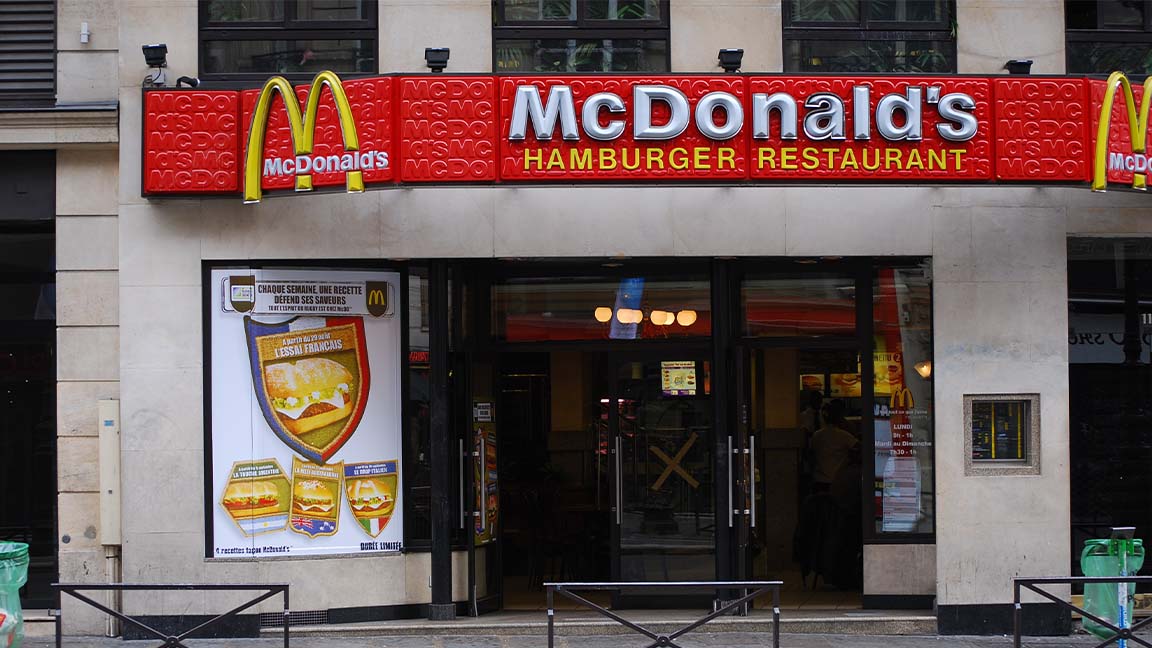
McDonald’s low-income customers are leaving the chain in double-digit numbers, a sharp reversal for a brand built on value meals and everyday affordability. Company leaders say higher-income diners are now filling the gap, underscoring how price pressures are reshaping the fast-food landscape and widening the wealth divide.
Key Points
Executives point to higher beef costs, restaurant labor, and other essentials as key drivers of menu price increases. Those increases are colliding with household budgets already strained by rising costs for groceries, rent, clothing, and child care. The result: a pivotal shift in who is walking into McDonald’s—and who is staying away.
Why McDonald’s Low-Income Customers Are Pulling Back
The change is showing up in visits as McDonald’s low-income customers tighten their spending. Prices at limited-service restaurants are up 3.2% year over year and climbing, according to Moody’s Analytics economist Marisa DiNatale. With wages stagnating more at the lower end and tariffs hitting goods-heavy budgets hardest, value-focused diners are recalibrating.
McDonald’s says the average item price climbed about 40% from 2019 to 2024. A Big Mac rose from $4.39 to $5.29. A 10-piece McNuggets Meal increased from $7.19 to $9.19 over the same period. For families juggling higher rents and essentials, that extra few dollars per order adds up.
The company did not detail how it determines customer income levels. Businesses typically analyze store trade areas and product baskets to estimate customer demographics, but McDonald’s offered no specifics.
Prices, Beef, and Wages: What’s Pushing Menus Higher
Beef costs have surged. The U.S. cattle herd is at a 75-year low due to drought and parasites, while beef exports to the U.S. declined amid trade tensions and tariffs. Supermarket ground beef prices were up 13% in September year over year. McDonald’s Chief Financial Officer Ian Borden said the company’s supply chain has kept beef costs from rising as much as some peers, but pressures are still significant.
Labor is another major factor. McDonald’s said last year that spending on restaurant worker salaries was up around 40% since 2019, while costs for food, paper, and other goods climbed about 35%. In California, a new fast-food wage law for chains with more than 60 locations spurred an industry debate. Some owners and trade groups reported cutting hours or slowing hiring to offset higher pay. A UC Berkeley analysis of roughly 2,000 restaurants found the $20 wage did not reduce fast-food employment and led to minimal menu price increases—about eight cents on a $4 burger. The debate remains unresolved.
McDonald’s has also accused major meatpackers of artificially inflating prices in a lawsuit against industry giants Tyson, JBS, Cargill, and National Beef. The companies deny wrongdoing and have paid tens of millions to settle multiple price-fixing lawsuits. Even so, these cost dynamics ultimately reach the register, where McDonald’s low-income customers feel it most.
From Dollar Menu to Diminishing Returns
After a steep slump in the early 2000s, McDonald’s staged a turnaround with its Dollar Menu. Every item costs $1, a clear signal to budget-conscious diners. The strategy helped deliver three straight years of growth at restaurants open at least a year and lifted revenue by about 33%, according to reports from that period.
But rising costs made the strict $1 approach unsustainable. In 2013, the chain rebranded the lineup as the “Dollar Menu & More,” with prices reaching up to $5. The pivot marked a shift away from the ultra-low-price anchor that once defined the brand’s value proposition.
A K-Shaped Economy in Plain Sight
Economists see a broader pattern: higher earners are spending briskly while others are refocusing on essentials. Analyst Adam Josephson points to examples across sectors, noting that what’s happening to McDonald’s fits a split-screen economy.
Airlines illustrate the divide. Delta reported a 5% year-over-year increase in premium ticket sales for the June quarter, while main cabin revenue fell 5%. Hotels show a similar split: revenue at luxury brands such as Four Seasons, Ritz-Carlton, and St. Regis is up 2.9% so far this year, while economy hotels are down 3.1%, according to CoStar. Against that backdrop, the retreat by McDonald’s low-income customers looks less like an outlier and more like a sign of the times.
Financial strain is intensifying for lower-income households. VantageScore’s Rikard Bandebo notes “huge” year-over-year increases in 60-day delinquencies among households earning under $45,000 annually, even as delinquency rates for middle- and higher-income households have flattened. After the pandemic-era stimulus ended, delinquencies among lower-income borrowers jumped and have not eased since 2022.
Housing costs are a major pressure point. A Harvard Joint Center for Housing Studies report found that half of U.S. renters—22.6 million people—were cost-burdened in 2023, spending more than 30% of their income on housing and utilities. Twenty-seven percent were severely burdened, spending more than half their income on housing. For renters with annual incomes under $30,000, residual income after housing and utilities fell to a median $250 per month in 2023, down 55% since 2001, with the steepest declines since the pandemic.
DiNatale adds that price increases tied to tariffs hit lower-income households harder because they spend more on goods than services. And while inflation has cooled from its peak, menu prices at limited-service restaurants continue to outpace overall inflation, deepening the squeeze.
How McDonald’s Is Responding
The company has rolled out value-oriented offers to reconnect with price-sensitive diners. A $5 deal paired a McDouble or McChicken with small fries, a small soft drink, and a four-piece McNuggets. In January, McDonald’s introduced a promotion offering a $1 item alongside a full-price purchase, supported by an ad featuring John Cena. In early September, it launched Extra Value Meal, promising combos priced about 15% below ordering items individually.
Early results were mixed. The company reported a 3.6% year-over-year decline in U.S. same-store sales in May. More recently, third-quarter results showed a 2.4% sales lift, even as the chief executive warned of an increasingly two-tiered economy. Winning back McDonald’s low-income customers will likely hinge on clear, sustained value rather than one-off promotions.
Other brands are leaning into deals, too. San Francisco-based Super Duper has promoted a $10 “recession combo” of a burger, fries, and a drink. Across industries, DiNatale says many companies are hesitant to pass along further cost increases after years of inflation, sensing consumers’ tolerance is wearing thin.
Can McDonald’s Low-Income Customers Be Won Back?
There are moving pieces on the cost side. Borden says McDonald’s supply chain has limited beef cost increases relative to peers. The company’s lawsuit against major meatpackers signals how seriously it views proteins’ impact on margins; the defendants deny wrongdoing and have settled other suits. Meanwhile, policy shifts could matter at the margins: this month, the White House scrapped tariffs on beef, coffee, and tropical fruit as part of a push to lower grocery prices.
McDonald’s did not disclose how it assesses the income mix of its customers, a reminder that precise measurement of who returns—and why—may be hard to track in real time. The open question is whether McDonald’s low-income customers will come back as budgets stabilize, or whether higher earners will continue to dominate traffic.
Outlook
The brand that helped define cheap eats is now at the center of America’s affordability test. McDonald’s low-income customers may continue to pull back while higher-income diners keep spending, unless costs ease or value promotions resonate more clearly.
For now, many corporate leaders appear cautious about testing price limits further. After years of higher prices, consumers are showing limited tolerance for additional hikes. As promotions proliferate and tariff policies evolve, the split-screen, K-shaped economy is likely to remain in focus. How the chain balances costs, pricing, and everyday value will determine whether McDonald’s low-income customers come back in force.
FAQ’s
Why are McDonald’s prices rising so fast?
The company cites higher beef and labor costs, plus broader inflation and tariffs. McDonald’s says average menu prices rose about 40% from 2019 to 2024.
Are McDonald’s low-income customers really pulling back?
Yes. Executives reported a double-digit drop in low-income traffic, while higher earners increased nearly as much—mirroring a K-shaped economy.
Is the Dollar Menu coming back?
The $1-only lineup proved unsustainable and was rebranded in 2013. McDonald’s now leans on targeted value offers like a $5 bundle, $1 add-on deals and Extra Value Meals.
What’s driving the split in who’s dining at McDonald’s?
Limited-service menu prices are up 3.2% year over year, while essentials like rent and childcare strain budgets. Wealthier consumers keep spending; lower-income diners are pulling back.