

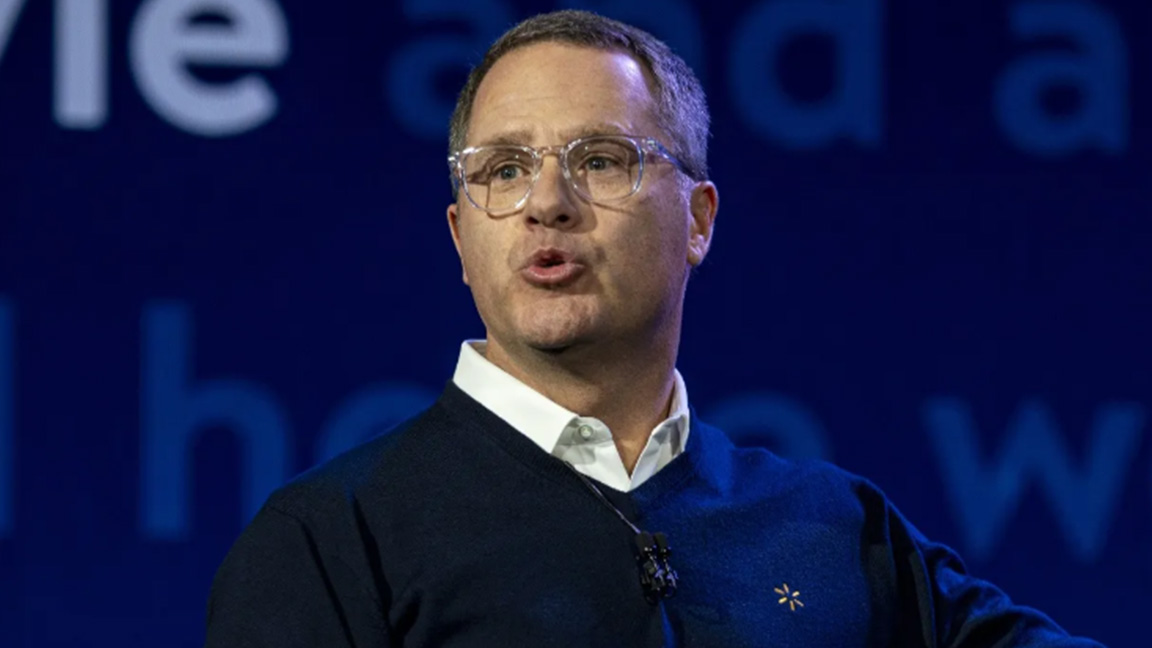
Walmart CEO transition headlines a pivotal change at the world’s largest retailer, with Doug McMillon set to retire in February and John Furner named as his successor. The move marks the end of an era for a leader credited with reshaping the company into a digital powerhouse built on e-commerce, advertising, and membership businesses.
Key Points
Announced on November 14, 2025, the leadership shift reflects a long-anticipated handoff. Furner, 51, has been running Walmart’s largest business in the U.S. and was widely viewed as the heir apparent to McMillon, 59.
Shares fell about 3% in premarket trading following the news, underscoring investor attention on continuity and execution during the Walmart CEO transition.
Inside the Walmart CEO transition
The Walmart CEO transition elevates a familiar operator in John Furner. He has been with the retailer since 1993, beginning as an hourly associate and rising through the organization to lead the U.S. unit.
Furner’s selection maintains continuity inside Walmart’s leadership bench. His day-to-day proximity to the company’s largest business positions him to step into the top job with clear visibility into operations.
Doug McMillon’s retirement comes after more than a decade at the helm. He was appointed CEO in 2014, capping a rise that began when he started at Walmart as an hourly worker in his teens.
Legacy of a digital shift
Under McMillon, Walmart evolved into what the company describes as a digital powerhouse. The strategy emphasized e-commerce expansion, a growing advertising business, and the development of membership offerings.
That track record defines the McMillon era. The Walmart CEO transition now turns attention to how the company sustains and builds on those engines with Furner in the lead.
McMillon’s journey from hourly employee to CEO mirrors Walmart’s culture of internal mobility. That ascent—and the company’s transformation—frame the significance of his departure.
From hourly associate to CEO
McMillon’s story began as an hourly worker in his teens. He rose through roles over decades to become chief executive in 2014.
Furner likewise started as an hourly associate in 1993. His progression to U.S. chief and now CEO-designate reinforces Walmart’s development of leaders from within.
Together, their paths reflect a leadership pipeline that has shaped the company’s direction and culture. The Walmart CEO transition extends that continuity.
Market reaction and leadership handoff
Walmart’s shares fell about 3% in premarket trading after the announcement. The move signals investors digesting the timing and implications of the leadership change.
The Walmart CEO transition is set for February, when McMillon retires and Furner steps into the role. That timing provides a clear handover window for the company and its stakeholders.
The U.S. unit—Walmart’s largest business—remains central to the retailer’s operations. Furner’s stewardship there provides direct context for the responsibilities he will assume.
Walmart CEO transition timeline
- Announcement date: November 14, 2025
- Effective timing: McMillon will retire in February
- Successor: John Furner, 51, current head of Walmart U.S.
These milestones structure the leadership shift. The Walmart CEO transition moves from announcement to execution over the coming months.
End of an era
McMillon’s retirement closes a notable chapter for Walmart. He guided the company through the Internet age, building out e-commerce, advertising, and membership businesses that now sit alongside its core retail footprint.
That evolution anchors his legacy. The Walmart CEO transition passes the baton to Furner with those platforms in place.
The world’s largest retailer now prepares for leadership continuity under a successor who has led its biggest business and has deep company roots.
What changes for the U.S. business
Walmart U.S. is the company’s largest unit. Furner’s leadership there has shaped the organization’s day-to-day execution in its most consequential market.
As the Walmart CEO transition takes effect, that experience becomes the foundation for his role as chief executive. It also provides a direct link between corporate strategy and U.S. operations.
The company’s emphasis on e-commerce, advertising, and membership businesses remains a defining feature of its model as the transition unfolds.
What to watch
A few focal points frame the months ahead as the Walmart CEO transition progresses.
- Leadership handover: McMillon retires in February, and Furner assumes the CEO role.
- Market sentiment: Shares were down about 3% in premarket trading, reflecting investor focus on execution.
- Strategic continuity: The company highlights a digital powerhouse built on e-commerce, advertising, and membership areas shaped under McMillon’s tenure.
Each element will guide how stakeholders assess the handoff and the next chapter for Walmart.
Why this moment matters
Leadership changes at global companies carry symbolic and practical weight. The Walmart CEO transition touches both, combining a generational handoff with deep institutional knowledge.
McMillon’s career arc—from hourly worker in his teens to CEO—has been central to Walmart’s identity. Furner’s path—from hourly associate in 1993 to the top job—extends that narrative.
The result is a transition grounded in the company’s traditions, shaped by decades of experience, and focused on businesses that have redefined the retailer’s model.
The road ahead
The Walmart CEO transition sets a clear course into February. The company’s largest business in the U.S. remains a core engine under the leader who has been running it.
McMillon’s retirement concludes a tenure defined by modernization and digital expansion. Furner’s appointment maintains continuity while signaling confidence in internal leadership development.
As the world’s largest retailer, Walmart’s leadership choices resonate across the sector. The transition announced on November 14, 2025, underscores that reach and sets expectations for the next phase.
Continuity with a deep bench
Furner, 51, has been widely seen as the heir apparent, reflecting sustained exposure to the company’s most significant operations. That view now becomes reality with his selection as McMillon’s successor.
The Walmart CEO transition, therefore, aligns the company’s leadership with its scale and strategy. It also affirms the bench strength cultivated over decades.
Short paragraphs. Clear milestones. Defined roles. The handoff is simple to understand: McMillon retires in February; Furner steps in.
Bottom line
The Walmart CEO transition marks a generational passing of the torch at the world’s largest retailer. Doug McMillon, 59, will retire in February after a tenure that helped build a digital powerhouse centered on e-commerce, advertising, and membership.
John Furner, 51, steps up from leading the U.S. business—the company’s largest—to become CEO. Shares fell about 3% in premarket trading after the announcement.
With the timeline set and the successor named, Walmart enters its next chapter with continuity at the forefront.
FAQ’s
When is Doug McMillon retiring, and who will replace him?
Walmart says McMillon will retire in February, with John Furner set to take over as CEO. Furner currently leads Walmart’s largest business in the U.S.
How did the market react to the Walmart CEO transition?
Walmart shares fell about 3% in premarket trading after the announcement. Investors are watching for continuity and execution under the new leadership.
Who is John Furner, the incoming Walmart CEO?
Furner, 51, started at Walmart in 1993 as an hourly associate and rose to lead Walmart U.S. He has long been viewed as the heir apparent.
What is Doug McMillon’s legacy as Walmart CEO?
Appointed in 2014, McMillon is credited with transforming Walmart into a digital powerhouse—expanding e‑commerce, advertising, and membership businesses—after starting as an hourly worker.