

Key Points
The Japan aging population workforce is no longer a distant demographic trend — it is a living economic reality reshaping how businesses operate, how governments design labor policy, and how workers define retirement. With nearly 30% of its population aged 65 or older, Japan has become the world’s most advanced test case for what happens when longevity, low birth rates, and economic necessity converge inside the labor market.
For the United States, which is moving steadily toward a similar demographic crossroads, Japan’s experience offers both a roadmap and a warning. The lessons go far beyond aging statistics. They touch productivity, labor shortages, wages, social safety nets, and how economies adapt when “retirement age” becomes increasingly flexible.
What Is Happening in Japan’s Workforce
Japan’s demographic transformation has unfolded rapidly over the past few decades. According to government data, nearly one in three Japanese residents is now over 65 — the highest share of any major economy. Unlike many Western countries, Japan has responded not by shrinking its labor force, but by keeping older adults economically active.
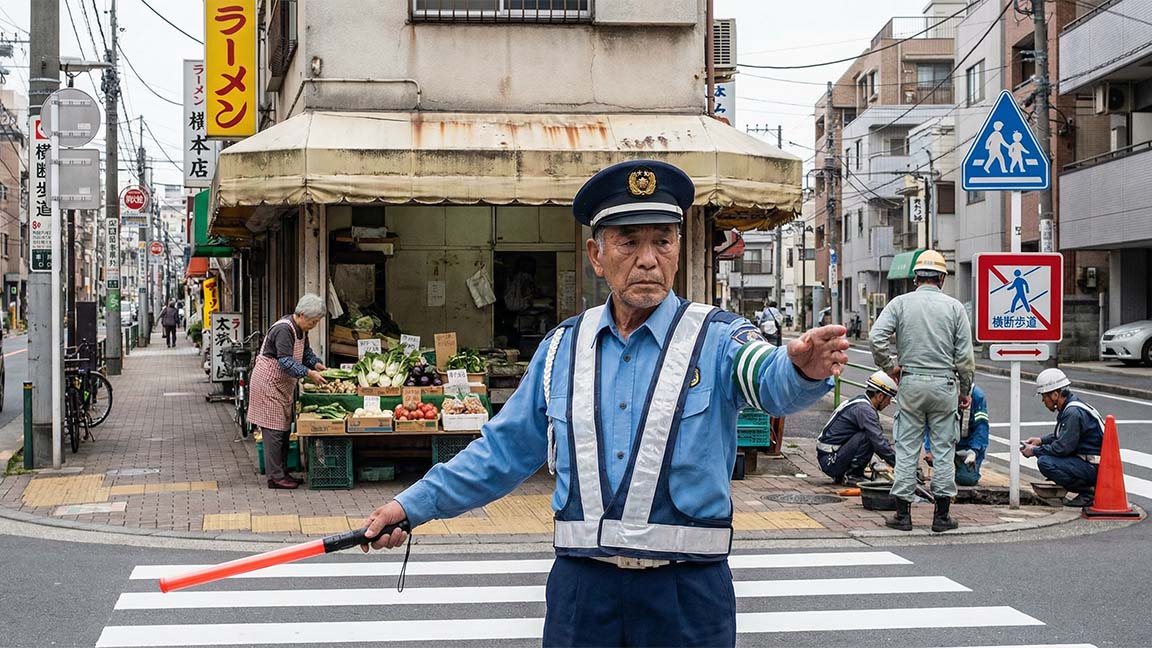
Roughly one in four Japanese citizens aged 65 or older continues to work. That means nearly one in seven workers in Japan is already part of the senior population. These workers are visible across the economy — from agriculture and retail to construction, transportation, cleaning services, and small business ownership.
However, the nature of this work matters. Most older Japanese workers are employed in lower-wage, service-oriented roles rather than white-collar or senior management positions. This reflects both labor demand and structural limits within Japan’s employment system.
Why the Japan Aging Population Workforce Matters Now
Japan’s labor policies did not evolve by choice alone. They were shaped by necessity.
Since the mid-1990s, Japan’s working-age population has declined by more than 10 million people. Each year, more workers exit the labor force than enter it. By 2030, labor shortages are projected to exceed six million workers, creating mounting pressure on productivity and economic growth.
To counter this, Japan has taken deliberate policy steps:
- Companies are legally required to provide employment opportunities to workers up to age 65.
- Firms are encouraged to extend employment options until age 70.
- Government-backed reskilling initiatives, including a multi-year investment exceeding one trillion yen, aim to keep older workers employable.
- Specialized job programs help match seniors with part-time or flexible work.
These measures have helped Japan avoid the kind of sudden labor collapse that economists once feared from rapid population aging.
Business Impact: Stability With Trade-Offs
From a business perspective, the Japan aging population workforce has delivered stability — but not without costs.
On the positive side, higher participation among older workers has softened labor shortages in critical sectors such as logistics, retail, healthcare support, and construction. Companies benefit from institutional knowledge, reliability, and lower turnover among senior employees.
But productivity remains a challenge. Research indicates that as workforces age, overall productivity growth tends to slow, especially when older workers are concentrated in roles that underutilize their experience. Many Japanese firms still follow a seniority-based wage system that peaks in mid-career and resets sharply at retirement age. Workers are often rehired at significantly lower pay, which can reduce motivation and engagement.
This wage compression also limits incentives for businesses to invest heavily in training older employees for higher-skilled or leadership roles.
Market and Economic Implications
At the macroeconomic level, Japan’s approach has helped mitigate fiscal strain but has not fully solved it.
An aging population places pressure on public pension systems, healthcare spending, and government budgets. Japan’s two-tier pension system relies heavily on contributions from active workers, making it particularly sensitive to demographic imbalance. As longevity increases, more retirees depend on fewer contributors.
Keeping older workers employed helps delay pension payouts and expand the tax base, but it does not fully offset rising costs. As a result, many older Japanese continue working primarily out of financial necessity rather than personal fulfillment.
For markets, this dynamic reinforces Japan’s long-term low-growth environment. Labor participation remains high, but consumption growth is constrained by modest wages and cautious household spending among older demographics.
How the United States Compares
The United States is not yet facing the same level of demographic pressure, but the direction is clear.
Americans aged 65 and older make up about 18% of the population today, and by 2030, older adults are projected to outnumber children for the first time in U.S. history. Nearly 550,000 Americans over the age of 80 are still working, according to Census data, and that figure is expected to rise as living costs increase and retirement savings fall short.
Unlike Japan, the U.S. benefits from higher fertility rates, immigration, and a comparatively younger population. However, it also lacks several structural advantages Japan relies on, including universal healthcare and coordinated national labor policies for older workers.
What U.S. Businesses and Policymakers Can Learn
Japan’s experience highlights several lessons that matter for American businesses and investors.
First, aging workforces are not inherently an economic drag — but ignoring job quality is costly. Retaining older workers in low-wage, low-mobility roles limits productivity gains and underutilizes skills.
Second, early investment matters. Japan’s challenges are partly the result of delayed reform. Experts argue the U.S. still has time to expand phased retirement options, redesign jobs for physical sustainability, and protect older workers from sharp income declines late in life.
Third, gender participation plays a critical role. A significantly higher share of Japanese women work part-time across all age groups compared with the U.S. Policies that help workers balance caregiving, parenting, and employment earlier in life can reduce economic vulnerability in later years.
Technology, Automation, and Aging Workers
Technology could reshape the future of aging labor markets — but Japan’s experience shows adoption matters as much as availability.
Despite its reputation for robotics, Japan has relatively low exposure to artificial intelligence in everyday work compared with the U.S. and China. Economists argue AI could ease labor shortages in transportation, construction, clerical work, and services, reducing physical strain on older workers and enabling flexible schedules.
However, limited mobility between high- and low-tech jobs has slowed the transition. Without targeted digital training, older workers risk being excluded from productivity-enhancing roles.
For the U.S., this underscores the importance of lifelong learning and accessible tech education as the workforce ages.
A Forward-Looking Perspective
The Japan aging population workforce shows that longer working lives are not just a social trend — they are becoming an economic necessity in aging societies.
Japan has demonstrated that keeping older workers employed can stabilize labor markets and delay fiscal stress. At the same time, it has revealed the limits of policies that prioritize quantity over quality of employment.
For the United States, the lesson is not to copy Japan’s model wholesale, but to adapt earlier. Thoughtful reforms in retirement policy, worker protections, healthcare access, and skills training could allow aging to become an economic strength rather than a constraint.
The window for proactive adjustment remains open — but, as Japan’s experience makes clear, it does not stay open forever.