

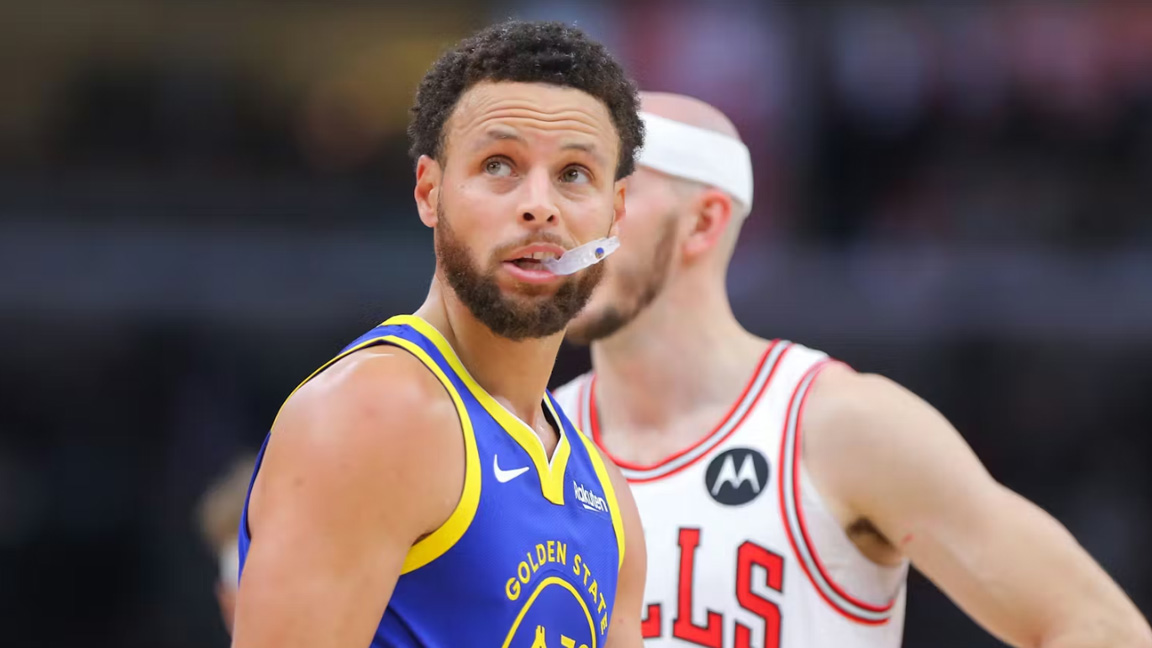
Stephen Curry Under Armour breakup headlines are rippling across the sports and business worlds after the NBA superstar quietly became one of the biggest sneaker free agents in history. Just a day after the split was made public, Curry stepped onto the court for warmups in a pair of Nike shoes — a visual signal that a decade-long partnership had reached its end and a new battle for his signature was beginning.
Key Points
For more than 10 years, Curry and Under Armour were deeply linked, with the four-time NBA champion helping turn the Baltimore-based company into a serious basketball player. Now, as the agreement winds down and Under Armour absorbs nearly $100 million in restructuring costs tied in part to the separation, the future of both the brand and Curry’s next deal is suddenly wide open.
Major sneaker companies — Nike, Adidas and Puma among them — are expected to line up with offers. Curry, for now, remains officially unsigned as a sneaker free agent, even as he continues to wear his Under Armour game shoes until the partnership fully runs its course.
How the Partnership Grew — and Stalled
The Stephen Curry Under Armour breakup marks a dramatic turn from where the relationship started.
In 2015, Curry’s first signature Under Armour shoe hit the market just as he led the Golden State Warriors to an NBA title over LeBron James and the Cleveland Cavaliers. James, one of Nike’s top global stars, was on the other side of the Finals, and Curry’s rise gave Under Armour a rare foothold against the industry leader.
Inside Under Armour, founder and chief executive Kevin Plank openly talked about chasing Nike’s dominance and building a global basketball business that could rival the Jordan Brand. Curry and his advisers envisioned a long-term path along those same lines — a dedicated label that could one day mirror Jordan’s cultural and commercial impact.
Under Armour used Curry as a centerpiece in pushing into footwear after building its name in performance apparel. The company poured marketing efforts into his profile, including overseas tours to markets like China, positioning him alongside other headline names such as NFL icons Tom Brady and Cam Newton.
Yet from early on, there were questions about how far the Curry line could go. While his shoes performed well on the court, they were not embraced as strongly by the fashion-driven sneakerhead culture that powers the bulk of industry sales. The products were seen more as basketball gear than everyday lifestyle sneakers, limiting their reach in the broader market.
Under Armour doesn’t break out Curry Brand revenue, but it projects total basketball sales, including his division, at up to $120 million this year — less than 3% of the roughly $5 billion in annual revenue the company expects. By comparison, Nike’s Jordan Brand alone generated more than $7 billion in its last fiscal year.
For Curry and those around him, that gap underlined how much unrealized potential they believed remained in the partnership.
Why the Stephen Curry Under Armour Breakup Happened Now
Behind the scenes, frustrations had been building for some time.
People familiar with the relationship, who requested anonymity because the details are private, say Curry and his advisers felt Under Armour was not investing enough in growing his brand. The performance of the division, which failed to meet internal expectations, became a persistent concern.
In a joint statement, Under Armour and representatives for Curry framed the decision as a mutual and measured choice. They said the move was made “thoughtfully and respectfully,” with shared pride in what they had built and an understanding that separating was best for both sides. The company said it chose to respond jointly because questions focused on the period in which they worked together.
Under the separation agreement, the partnership will not vanish overnight. Under Armour plans to launch a final Curry-branded shoe in February, with remaining products tied to the collaboration scheduled to roll out through October. After that, the line will close and Curry will be fully free to step into a new endorsement era.
For Under Armour, the Stephen Curry Under Armour breakup feeds into a broader restructuring effort that will increase its costs by nearly $100 million, according to a regulatory filing. Ending the deal is one piece of a larger reset aimed at simplifying the product lineup and returning the company to steadier growth.
Curry Brand, Stock Awards and a Missed Upside
The relationship between Curry and Under Armour deepened in 2020, when he signed a deal to launch Curry Brand as a sub-label under the company’s umbrella. In 2023, that arrangement was extended and expanded beyond just footwear. Curry was named president of the brand and received stock awards valued at $75 million at the time, according to regulatory filings.
Those shares, however, have lost significant value. Under Armour’s stock now trades at about $4, down from a peak above $50 roughly a decade ago and near a 15-year low. The 2020 equity grant was not scheduled to begin vesting until 2029, meaning the long-term upside depended heavily on a successful turnaround.
When the agreement ends early, Curry is entitled to a prorated portion of the stock under the contract’s terms. Under Armour declined to comment on how that piece of the Stephen Curry Under Armour breakup was resolved.
In a separate statement last week, Plank called it “the right moment to let what we created evolve on his terms,” signaling that Curry will now control how his next chapter unfolds. Curry, for his part, thanked Under Armour and said he will focus on “aggressive growth” going forward.
Shifting Priorities: From Basketball to Field Sports
The split is also tied to a strategic pivot inside Under Armour.
Plank, who stepped down as CEO in 2020 but remained chairman, returned to the top job in early 2024 in an effort to revive sales momentum and restore investor confidence. As part of that push, he led a restructuring that included job cuts, greater automation and trimming the number of products the company sells by about 25%.
According to people familiar with the internal strategy, Under Armour has recently steered more resources back toward the field sports that fueled its early rise: football, flag football and baseball. Those areas were seen as higher priorities than basketball in the new plan, even as the company publicly insists it remains committed to hoops.
“Under Armour remains deeply committed to basketball,” the company said, noting that it will continue to develop new products and that NBA guard De’Aaron Fox and college standout MiLaysia Fulwiley, both signed to Curry Brand, remain under contract with Under Armour. The broader Under Armour basketball roster also includes WNBA star Kelsey Plum.
To bolster its presence in football, the company added a group of incoming NFL players this year, headlined by Cam Ward, the No. 1 overall pick in the 2025 draft. By contrast, Curry’s brand signed only one NBA player in the same period — guard Davion Mitchell, now on his third team in five seasons.
Against that backdrop, the Stephen Curry Under Armour breakup reflects a growing mismatch between Curry’s ambitions for his label and the company’s shifting focus.
Caitlin Clark, Missed Bids and Rising Competition
One episode that reportedly stung for Curry and his camp involved the recruitment of Caitlin Clark.
According to people familiar with the situation, Curry and Under Armour made a major push last year to bring the college superstar into the Curry Brand lineup. But the company’s offer fell short of Nike’s total package, and Clark — now a WNBA star — ultimately chose Nike over Under Armour and other suitors.
Industry observers viewed that outcome as a sign of how cautious Under Armour had become about placing big, long-term bets in basketball, even under the Curry Brand umbrella. For Curry, it was another signal that the resources behind his nameplate were not matching the scale of his vision.
Meanwhile, competition across the basketball market has only intensified. Nike remains the dominant force, having signed many of the sport’s top names, including Clark, 2024 Rookie of the Year Victor Wembanyama and reigning NBA Most Valuable Player Shai Gilgeous-Alexander. Adidas has generated buzz with a line tied to Anthony Edwards. New Balance has aligned with Cooper Flagg, the NBA Draft’s top pick. Chinese brands Anta and Li Ning have also made progress in the US.
In that environment, the Stephen Curry Under Armour breakup instantly turns Curry into the most coveted unsigned player in the sneaker world.
Kevin Plank Admits a Story Not Fully Told
Plank has acknowledged that the company did not fully capitalize on Curry’s global star power.
At a Bloomberg conference in September, with Curry sitting beside him, Plank said Under Armour hadn’t done a “good enough job yet” of telling Curry’s story through the Curry Brand. That candid admission underscored the sense that the partnership had not reached the levels both sides expected when they set out to build a Jordan-style franchise.
As part of the announcement of the separation, Under Armour and Curry’s representatives emphasized that they “maintained a healthy professional working relationship throughout the build out of the Curry Brand,” including the joint choice to move on. Both sides have framed the Stephen Curry Under Armour breakup as a mature, if difficult, business decision rather than a public falling-out.
A Rare Free Agent in the Sneaker Market
Curry now occupies a rare position: a four-time NBA champion and globally recognized superstar who is free to sign a fresh signature shoe deal while he is still playing at a high level.
Curry has said he expects to continue his NBA career for another four or five seasons, giving any future partner the chance to market him both during the final stretch of his playing days and into his retirement years. In terms of global profile, he is in a small group of active or recently retired stars, alongside Michael Jordan and LeBron James — both of whom have lifetime agreements with Nike.
Any renewed talks with Nike would carry some history. Curry first signed with the brand when he entered the league in 2009, and Nike had a chance to re-sign him in 2013 as his star began to rise. But according to people familiar with those discussions, Nike executives delivered a disorganized pitch: they mispronounced Curry’s name and used a presentation deck that still had another athlete’s name on one of the slides. That misstep opened the door for Under Armour to land him in the first place.
Despite that, Nike remains the most powerful player in basketball footwear, and industry insiders expect the company — along with rivals like Adidas and Puma — to seriously consider bidding now that the Stephen Curry Under Armour breakup is official.
“New Beginnings” — and One Last Under Armour Run
For the moment, Curry is still finishing out the final phase of his relationship with Under Armour.
After his warmup appearance in Nikes last week, he wore his Under Armour game shoes once the action started. He has not yet begun formal talks with any sneaker companies about a new endorsement deal, according to a person familiar with the situation.
Asked about the Nike shoes at a postgame press conference, Curry described the change as “new beginnings.” He acknowledged that it might look unusual to see him in something other than his own branded sneakers, but added, “I’m going to have some fun with this.”
Curry has been candid about the realities of the business. “The sneaker industry is difficult,” he said at a recent press conference. “You give your best effort to create something sustainable.” With the Stephen Curry Under Armour breakup now public, that effort will likely take place under a different logo.
What the Breakup Means for Both Sides
For Under Armour, losing its most recognizable basketball ambassador is a significant symbolic blow, even as it stresses that it will keep investing in the sport. The company is betting that a sharper focus on its traditional strengths in football and other field sports, a leaner product lineup and automation can restore growth and shareholder confidence.
For Curry, walking away from a long-term equity-based arrangement tied to Under Armour’s stock is a calculated gamble on his own market power. He may have given up a clear, if diminished, path with Curry Brand in exchange for the chance to secure a fresh, potentially massive deal elsewhere — one that aligns more closely with his desire for “aggressive growth” and greater cultural impact.
As the Stephen Curry Under Armour breakup plays out over the coming months, the next move from Nike, Adidas, Puma and other global brands will reveal how much value the market places on pairing with one of basketball’s greatest shooters at this late stage of his career.
However it ends, the split closes a defining chapter for both a global athlete and a once-surging challenger brand, and sets the stage for one of the most closely watched endorsement battles the sneaker industry has seen in years.
FAQ’s
Why did Stephen Curry and Under Armour split?
The breakup reportedly stemmed from Curry’s camp feeling Under Armour underinvested in his brand and shifted priorities away from basketball. Both sides say the decision was mutual and made respectfully.
How much was the Stephen Curry–Under Armour deal worth?
The separation is tied to nearly $100 million in additional restructuring costs for Under Armour. Curry also held a stock-based package initially valued at about $75 million, subject to prorated treatment after the early end.
Will Stephen Curry sign a new shoe deal with Nike?
Curry has not yet announced a new sneaker deal or entered formal talks, according to reports. However, Nike, Adidas, Puma and other major brands are widely expected to pursue him as a top-tier sneaker free agent.
What happens to Curry Brand after the breakup?
Under Armour will release a final Curry shoe in February and continue launching remaining products through October. After that, the Curry Brand line under Under Armour is expected to wind down as Curry moves on.