

Grain futures climbed Monday as signs of progress in Washington raised hopes that the prolonged U.S. government shutdown could be nearing an end, unlocking crucial federal agricultural data that traders have lacked for weeks.
Key Points
Chicago benchmarks advanced across the board in morning trading. Wheat led gains, soybeans firmed, and corn edged higher as investors repositioned for a busy week that may bring both a legislative breakthrough and the return of market-moving statistics from the U.S. Department of Agriculture.
The bid under prices was shaped by two storylines: a potential compromise to reopen the government and anticipation for a long-awaited monthly supply-and-demand update. Together, they were enough to nudge grain futures higher as participants recalibrated risk and prepared for volatility later in the week.
Behind the move was a tentative step forward on Capitol Hill. The Senate advanced a bipartisan plan over the weekend, though a final vote had not been scheduled, and any agreement would still need House approval before heading to the White House. Even without a completed deal, the signal of momentum was enough to spark fresh buying interest in grain futures.
Why grain futures rallied today
- Washington momentum: Traders responded to signs that lawmakers could end the longest shutdown on record, restoring USDA’s full suite of reports and routine communications with markets.
- Data vacuum relief: The shutdown has kept key reports from public view, forcing analysts to rely on private estimates and adding uncertainty to price discovery. The prospect of official data returning reduces guesswork.
- Positioning ahead of Friday: With a monthly supply and demand update on the docket, many market participants opted to reduce short exposure or add longs in grain futures in case data surprises to the upside.
Market analysts said a negotiated reopening in the coming days would remove a major uncertainty overhanging agricultural markets. One senior commodities economist noted in a client note that a brokered agreement could get government agencies back online relatively quickly, which would help normalize reporting and reduce volatility rooted in missing information. Separately, a widely followed research shop cautioned that price swings may intensify this week as traders square positions before Friday’s report while watching for evidence of near-term Chinese buying interest.
USDA data drought nears an end
For weeks, the absence of regular USDA reports has complicated everything from hedging decisions to export planning. Dealers, elevators, and producers have operated with limited official updates on production, usage, and ending stocks.
The market is now focused on Friday’s scheduled World Agricultural Supply and Demand Estimates (WASDE) release, along with updated crop production figures. Corn and soybeans are the central storyline. Traders want clarity on:
- Final U.S. corn and soybean yields and production.
- Changes in domestic feed, crush, and export demand.
- Ending stocks projections and any revisions to global balances.
- The pace of export inspections and sales will once weekly reports resume.
A return of USDA’s data pipeline would also restore confidence in forward bids and basis calculations. Without frequent, authoritative numbers, grain futures can disconnect from physical market signals, widening spreads and injecting noise into intraday moves.
Prices at a glance
As of 10:07 a.m. CT in Chicago:
- Soybeans rose 0.8% to $11.26 per bushel.
- Wheat advanced 1.2% to $5.345 per bushel.
- Corn added 0.5% to $4.2925 per bushel.
Intraday, wheat gained as much as 1.7%, soybeans up to 0.9%, and corn about 0.6% at the session highs.
Context: Why data matter so much to grain markets
Grain markets are uniquely data-sensitive. Planting progress, weekly export sales, monthly balance sheets, and daily flash sales can all shift positioning within hours. When those signals disappear, uncertainty rises:
- Price discovery slows: With fewer official datapoints, models diverge and traders demand a higher risk premium.
- Volatility can increase: Information gaps amplify reactions to private estimates and rumor-driven headlines.
- Physical markets wobble: Basis levels, freight decisions, and forward contracting all rely on regular federal reporting.
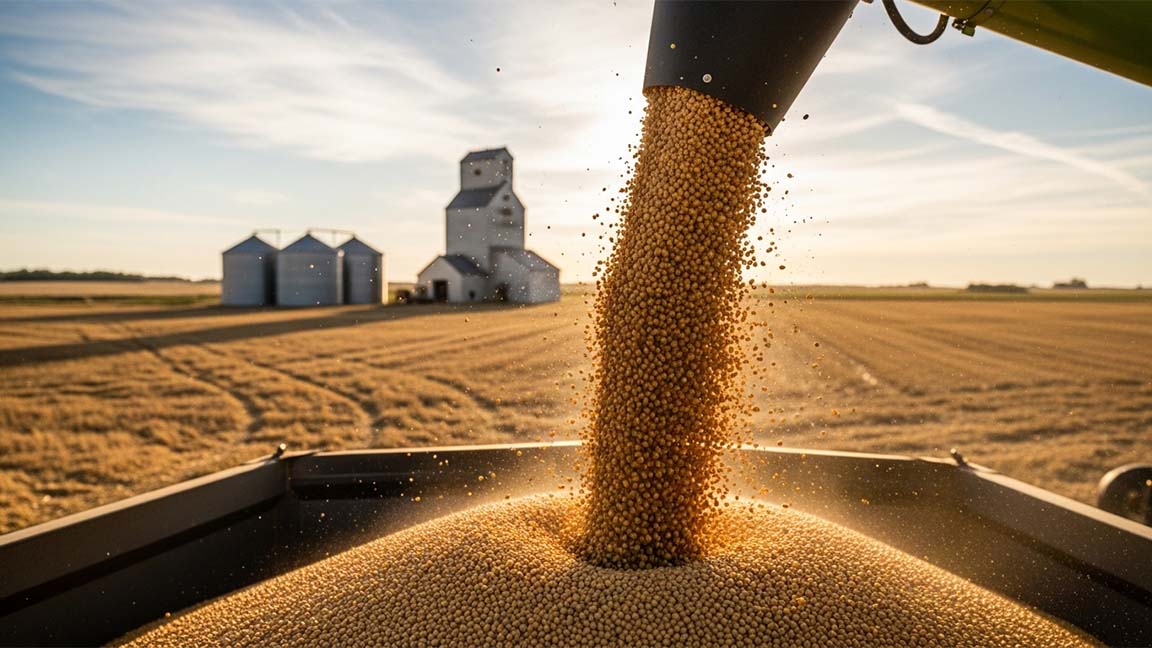
For producers and merchandisers in states like Arkansas—where harvested soybeans are moving by truck during peak activity—better visibility into supply, demand, and export flows helps match local cash bids to global benchmarks. The return of USDA releases would bring that visibility back.
Global crosscurrents still in play
Even as grain futures respond to Washington headlines, global fundamentals remain central:
- South America: Weather across Brazil and Argentina during planting and early development will shape second-half supply prospects. Traders are monitoring precipitation patterns closely, but the immediate driver this week is U.S. policy and data.
- Currency and freight: Dollar strength, barge rates, and ocean freight indices can sway export competitiveness. Any sustained rally in grain futures will be tested against global pricing power.
- Demand signals: China’s near-term appetite—especially for soybeans—remains a swing factor. Market chatter about fresh interest can sharpen day-to-day moves, particularly near key data releases.
What industry voices are saying
- From the brokerage desk: A leading commodities economist at StoneX said the brokered compromise could reopen the government within days, allowing agencies to resume normal operations and giving markets the official data they’ve been missing.
- From research firms: The Hightower Report told clients to expect a choppier tape as traders square up ahead of Friday’s numbers and keep watch for any confirmation of incremental Chinese demand.
Neither view presumes a straight-line rally. The consensus is that grain futures may remain headline-driven until both a final vote in Washington and Friday’s report are in the books.
What to watch next
- Senate calendar: Whether leaders schedule and pass a final measure to reopen the government.
- House action: Timing and details of House consideration and any amendments.
- White House: The path and pace from congressional passage to enactment.
- USDA timeline: How quickly the department can publish delayed or partial reports if operations resume.
- Friday’s WASDE: Production adjustments for corn and soybeans, and any surprises in U.S. and global ending stocks.
A fast resolution could allow USDA to not only release the scheduled balance sheet update but also begin clearing a backlog of weekly export and inspection data. That would help grain futures track fundamentals more closely as the market transitions from the U.S. harvest into the South American weather watch.
The market mechanics behind today’s move
Today’s price action reflected a classic risk recalibration:
- Short covering: With a major report approaching, some funds covered shorts in grain futures to reduce event risk.
- Bullish skew from uncertainty relief: The mere prospect of restored data flow can narrow bid-ask spreads and encourage discretionary buying, particularly in markets that have been starved of official information.
- Spread adjustments: Traders tweaked inter-commodity and calendar spreads as they anticipated fresh guidance on relative tightness between corn, soybeans, and wheat.
If the shutdown ends and USDA posts updates as planned, the market could pivot swiftly from policy-driven moves back to fundamentals—acreage ideas for 2026, export competitiveness versus South America, and domestic usage trends.
Regional and producer implications
- Basis and merchandising: Local basis levels often firm when pipeline clarity improves. Elevators and processors gain confidence to quote forward bids with USDA benchmarks in hand.
- Risk management: Producers who deferred pricing decisions during the data gap may use the first round of reports to lock in margins or layer hedges.
- End users: Feed users and crushers monitor carry and spreads closely. Updated stocks and usage data help refine coverage strategies for winter.
While today’s pop in grain futures is notable, it is the sustainability of demand and the shape of new-crop expectations that will dictate price paths into the first quarter. A steady cadence of USDA releases is essential to that analysis.
The bottom line
Grain futures found support as Washington edged closer to ending the shutdown and as markets braced for the return of USDA’s key reports. The confluence of a potential policy resolution and an imminent balance-sheet update has traders preparing for a more informative, and likely more volatile, week.
Whether today’s firmness evolves into a lasting trend will depend on two things: confirmation that the government reopens and the story Friday’s data tells about supplies and demand. For now, the bias is to respect the headline risk, manage exposure into the report, and let the fresh numbers guide the next leg in grain futures.
FAQ’s
Why are grain futures rising today?
Gains reflect progress toward ending the U.S. government shutdown, which would restore USDA data. Traders are also positioning ahead of Friday’s WASDE, lifting soybeans, wheat, and corn.
When is the next USDA WASDE report and why does it matter?
The monthly WASDE is slated for Friday, typically released around midday ET. Markets will watch corn and soybean production, demand shifts, and ending stocks for direction.
How would a shutdown deal affect grain futures?
A deal would restart USDA reports, reducing uncertainty and improving price discovery. That can compress risk premiums and shift positioning back toward fundamentals.
What are today’s soybean, wheat, and corn prices?
As of 10:07 a.m. CT, soybeans were near $11.26/bu, wheat $5.345/bu, and corn $4.2925/bu. Levels are intraday and can change quickly as headlines and data hit.
Article Source: Bloomberg