

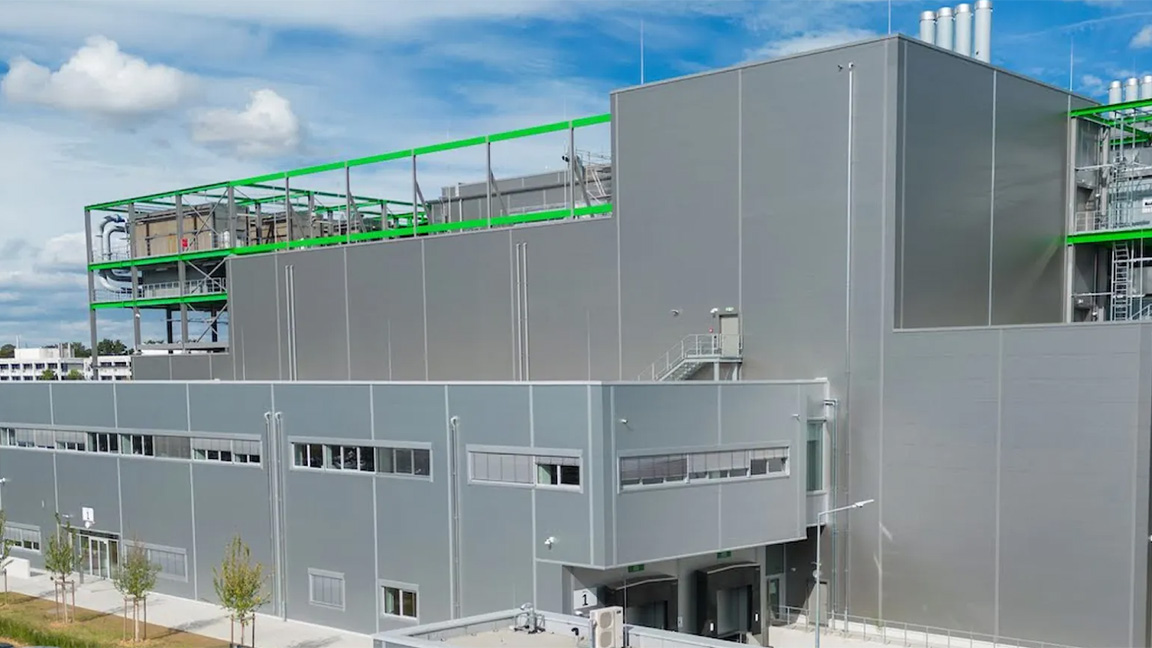
Google investment in Germany will reach €5.5 billion over the next four years, a major push that expands computing resources and operations across the country as Europe races to build capacity for artificial intelligence. Announced Tuesday in Berlin alongside German federal ministers, the plan centers on two new data centers in the Frankfurt region, a core hub for cloud services, even as Google declined to disclose facility sizes.
Key Points
The pledge arrives amid a flurry of high-profile infrastructure commitments across the continent. It underscores how Germany—and Frankfurt in particular—has become a focal point in the competition to host data-heavy workloads from AI training to cloud computing, while policymakers press for scale and sovereign capabilities.
What Google announced in Berlin
At the event in Berlin, Google outlined a multi-year blueprint to deepen its footprint in Europe’s largest economy. The Google investment in Germany includes:
- Up to €5.5 billion in total outlays over four years.
- Two data centers are planned for the Frankfurt region.
- Additional spending is tied to operations, with the German pledge also covering the expansion of three Google offices.
While the company did not specify the capacity or exact size of the Frankfurt-area facilities, the plan highlights the strategic role of Germany’s cloud corridor. The Google investment in Germany aligns with rising demand for compute and storage tied to AI model training and enterprise workloads.
Google described the spending as part of a “continued commitment to Europe.” That framing situates the Google investment in Germany within a broader pattern of cloud, AI, and corporate infrastructure decisions across the region.
Why the €5.5 billion matters
The Google investment in Germany marks one of the country’s most notable recent cloud commitments. The focus on Frankfurt is no accident: it’s a well-established connectivity hub, home to major network exchanges and enterprise customers. Placing two data centers there positions Google Cloud to serve both domestic and cross-border demand.
More broadly, the Google investment in Germany arrives as European leaders push to prioritize data centers—often referred to as “gigafactories” for AI—capable of training and maintaining increasingly complex models. That policy emphasis aims to avoid lagging behind North America and Asia in computing availability, a prerequisite for scaling AI-driven products and services.
Europe’s race to scale AI infrastructure
Momentum across Europe has accelerated in recent weeks:
- Nvidia and Deutsche Telekom unveiled plans for a €1 billion data center in Munich, set to open in early 2026.
- Microsoft said earlier Tuesday it would commit $10 billion to a data center hub in Portugal.
Those moves bracket the Google investment in Germany within a broader surge of capital aimed at building AI-ready infrastructure across the European Union. Taken together, these projects suggest a continental strategy: anchor capacity in major economic centers, add regional hubs, and tie them together with modern networks to support cloud, enterprise, and AI workloads.
The Google investment in Germany complements that map. By concentrating in Frankfurt, Google aligns with enterprise demand patterns while responding to policymakers who have urged companies to build at scale within the EU.
Regulatory backdrop and Europe strategy
For years, Google has navigated a patchwork of privacy, antitrust, and copyright actions across Europe. Within that context, the Google investment in Germany serves both commercial and strategic aims: expanding local infrastructure and signaling alignment with European priorities on data residency, resilience, and AI readiness.
The company’s broader regional momentum has been visible. In September, Google announced plans to spend £5 billion in the UK over the next two years. That prior UK move, when paired with the Google investment in Germany, reflects a deliberate effort to position infrastructure where demand and policy intersect.
How Germany fits into Alphabet’s global spending
Alphabet’s capital expenditure outlook sets the stage for these regional calls. Globally, the company expects capex to be as high as $93 billion in 2025. Within that umbrella, the Google investment in Germany represents a targeted deployment of resources to serve a key market and one of Europe’s principal data center clusters.
By laying out a four-year horizon, the Google investment in Germany implies a phased approach. That timeline gives space to bring sites online, scale operations, and sequence additional investments as utilization grows. It also dovetails with the EU’s push for “gigafactories,” where large, expandable facilities are designed to meet the steep compute curve AI demands.
Details and timing
- Announcement: Tuesday in Berlin, alongside German federal ministers.
- Geography: Frankfurt region for two data centers; expansion of three Google offices in Germany.
- Scope: Computing resources and operations; sizes not specified.
- Duration: Four years for the Google investment in Germany.
These details point to a practical playbook: build where connectivity and customers converge, commit multi-year capital, and keep options open to scale as AI workloads intensify.
Competitive landscape
The data center rush isn’t happening in isolation:
- The Munich project by Nvidia and Deutsche Telekom, targeted for early 2026, suggests diversified approaches to AI infrastructure in Germany—Frankfurt for cloud density, Munich for additional capacity and ecosystem development.
- Microsoft’s Portugal investment highlights a complementary strategy of distributing AI-ready assets across the EU.
Seen against this backdrop, the Google investment in Germany is both a competitive response and a market-maker. It sets expectations for additional commitments while reinforcing Germany’s role as a core node for Europe’s digital economy.
Signals to watch next
The Google investment in Germany raises several near-term watchpoints:
- Site specifics: Capacity, power sourcing, and connectivity details for the Frankfurt region facilities as plans advance.
- Phasing: How the four-year schedule translates into construction milestones and service availability.
- Regional interplay: Interactions between the Frankfurt sites, Munich’s planned build, and other EU hubs, including Portugal.
- Policy alignment: How evolving EU and German regulations—particularly around AI and data—shape deployment and operations.
As those details clarify, the Google investment in Germany could help define standards for scale, sustainability, and AI model support across European data centers.
Market and policy context
European officials have pushed for more locally anchored infrastructure to support AI, frequently invoking the need for “gigafactories” capable of training and maintaining advanced models. The Google investment in Germany aligns with that mandate by committing long-term capital to a market where enterprise demand and policy objectives overlap.
For corporations evaluating AI adoption, capacity is increasingly a strategic variable. Investments like the Google investment in Germany are meant to ensure that computing availability doesn’t become the bottleneck for deploying AI across industries.
Reactions and momentum
While Google’s statement framed the plan as a continued commitment to Europe, the presence of German federal ministers at the announcement illustrates governmental interest in major infrastructure deployments. Paired with recent German and EU developments—from Munich’s upcoming site to broader policy calls—the Google investment in Germany reflects growing coordination between the private and public sectors around AI-readiness.
In practical terms, enterprises in Germany and across the region could benefit from reduced latency, expanded capacity, and additional options for data residency as facilities come online. That, in turn, supports cloud migration and AI use cases that depend on reliable and scalable compute.
Outlook
With €5.5 billion committed over four years, the Google investment in Germany positions the company to serve rising demand for compute and storage, deepen its European cloud presence, and contribute to the continent’s AI ambitions. Alongside parallel builds by leading tech and telecom players, the investment suggests Europe’s data center footprint is entering a new phase—bigger, more distributed, and designed for the AI era.
As project details emerge—particularly around the Frankfurt sites’ specifications and rollout cadence—the Google investment in Germany will be a bellwether for how quickly Europe can translate capital commitments into operational AI infrastructure.
FAQ’s
What is the value and timeline of Google’s plan in Germany?
Google will invest €5.5 billion over the next four years in computing resources and operations. The announcement was made on Tuesday in Berlin with German federal ministers.
Where will the new Google data centers be located?
Two data centers are planned for the Frankfurt region, a key cloud hub. Google has not disclosed the size or capacity of the facilities.
How does this compare with other recent European data center investments?
Nvidia and Deutsche Telekom plan a €1 billion Munich data center opening in early 2026. Microsoft announced a $10 billion hub in Portugal, and Google earmarked £5 billion for the UK.
Is this tied to Europe’s AI and “gigafactory” push?
Yes. EU leaders are prioritizing AI-ready data center “gigafactories” to train and maintain complex models. Google calls the pledge a continued commitment to Europe.