

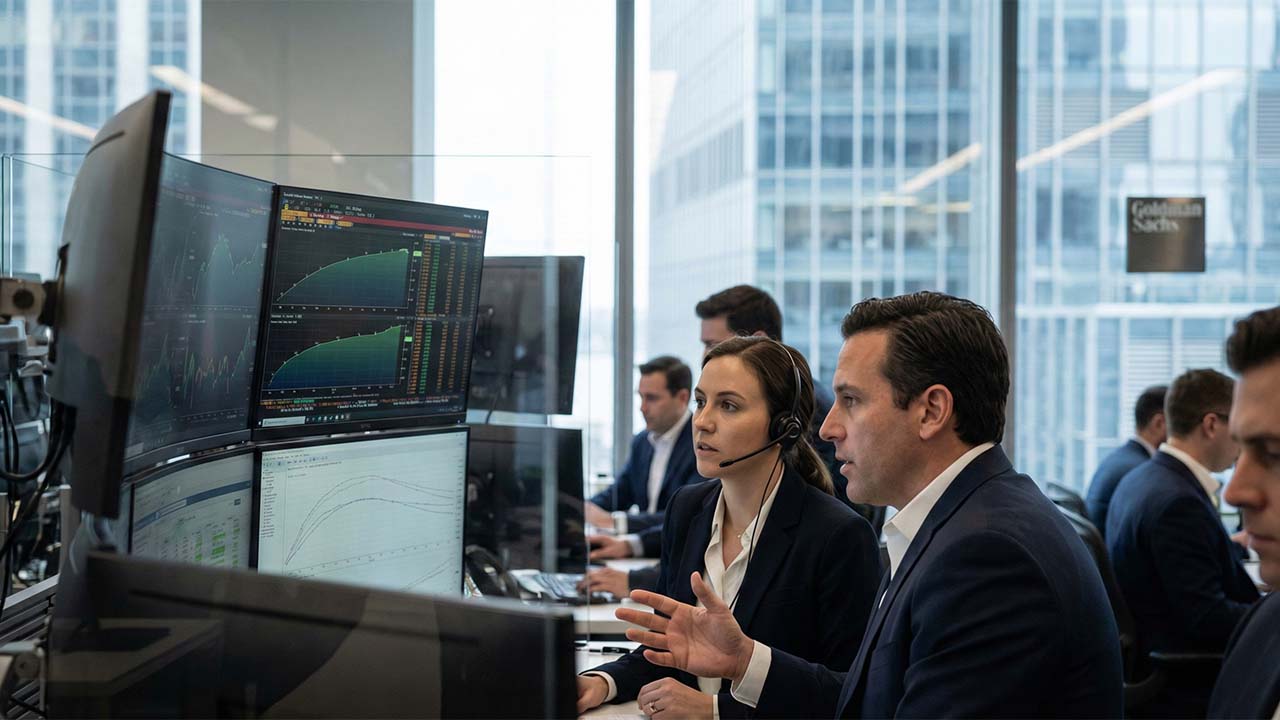
The Goldman Sachs US dollar bond sale is back in focus just days after the Wall Street giant completed the largest bond offering ever by a U.S. bank. In a market already on pace for a historic January, Goldman’s return underscores how aggressively major lenders are tapping investor demand — and why the timing matters for businesses, markets, and capital allocation decisions across the financial system.
Earlier this month, Goldman Sachs Group Inc. raised $16 billion in a landmark bond sale that set a new record for U.S. banks. Now, barely more than a week later, the firm is back in the US dollar bond market, offering 15-year subordinated fixed-rate reset notes. According to people familiar with the deal, initial price discussions are around 1.4 percentage points above the U.S. government benchmark.
This rapid follow-up issuance is not just about Goldman’s balance sheet. It reflects a broader reopening of the investment-grade bond market, strengthening investor appetite for financial debt, and a January issuance pace that could surpass $200 billion — a milestone never reached before in the first month of the year.
What Happened and Who’s Involved
Goldman’s latest offering consists of long-dated subordinated debt, a form of borrowing that ranks below senior bonds but above equity in a firm’s capital structure. These instruments typically offer higher yields to compensate investors for added risk, while allowing banks to bolster regulatory capital buffers.
The deal arrives amid heavy issuance activity across Wall Street. Dealers estimate roughly $35 billion in U.S. investment-grade bond sales this week alone. If those projections hold, January 2026 will mark the strongest start to the year ever for corporate debt issuance.
Goldman was at the center of the early-January borrowing surge, moving swiftly after reporting earnings. That timing proved critical, allowing the firm to capitalize on relatively stable market conditions and strong demand for high-quality credit.
Why This Matters Now
The Goldman Sachs US dollar bond sale is significant because it highlights how quickly confidence has returned to credit markets after months of cautious positioning. Large banks are often among the first to test investor sentiment, and their success tends to set the tone for broader corporate borrowing.
For Goldman, issuing again so soon after a record deal suggests two things: confidence in investor demand and a strategic decision to lock in long-term funding while market conditions remain favorable. Subordinated debt, in particular, helps strengthen capital ratios without diluting shareholders — an important consideration for systemically important banks.
At a market level, the surge in issuance reflects a recalibration of risk appetite. Investors are once again willing to commit capital to long-dated bank debt, even at spreads that acknowledge lingering uncertainty.
Impact on Businesses and the Banking Sector
For banks, the renewed pace of bond issuance has direct implications for funding costs and strategic flexibility. Successful deals like the Goldman Sachs US dollar bond sale allow lenders to refinance existing obligations, extend maturities, and improve capital structures.
This, in turn, supports broader lending capacity. When large banks secure stable long-term funding, they are better positioned to provide credit to corporations, support mergers and acquisitions, and finance large-scale projects.
For non-financial businesses, the signal is equally important. Strong demand for bank debt often precedes increased activity in the broader investment-grade market, potentially opening a window for corporations to issue bonds on more predictable terms.
Market and Investor Implications
From an investor perspective, Goldman’s return offers insight into how risk is being priced in early 2026. Subordinated bank bonds typically attract institutional buyers seeking yield without venturing too far down the credit spectrum.
The pricing discussions — about 1.4 percentage points above government benchmarks — reflect a balance between caution and confidence. Investors are demanding compensation for duration and subordination risk, yet they are still willing to absorb sizable supply from a major financial institution.
If January issuance does surpass $200 billion, it would reinforce the idea that capital markets have entered a phase of normalization. That environment tends to favor disciplined issuers and reward investors who can selectively allocate to higher-quality credits.
Why Goldman’s Timing Stands Out
Goldman’s decision to re-enter the market so quickly after its record deal is also a tactical move. Early-year issuance often benefits from fresh portfolio allocations and fewer competing deals. By acting decisively, Goldman reduced execution risk and captured investor attention.
The Goldman Sachs US dollar bond sale also serves as a benchmark for other banks considering similar transactions. Successful pricing and strong demand could encourage peers to accelerate their own funding plans, adding momentum to the market.
Broader Outlook for the US Dollar Bond Market
While no single deal defines a market, Goldman’s activity adds weight to the narrative that investment-grade issuance is regaining its footing. Banks, in particular, appear eager to take advantage of receptive conditions, even as they remain mindful of regulatory and capital requirements.
For policymakers and market watchers, the pace of issuance will be closely monitored. Sustained activity at this level suggests confidence in the financial system’s resilience and the ability of markets to absorb large volumes of debt.
Final Takeaway
The Goldman Sachs US dollar bond sale is more than a follow-up transaction — it is a signal. It shows how quickly confidence can translate into capital-raising momentum, how major banks are positioning themselves for the year ahead, and why investors are once again engaging with long-dated financial debt.
As January draws to a close, Goldman’s return to the market highlights a key reality for 2026: access to capital is opening up, but discipline in pricing and structure remains essential. For businesses, investors, and markets alike, that balance will shape the months ahead.