

Key Points
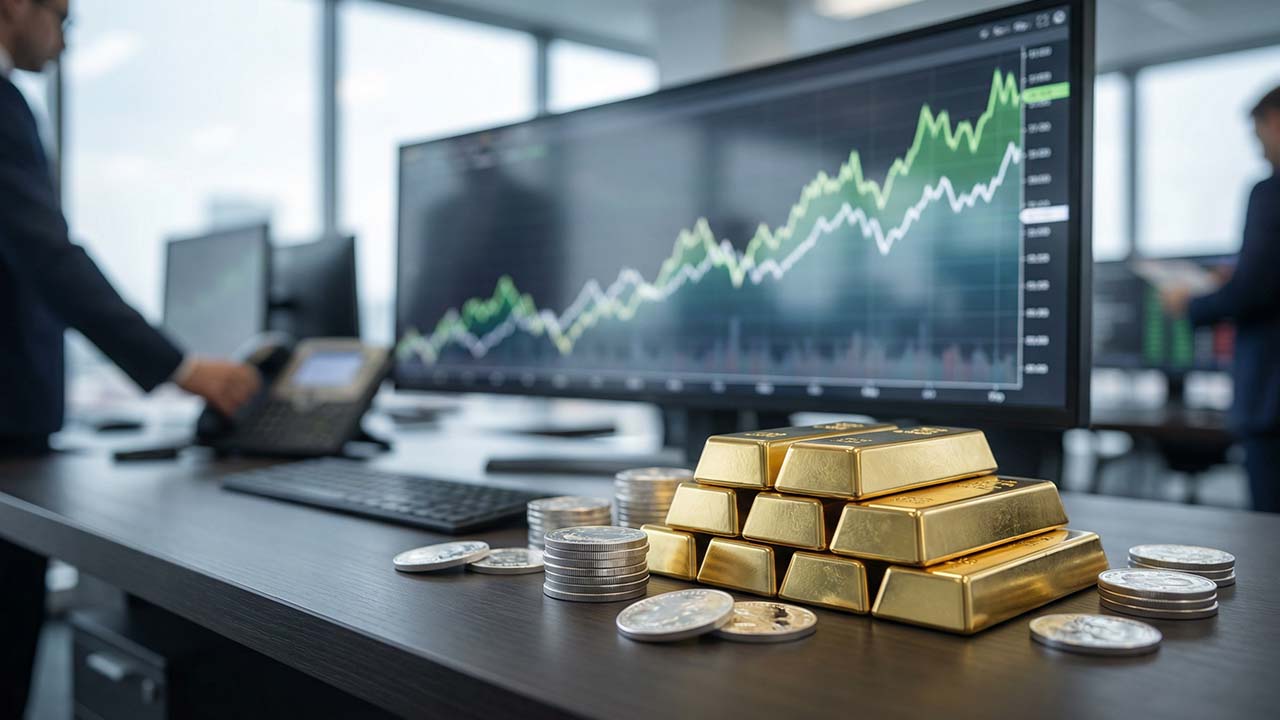
Gold and silver prices surge at a moment when global markets are navigating an unusual mix of political disruption, resilient risk appetite, and shifting expectations about the economic outlook. The rally in precious metals comes as investors digest the dramatic developments in Venezuela alongside continued strength in U.S. equities, a steady dollar, and softer bond yields — a combination that underscores how uncertainty, rather than panic, is shaping market behavior.
On Monday, spot gold climbed above $4,400 an ounce, extending what has already become the strongest annual performance for the metal since 1979. Silver followed a similar trajectory, pushing higher as demand for hard assets strengthened. The move occurred even as U.S. stock indexes rallied, with the Dow Jones Industrial Average reaching a record and technology stocks powering gains across the S&P 500 and Nasdaq 100.
This rare alignment — rising equities alongside rising safe-haven assets — reflects a market that is hedging risk rather than fleeing it.
What happened in the markets
The immediate catalyst behind the renewed strength in precious metals was the geopolitical shock stemming from Venezuela. The capture of President Nicolás Maduro by U.S. forces over the weekend sent ripples through global markets, raising questions about political stability in Latin America, energy supply implications, and the broader geopolitical balance.
Gold and silver prices surge typically when uncertainty rises, and Monday’s price action followed that familiar pattern. However, unlike past geopolitical crises that triggered sharp sell-offs in equities, investors this time appeared more confident that global growth — particularly in the United States — can absorb political disruptions without derailing the broader bull market.
U.S. stocks rose sharply, led by megacap technology companies such as Amazon and Tesla. Energy stocks also advanced as oil prices climbed, reflecting speculation that changes in Venezuela’s political landscape could eventually reshape its energy sector. Meanwhile, the dollar edged slightly higher, another sign that investors were not aggressively abandoning risk assets.
Bond markets told a complementary story. The yield on the U.S. 10-year Treasury slipped to around 4.17%, signaling modest demand for safety without a full-scale flight into government debt.
Why this rally matters now
The fact that gold and silver prices surge while stocks also rally is significant. Traditionally, precious metals benefit when fear dominates markets. This time, the rally appears driven by a more nuanced calculation.
Investors are responding to multiple layers of risk at once: geopolitical uncertainty tied to Venezuela, questions about global political alignments, softening U.S. manufacturing data, and ongoing debate about the future path of U.S. monetary policy. Rather than choosing a single narrative, markets are spreading exposure across both growth assets and defensive hedges.
For gold, the rally also builds on a longer-term trend. Prices have already been elevated due to sustained demand from investors seeking protection against policy uncertainty, fiscal concerns, and currency volatility. Monday’s gains reinforced gold’s role not as a panic asset, but as a strategic component of diversified portfolios.
Silver, often seen as both an industrial metal and a store of value, benefited from similar dynamics. Its move suggests that investors are not only hedging against risk, but also positioning for scenarios in which industrial demand remains intact despite political disruptions.
The Venezuela factor and commodity psychology
Events in Venezuela added fresh impetus to precious metals because they intersect political risk with energy markets and U.S. foreign policy. Venezuela holds some of the world’s largest proven oil reserves, and any change in leadership has implications far beyond its borders.
Oil prices rose as traders weighed potential disruptions and longer-term restructuring of the country’s energy sector. Higher energy prices often reinforce inflation sensitivities, which historically support gold and silver prices. Even without immediate supply shocks, the perception of instability can lift commodity risk premiums.
For market participants, Venezuela also serves as a reminder that geopolitical surprises can emerge quickly and with limited warning. That uncertainty tends to favor assets with perceived durability, particularly when valuations in other markets are already elevated.
Importantly, analysts noted that while the geopolitical ramifications are potentially significant, markets are treating them as a background risk rather than an existential threat to global growth. This balanced response helps explain why gold and silver prices surge alongside continued appetite for equities.
Impact on businesses
For businesses, especially those exposed to commodities, the rally in precious metals carries both direct and indirect consequences.
Mining companies producing gold and silver benefit immediately from higher spot prices, which can improve margins and cash flow. Shares of precious metals producers advanced alongside the rally, reflecting investor expectations of stronger earnings performance if prices remain elevated.
However, higher metals prices also affect manufacturers and technology firms that rely on silver for industrial uses. While short-term price increases may be manageable, sustained strength could eventually pressure input costs, particularly for companies operating with thin margins.
Energy companies, meanwhile, are closely watching developments in Venezuela. Any potential reopening or restructuring of its oil industry under U.S. involvement could reshape competitive dynamics in global energy markets, influencing investment decisions and long-term supply planning.
Market implications for investors
From an investment perspective, the surge in precious metals highlights a shift in risk management rather than outright fear. Portfolio managers appear to be adding exposure to gold and silver as insurance against tail risks, while maintaining positions in equities tied to technology, energy, and financials.
The behavior of the dollar and Treasury yields reinforces this interpretation. The greenback’s stability suggests continued confidence in U.S. assets, while the modest decline in yields points to selective demand for safety rather than aggressive de-risking.
For investors, this environment rewards balance. Assets that offer growth potential remain attractive, but the renewed interest in gold and silver signals recognition that geopolitical events and policy uncertainty still matter — even during a bull market.
Cryptocurrencies also rose, with Bitcoin and Ether posting gains, further illustrating that investors are spreading exposure across multiple alternative assets rather than concentrating risk in a single hedge.
What it means for consumers
While consumers do not feel the impact of rising precious metals prices immediately, there are indirect effects worth noting.
Gold prices influence jewelry markets, particularly in regions where gold is a traditional store of wealth. Sustained price increases can dampen consumer demand or push buyers toward lighter or alternative designs.
Silver’s role in industrial production means higher prices could eventually filter into electronics and consumer goods, though such effects tend to emerge gradually and depend on how long prices remain elevated.
More broadly, rising gold prices often reflect concerns about inflation or economic stability. Even if inflation is not currently accelerating, consumer sentiment can be shaped by headlines suggesting heightened global uncertainty.
The broader economic backdrop
The rally in precious metals comes against a mixed U.S. economic backdrop. Manufacturing activity shrank in December by the most since 2024, highlighting ongoing pressure in parts of the industrial economy. At the same time, labor market data and consumer spending have remained resilient, supporting growth expectations.
This uneven landscape reinforces the appeal of diversification. Gold and silver prices surge not because investors expect immediate economic distress, but because they are navigating an environment where signals are increasingly complex.
Attention now turns to upcoming U.S. economic data, including jobs figures, housing starts, and consumer sentiment readings. These reports will help shape expectations about monetary policy and economic momentum, both of which influence demand for precious metals.
Looking ahead
The latest rally underscores that gold and silver have reasserted their relevance in modern portfolios. Even in a market dominated by technology optimism and strong equity performance, precious metals continue to serve as a stabilizing force when uncertainty rises.
Rather than signaling alarm, the surge reflects a recalibration of risk — one that acknowledges geopolitical developments, policy questions, and uneven economic data without abandoning confidence in growth.
For businesses, investors, and consumers alike, the message is clear: diversification remains essential. Gold and silver prices surge not in isolation, but as part of a broader market response to a world where political and economic forces remain tightly intertwined.