

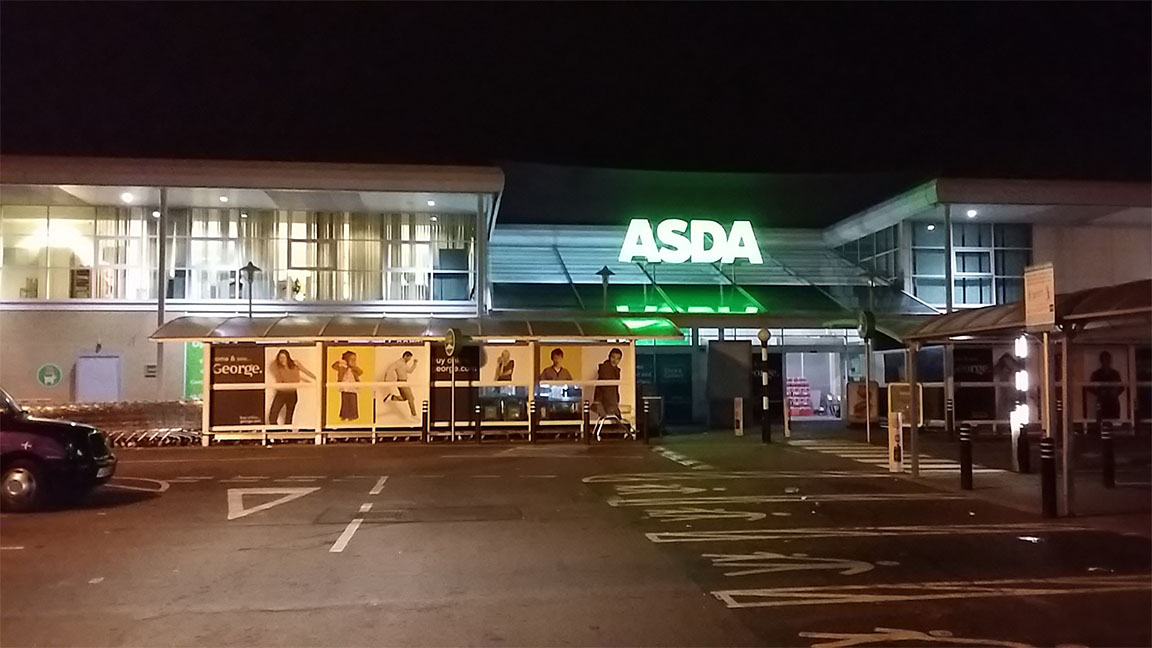
The Asda Fitch downgrade has pushed the UK value supermarket chain deeper into junk territory, as its latest property moves and aggressive price cuts collide with a highly competitive grocery market and weak consumer sentiment.
Key Points
Fitch Ratings lowered Asda’s issuer entity Bellis Finco plc to B from B+ and attached a negative outlook, citing a mix of higher leverage from recent sale‑and‑leaseback transactions and growing pressure on earnings.
The decision underscores how Asda’s efforts to raise cash and win back shoppers are also increasing financial strain at a time when margins are already under threat.
Fitch Pushes Asda Deeper Into Junk Territory
In its new report, Fitch said it is cutting Asda’s Bellis Finco plc rating to B with a negative outlook, moving the company further into junk status.
The downgrade is driven in part by recently signed sale‑and‑leaseback deals, including one with US asset manager Blue Owl Capital, which Asda promoted as generating £568 million ($745 million) of proceeds.
According to Fitch, those transactions are expected to increase leverage and weigh on cash flow, adding to the company’s financial challenges.
The rating agency warned that the negative outlook reflects the risk that profit margins could shrink more sharply than previously anticipated.
That concern is tied directly to the supermarket’s decision to pursue deeper price cuts as it battles to regain market share in a crowded UK food retail sector.
The Asda Fitch downgrade signals that ratings analysts see limited room for error as the retailer juggles balance‑sheet pressures and an intensifying price war.
Sale‑and‑Leaseback Deals Raise Cash but Add Pressure
Asda announced two major sale‑and‑leaseback transactions last week, selling off underlying properties and then continuing to occupy them as a tenant.
As part of these moves, 20 stores and a depot in Lutterworth were sold to Blue Owl, with Asda entering into lease agreements to keep operating from the sites.
The company highlighted the deals as a way to raise £568 million in cash, but Fitch’s assessment is more cautious.
The agency argues that while the transactions unlock capital, they also increase leverage and create ongoing rental obligations that will put additional pressure on cash flow.
Fitch noted that the sale‑and‑leaseback transactions may require Asda to commit more capital expenditure in the coming years.
Analysts estimate that this combination of higher fixed costs and extra investment will likely reduce free cash flow to neutral over the 2026 to 2028 period.
Within the context of the Asda Fitch downgrade, these property deals are viewed not only as a liquidity measure but also as a source of long‑term financial strain.
Price War Intensifies as Asda Fights for Market Share
Even as it reworks its property portfolio, Asda is doubling down on price cuts in an effort to recapture customers.
Fitch analysts said earnings are under pressure because the retailer is going deeper on pricing to claw back market share in a highly contested UK grocery sector.
The negative outlook attached to the Asda Fitch downgrade reflects the possibility that margins will contract faster and more severely than previously forecast as this competition plays out.
“We expect the UK food retail market to remain highly competitive in 2026 due to weak consumer sentiment,” wrote Fitch analysts, including Clarisse Plissonneau.
Asda has been struggling with softer demand and stiff rivalry from discounters, including German chain Lidl.
Market‑share data underline the challenge: Asda’s share fell to 11.6% in the 12 weeks to Nov. 2, down from 12.6% a year earlier.
That one‑percentage‑point drop shows how difficult it has been for the chain to defend its position even as it sharpens prices.
In that environment, the more Asda leans into discounts to attract shoppers, the greater the risk to its profitability and, in turn, its credit profile.
Bonds Steady Despite the Asda Fitch Downgrade
While the rating action is significant, the immediate reaction in Asda’s debt market was muted.
Notes issued by Bellis Acquisition Company PLC were little changed after Fitch announced the downgrade and negative outlook.
Asda’s €700 million bond maturing in 2031 was quoted at 97 cents on the euro, according to data compiled by Bloomberg.
The limited price move suggests that some investors may have already anticipated a weaker rating or see the impact as manageable in the near term.
However, the Asda Fitch downgrade formalizes the increased risk assessment from a major ratings firm, which could shape sentiment over time if operating performance does not stabilize.
Bondholders will be watching closely to see whether the combination of higher leverage, additional rental commitments, and tighter margins affects the company’s ability to generate steady cash flow.
Competitive Outlook Remains Harsh
Fitch’s commentary makes clear that its concerns extend beyond one‑off transactions or a single year’s performance.
The agency expects the UK food retail sector to stay “highly competitive” into 2026, linking this to subdued consumer confidence.
For Asda, that means continued pressure from discounters and rivals that are also vying for price‑sensitive shoppers.
The Asda Fitch downgrade reflects a view that the company is entering this extended period of competition with a heavier financial load and less flexibility.
With market share already slipping, the supermarket has little choice but to remain aggressive on pricing, even as that strategy erodes margins.
Layered on top of that are the new lease and capex commitments tied to the sale‑and‑leaseback strategy, which Fitch believes will hold free cash flow to roughly neutral over several years.
In such a setting, any further deterioration in consumer demand or intensification of the price war could leave Asda facing even tighter financial constraints.
What the Asda Fitch Downgrade Signals for the Years Ahead
Taken together, the Asda Fitch downgrade and negative outlook highlight a delicate balance for the retailer.
On one side, the company is using asset sales and sharper pricing to raise funds and fight for customers.
On the other, those same moves are driving up leverage, straining cash flow, and exposing the business to thinner margins in an already unforgiving market.
Fitch’s decision to move Asda’s Bellis Finco plc rating to B, deeper into junk, shows that the rating agency sees rising risks in how this strategy plays out.
The sale‑and‑leaseback transactions bring in substantial cash but also lock in ongoing costs and potential additional capital spending.
At the same time, the battle to reclaim market share from discounters like Lidl is forcing Asda to accept lower profitability, at least in the near term.
With its bonds little changed after the move, investors have yet to render a decisive verdict.
But as competition continues into 2026 and free cash flow stays under pressure, both Fitch and bondholders will be watching whether Asda can stabilize its performance without further weakening its credit standing.
FAQ’s
What is the Asda Fitch downgrade and what does a B rating mean?
Fitch downgraded Asda’s issuer entity Bellis Finco plc to B from B+, pushing it deeper into junk status. A B rating signals higher credit risk and less financial flexibility compared with investment‑grade companies.
Why did Fitch downgrade Asda’s credit rating?
The Asda Fitch downgrade was driven by recent sale‑and‑leaseback deals that raise leverage and pressure cash flow, plus weaker earnings as the retailer cuts prices to fight a fierce UK grocery price war.
How do Asda’s sale‑and‑leaseback transactions affect its finances?
The deals generated about £568 million in proceeds but added ongoing rental and capex obligations. Fitch expects these commitments to keep Asda’s free cash flow roughly neutral between 2026 and 2028.
What does the Asda Fitch downgrade mean for investors and bond prices?
While Asda’s bonds moved little immediately after the downgrade, the lower rating and negative outlook highlight rising risk. Over time, investors may demand higher yields if margins and cash flow remain under pressure.