
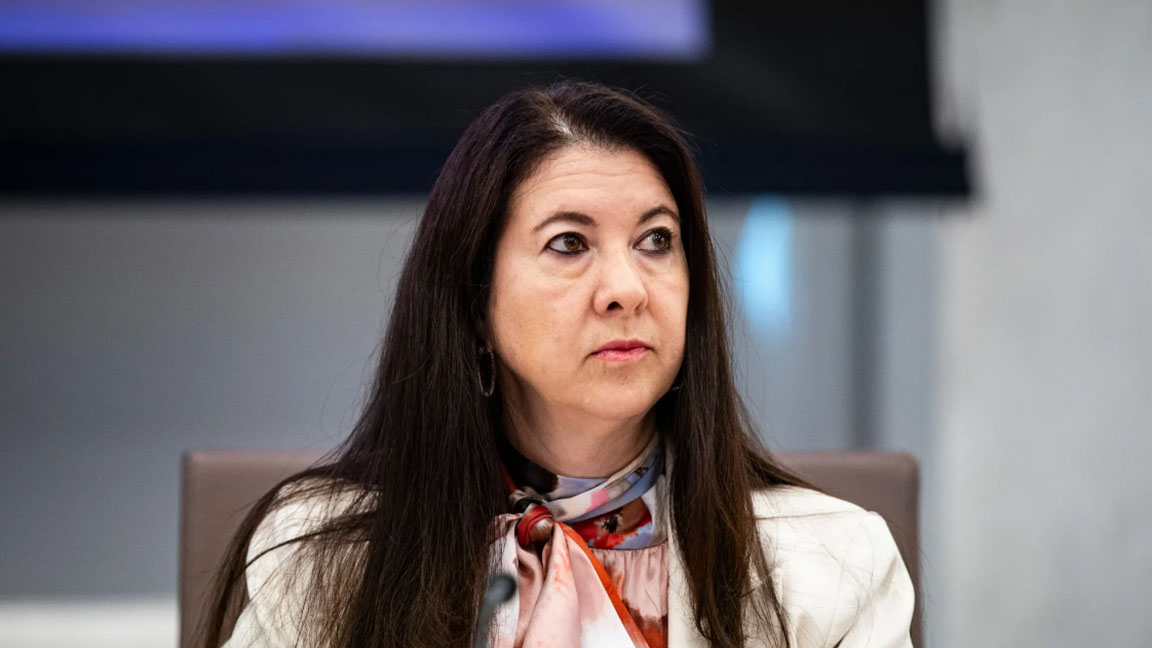
Adriana Kugler trading violations prompted an abrupt resignation from the Federal Reserve’s Board of Governors after Chair Jerome Powell declined her request for a waiver to address impermissible financial holdings, according to a Fed official.
Key Points
Kugler stepped down in early August after new disclosures—later declined for certification by ethics officials—revealed financial activity that ran afoul of the central bank’s rules. The matter has been referred to the Fed’s independent Office of Inspector General (OIG), underscoring the central bank’s post-2020 push to tighten standards and preserve public trust.
Powell Denied Waiver as Ethics Concerns Mounted
Kugler announced on Aug. 1 that she would resign effective Aug. 8, shortly after missing the Fed’s July 29–30 policy meeting. At the time, the Fed said her absence was due to a “personal matter.”
Ahead of that meeting, she sought permission to conduct financial transactions aimed at fixing what a Fed official described as impermissible holdings. She asked for a waiver to rules that require top officials to obtain clearance before certain trades and that prohibit transactions during blackout periods surrounding policy meetings. Powell denied the request.
The denial left no practical path to remediate the holdings under the expedited terms she sought, setting the stage for her departure.
Adriana Kugler Trading Violations Detailed in 2024 Activity
Documents posted to the Office of Government Ethics (OGE) and released Saturday show that Fed ethics officials declined to certify Kugler’s latest disclosures and referred the matter to the Board’s inspector general. The OGE also declined to certify the newly released reports.
Those disclosures cited financial activity that violated the Fed’s internal ethics rules, including previously undisclosed trading in individual stocks during 2024, prohibited for senior Fed officials and their immediate family members. The list included Materialise NV, Southwest Airlines, Cava Group, Apple, and Caterpillar.
Some trades also occurred during blackout windows that straddle Federal Open Market Committee (FOMC) meetings—periods in which no transactions are allowed. Examples include the purchase of Cava shares on March 13, 2024, days before the March 19–20 meeting, and the sale of Southwest shares on April 29, 2024, the eve of the April 30–May 1 meeting. The disclosures also list several fund transactions within blackout periods.
A footnote tied to the Jan. 2, 2024, sale of Materialise NV shares stated: “Consistent with her September 15, 2024, disclosure, certain trading activity was carried out by Dr. Kugler’s spouse, without Dr. Kugler’s knowledge, and she affirms that her spouse did not intend to violate any rules or policies.”
Kugler declined to comment.
Oversight Response and Certification Decisions
In the financial disclosure released Saturday, Fed ethics official Sean Croston wrote: “Consistent with our standard practices and policies, matters related to this disclosure were referred earlier this year by the Board’s Ethics Office to the independent Office of Inspector General for the Board of Governors of the Federal Reserve System.”
The filing—submitted roughly a month after her departure—covers calendar years 2024 and 2025 through her resignation. Top Fed officials must file annual disclosures, post-employment disclosures, and periodic transaction reports. In this case, Adriana Kugler trading violations cited in the latest documents were not certified by the Fed’s ethics team or the OGE, prompting the referral.
Blackout-Period Trades and Preclearance Rules
The Fed’s ethics framework bars trading during blackout periods that bracket each policy meeting and requires preclearance for certain transactions by senior officials. The newly released documents show activity at odds with those restrictions. The timing of the Cava and Southwest trades—both within days of policy meetings—highlights why blackout periods are central to the rules set.
Kugler’s request for a waiver sought permission to conduct transactions to address impermissible holdings. Powell rejected that waiver, a decision consistent with the Fed’s stricter post-2020 posture. In turn, the inability to execute corrective trades under a waiver left the situation unresolved internally, contributing to her exit.
Previous Disclosures and Divestments
Earlier in 2024, periodic filings acknowledged that Kugler’s spouse completed four purchases of Apple Inc. and Cava Group Inc., in violation of the Fed’s limits for senior officials, their spouses, and minor children. According to those disclosures, the shares were later divested, and the Fed’s designated ethics official deemed her in compliance with applicable laws and regulations.
The latest filings, however, introduced additional activity that ethics officials declined to certify. That divergence explains why the new disclosures escalated to the Board’s inspector general and why OGE withheld certification. In short, while some issues were previously cured through divestment, the additional Adriana Kugler trading violations documented this year remained unresolved at the time of her resignation.
Appointment, Absence, and Resignation Timeline
Kugler was appointed to the Board in September 2023. She missed the July 29–30, 2024, policy meeting due to what the Fed described as a “personal matter.” Two days later, on Aug. 1, she announced she would resign effective Aug. 8. The Adriana Kugler trading violations outlined in disclosures—and the failed waiver attempt—frame the sequence leading to that decision.
Resignation’s Fallout for the Board
Kugler’s departure created an earlier-than-expected opening on the Federal Reserve Board. President Donald Trump filled the slot with Stephen Miran, a Trump ally who took an unpaid leave from his role as a White House economic adviser and has repeatedly called for rapid rate cuts. The change came as Trump intensified pressure on policymakers to lower interest rates.
The immediate impact inside the Fed was a shortened Board roster, while the broader political backdrop turned the vacancy into a timely appointment with clear policy implications.
Tougher Standards Since 2022
The Fed in 2022 introduced tougher investment and trading restrictions for policymakers and senior staff following revelations about unusual trading activity in 2020 by several officials. Boston Fed President Eric Rosengren and Dallas Fed chief Robert Kaplan each announced early retirements after those revelations—Rosengren citing ill health. The Fed’s internal watchdog later cleared both of legal wrongdoing but criticized the conduct for undermining confidence.
The 2022 rules enhanced disclosure requirements and tightened trading boundaries, aiming to bolster the public’s trust in the impartiality and integrity of monetary policy. The Adriana Kugler trading violations now under review demonstrate how those standards are being applied and enforced.
What the Latest Disclosures Mean
The newly released filings make three points clear:
- Ethics officials declined to certify the latest reports and referred the matter to the OIG.
- The OGE also declined certification.
- The filings document prohibited individual stock trading—some during blackout periods—and other fund transactions within restricted windows.
Together, these elements explain why the situation escalated and why a denied waiver led to an abrupt resignation. The official referral signals that oversight remains active and ongoing.
Reactions and Next Steps in Oversight
Kugler declined to comment on the disclosures. Powell denied the waiver request before the July policy meeting. Fed ethics official Sean Croston confirmed the referral to the OIG in the disclosure itself.
With those steps taken, the process now sits with the inspector general’s office. Any further actions will flow from that review and from the certification stance of the OGE and the Board’s ethics office. For now, the record consists of the released documents, the waiver denial, and the resignation itself.
Why This Matters for Governance
The case highlights how strict trading rules, blackout periods, and preclearance requirements function in real time—especially for high-profile officials. The integrity of disclosures, the role of ethics certification, and the weight of OIG referrals all serve the Fed’s broader mission to maintain credibility.
Adriana Kugler trading violations, as documented, also reinforce the importance of spousal and family compliance in the Fed’s framework. The footnote acknowledging trades attributed to her spouse underscores the scope of responsibility for senior officials and the sensitivity around timing during policy windows.
Conclusion
Adriana Kugler trading violations—and a denied waiver to address impermissible holdings—culminated in an abrupt resignation from the Federal Reserve Board. Newly released disclosures, declined for certification, and referred to the inspector general, detail prohibited stock trades and transactions within blackout periods. Earlier issues documented in 2024 were divested and deemed compliant at the time, but additional activity in the latest filings changed the calculus.
With ethics offices and the OGE holding their ground, the case moves into oversight channels while the Fed continues to enforce its tougher post-2020 standards. The resignation closed one chapter and opened a Board seat that was swiftly filled, even as the underlying governance process proceeds.
FAQ’s
Why did Adriana Kugler resign from the Federal Reserve?
She stepped down after Chair Jerome Powell denied a waiver to fix impermissible holdings and as ethics officials declined to certify her latest disclosures. The matter was referred to the Fed’s inspector general.
What rules did Adriana Kugler allegedly violate?
Fed policy bars senior officials and immediate family from trading individual stocks and from trading during blackout periods around FOMC meetings. Preclearance is also required for certain transactions.
Which trades were cited in the disclosures?
Previously undisclosed 2024 trades included Materialise NV, Southwest Airlines, Cava Group, Apple, and Caterpillar. Some occurred in blackout windows, such as Cava (Mar 13, 2024) and Southwest (Apr 29, 2024).
What happens next after the OIG referral and OGE non-certification?
The inspector general will review the disclosures and ethics issues; findings could take time. No determination of legal wrongdoing has been announced, and the BBC-style certification remains withheld pending review.
Image and News Source: Bloomberg