

Key Points
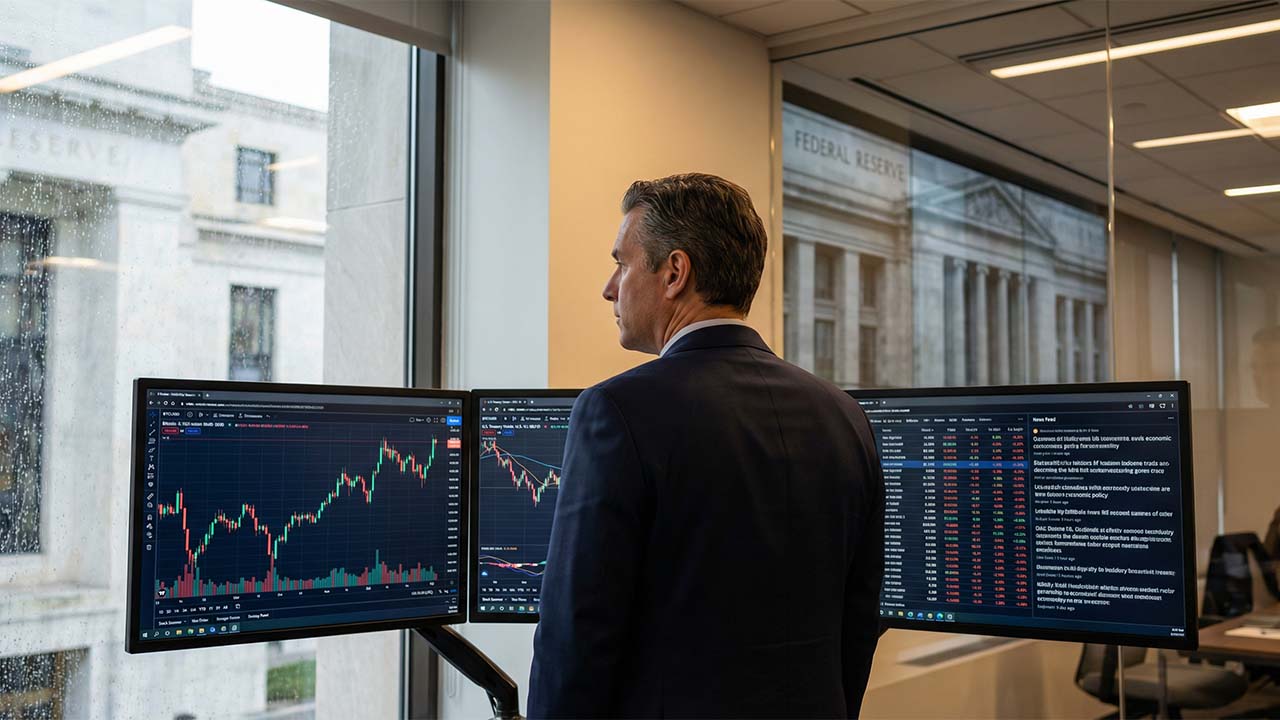
The Federal Reserve rate cuts impact on bitcoin is back at the center of global market attention as traders brace for a pivotal Friday shaped by U.S. labor data, central bank signals, and a high-stakes Supreme Court decision on trade tariffs. Together, these events form a rare convergence of macroeconomic and policy forces that could reshape near-term risk appetite across digital assets, equities, and currencies.
Bitcoin, the world’s largest cryptocurrency, is hovering near $90,500 with no clear directional conviction. That uncertainty reflects a market waiting for confirmation: whether the U.S. economy is cooling enough to justify further monetary easing, and whether legal pressure could soften America’s aggressive trade stance. For crypto investors, businesses, and institutional allocators, the implications extend well beyond a single trading session.
What Happened: A High-Stakes Friday for Markets
Markets are focused on the U.S. December nonfarm payrolls report, scheduled for release at 8:30 a.m. ET. According to FactSet estimates cited in your research, the U.S. economy is expected to have added roughly 55,000 to 60,000 jobs, while the unemployment rate is projected to edge down to 4.5%. Wage growth is forecast at 3.6% year over year.
This data arrives shortly after the Federal Reserve justified recent rate cuts by pointing to a softening labor market. Any confirmation that hiring momentum is fading would strengthen expectations that the Fed remains on an easing path.
Shortly after the jobs data, markets will also digest remarks from Neel Kashkari, president of the Federal Reserve Bank of Minneapolis, who is scheduled to speak on policy direction and inflation.
Adding another layer of complexity is a pending U.S. Supreme Court decision on whether former President Donald Trump was justified in using emergency powers to impose sweeping tariffs on trading partners. Prediction markets currently assign only a 28% probability that the court fully upholds those tariffs.
Why This Matters Now
The Federal Reserve rate cuts impact on bitcoin is especially sensitive at this juncture because crypto markets lack a strong internal catalyst. Unlike earlier periods driven by ETF approvals or network upgrades, today’s price action is being shaped largely by macroeconomic crosscurrents.
Bitcoin has gained just 0.2% over the past 24 hours and has slipped more than 0.5% since early Asian trading, underscoring investor caution. Most major tokens, including ether, XRP, and BNB, are largely unchanged, while Solana stands out with a 2.8% gain. At the same time, U.S.-listed spot bitcoin ETFs have recorded outflows for a third straight day, reversing over $1 billion in inflows seen earlier this month.
These signals point to a market that is pausing, not panicking—but also not willing to commit without clarity on monetary policy and growth.
How Federal Reserve Rate Cuts Influence Bitcoin
At its core, the relationship between Fed policy and bitcoin hinges on liquidity and the dollar. Rate cuts typically weaken the U.S. dollar and lower yields on traditional safe assets such as Treasurys. When that happens, risk assets—from equities to cryptocurrencies—often become more attractive.
If the jobs report confirms labor market softness, it would reinforce the rationale behind recent Fed cuts and keep expectations anchored for additional easing. In that scenario, the dollar could face renewed pressure, creating a supportive backdrop for bitcoin.
Conversely, stronger-than-expected employment data could challenge the narrative of a slowing economy. That would complicate the case for further rate cuts, potentially lifting the dollar and dampening enthusiasm for crypto assets in the short term.
The Dollar, Technical Signals, and Crypto Correlation
Traditional markets are already flashing signals worth noting. The dollar index is showing signs of a “golden cross,” where the 50-day moving average moves above the 200-day average. This technical pattern is often interpreted as bullish for the dollar.
A stronger dollar historically acts as a headwind for bitcoin, particularly when driven by expectations of tighter monetary conditions. This tension explains why crypto traders are approaching the jobs data with caution: macro indicators are sending mixed messages, and conviction remains low.
Business and Institutional Impact
For businesses operating in the crypto ecosystem—exchanges, miners, and blockchain infrastructure firms—the Federal Reserve rate cuts impact on bitcoin directly influences revenue visibility and capital planning.
Mining companies, for example, are sensitive to both bitcoin prices and financing costs. Lower rates reduce borrowing expenses, which can support balance sheets and expansion plans. That dynamic helps explain recent strength in crypto-linked equities such as MARA Holdings and Core Scientific, even as bitcoin itself trades sideways.
Institutional investors face a different calculus. ETF outflows suggest some funds are de-risking ahead of macro events. However, cumulative net inflows into spot bitcoin ETFs remain above $56 billion, signaling that long-term conviction has not disappeared—it is simply on pause.
The Supreme Court Tariffs Ruling and Risk Sentiment
The potential Supreme Court decision on tariffs adds a political dimension to Friday’s trading. If the court rules against the tariffs, risk sentiment could improve across markets, including crypto. Lower trade barriers generally support global growth expectations and reduce inflationary pressures—both favorable for risk assets.
However, observers caution that any relief may be temporary. Even if the tariffs are deemed illegal, alternative policy tools could be used to pursue a hawkish trade agenda. For bitcoin, this means the impact may be more psychological than structural, influencing short-term sentiment rather than long-term adoption.
Consumer and Retail Investor Implications
Retail investors are watching these developments closely, particularly those who entered the market during bitcoin’s recent climb above $90,000. The current environment underscores a key reality: bitcoin is increasingly intertwined with macroeconomic narratives.
For consumers using crypto as a store of value or speculative investment, understanding how Fed policy, employment data, and legal decisions interact is now essential. Volatility driven by macro news can create sharp intraday swings, even when long-term fundamentals remain unchanged.
Market Positioning Ahead of Key Data
The absence of a clear directional bias reflects prudent positioning. Bitcoin funding rates remain modest, suggesting leverage is under control. Meanwhile, gold and silver futures are rising, indicating that some investors are hedging macro uncertainty with traditional hard assets.
This balanced positioning suggests markets are prepared for volatility but not pricing in extreme outcomes. That stance aligns with a broader theme: the Federal Reserve rate cuts impact on bitcoin is meaningful, but it unfolds within a complex web of signals rather than a single headline.
Forward-Looking Insight
As markets digest Friday’s data and decisions, the focus will shift to whether macro clarity emerges. For bitcoin, confirmation of continued monetary easing would reinforce its role as a liquidity-sensitive asset, while mixed signals could prolong consolidation near current levels.
For businesses, investors, and consumers alike, the lesson is clear: crypto markets are no longer operating in isolation. They are responding—sometimes subtly, sometimes sharply—to the same economic forces shaping global finance. Understanding those connections is now a prerequisite for navigating digital assets with confidence.