

Key Points
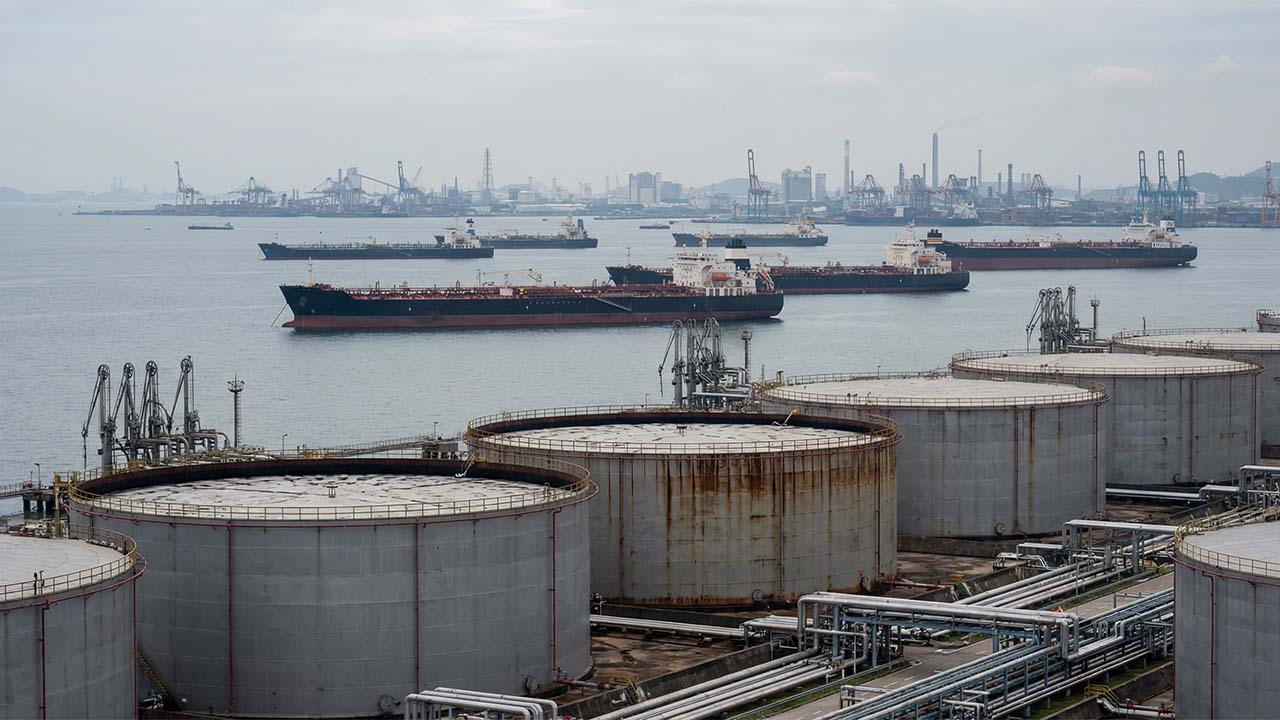
The global oil market surplus is once again dictating price direction, underscoring a shift in how traders, businesses, and policymakers interpret geopolitical risk. Despite escalating headlines tied to Ukraine, Venezuela, and Iran, crude prices have struggled to break higher, revealing a market increasingly anchored to supply-demand fundamentals rather than political flashpoints.
West Texas Intermediate has hovered near $58 a barrel, while Brent crude has traded below $62, levels that reflect not panic but persistence — persistence of oversupply in a market already facing one of its loosest balances since the pandemic-era downturn. For businesses and investors, the message is becoming clearer: geopolitical noise alone is no longer enough to offset structural excess.
What Happened: Oil Prices Swing, but Go Nowhere
Oil prices whipsawed this week as traders digested diplomatic signals around a potential resolution to Russia’s war in Ukraine, alongside developments in Venezuela and continued unrest in Iran. According to reporting by Bloomberg News, negotiations among Ukraine’s allies could result in security guarantees backed by Washington, though the plan remains subject to approval from both the US and Moscow.
In earlier market cycles, even the hint of de-escalation in a conflict involving a major energy producer would have triggered significant repricing. This time, the reaction was muted. Traders quickly assessed that any eventual normalization of Russian supply would simply add barrels to an already saturated market.
Simultaneously, the removal of Venezuelan leader Nicolás Maduro by US forces prompted speculation around the country’s energy sector reopening. Yet market participants largely dismissed the idea that Venezuela could meaningfully tighten global supply in the near term, given years of underinvestment and infrastructure decay.
The result: volatility without direction. Prices moved sharply intraday but failed to establish a sustained trend higher.
Why This Matters Now
The current episode highlights a fundamental recalibration underway in the oil market. The global oil market surplus has grown large enough to absorb shocks that once would have dominated pricing models.
Several forces are converging:
- OPEC+ producers have added barrels back to the market faster than demand has recovered.
- Non-OPEC supply, including US shale, remains resilient.
- Demand growth has softened amid uneven global economic momentum.
- Inventories are building across key consuming regions.
This combination has left traders less sensitive to geopolitical developments unless they pose an immediate and severe threat to physical supply flows.
As Nour Al Ali, a Markets Live strategist at Bloomberg, noted, oil prices remain below their six-month average, signaling that traders are “looking through geopolitical headlines” and focusing instead on the growing surplus.
Ukraine, Russia, and the Supply Equation
Any credible path toward ending the Ukraine conflict carries clear implications for oil markets. Russia remains one of the world’s largest crude exporters, and while sanctions have reshaped trade flows, they have not eliminated Russian barrels from the system.
An end to hostilities would likely ease logistical disruptions and insurance costs, potentially allowing more stable exports. In a tight market, that would matter enormously. In today’s environment, it simply adds to excess.
For energy-intensive businesses — from manufacturers to logistics firms — this dynamic reduces the risk of sudden fuel cost spikes tied to Eastern European geopolitics. For investors, it suggests that peace-driven supply normalization may be bearish rather than bullish for oil-linked assets.
Venezuela: Big Reserves, Small Impact
Venezuela’s political upheaval initially stirred speculation that its vast oil reserves could return to global markets. In reality, its influence is limited.
Once a major producer, Venezuela now accounts for less than 1% of global supply. Years of neglect have left pipelines, refineries, and export infrastructure in disrepair. Even with political change and potential US support, restoring meaningful production would take time and capital.
Ben Luckock, global head of oil at Trafigura Group, summed up the market’s view succinctly, noting that returning Venezuelan barrels this year would be “very, very few.”
From a business perspective, this limits Venezuela’s ability to reshape pricing power. For oil majors, however, it presents a long-term optionality play rather than a near-term supply shock.
Middle East Risks Meet Market Fatigue
Protests in Iran and broader Middle East tensions continue to simmer, but traders appear increasingly desensitized. The region remains critical to global energy security, yet repeated episodes of unrest have conditioned markets to wait for concrete disruptions rather than trade on possibility.
This fatigue reflects confidence in spare capacity, particularly from Saudi Arabia, and the belief that any temporary outage could be offset by existing surplus.
Saudi Arabia’s recent decision to cut crude prices to Asia for a third consecutive month underscores this reality. Rather than defending price levels, the kingdom is prioritizing market share in an oversupplied environment.
The Role of Financial Traders
Positioning data reinforces the fundamental narrative. Trend-following commodity trading advisers have reduced short positions in both WTI and Brent, signaling less conviction in further downside but also limited appetite for aggressive bullish bets.
Meanwhile, hedge funds briefly increased bullish positions ahead of Venezuela’s leadership change, only to see prices stall. This pattern reflects a market struggling to find catalysts strong enough to overwhelm surplus-driven gravity.
Market Outlook: Surplus Takes Center Stage
Analysts at Morgan Stanley expect the surplus to expand through the first half of the year, peaking around mid-year. The bank has already cut its oil price forecasts for the first three quarters of 2026, citing persistent oversupply.
This comes after oil futures recorded their largest annual decline since 2020, a stark reminder that production discipline has weakened even as demand growth moderates.
For producers, this environment pressures margins and raises the stakes for cost efficiency. For consumers, it offers relative price stability, easing inflationary pressures tied to energy.
Business Impact: Winners and Losers
The global oil market surplus carries uneven consequences across sectors:
- Energy producers face tighter margins and heightened competition, particularly high-cost operators.
- Refiners benefit from cheaper feedstock, though weak demand caps upside.
- Transportation and logistics firms gain from lower fuel costs, improving profitability.
- Manufacturers enjoy reduced input volatility, aiding planning and pricing strategies.
For governments, subdued oil prices can ease inflation but strain budgets in export-dependent economies.
Investor Implications
For investors, the current environment demands a shift in strategy. Rather than trading headlines, portfolio decisions increasingly hinge on balance-sheet strength, production costs, and dividend sustainability.
Oil equities may underperform broader markets if surplus conditions persist, while integrated majors with downstream exposure and trading operations may fare better than pure upstream players.
Looking Ahead
The oil market is entering a phase where fundamentals dominate narrative. Geopolitics still matter, but only when they materially disrupt supply. Until then, the global oil market surplus remains the defining force shaping prices, investment decisions, and corporate strategy.
For businesses and investors alike, understanding this shift is critical. The question is no longer whether risks exist — but whether they are strong enough to overcome a market awash in barrels.