

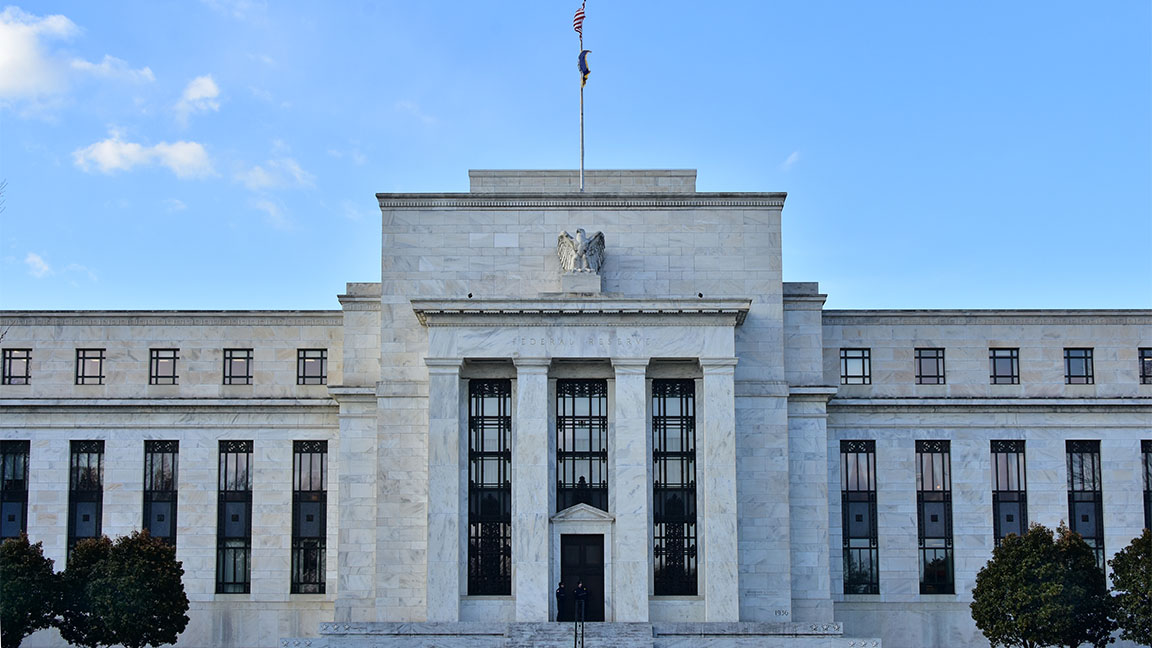
Fed dissents are moving from background noise to center stage as the U.S. central bank heads into a closely watched December policy meeting that could feature one of its most divided votes in years.
Key Points
What was once criticized as an overly consensus‑driven institution now faces the opposite problem: a rate‑setting committee split over whether to keep cutting interest rates to support hiring or pause to avoid reigniting inflation. The way those Fed dissents play out may shape not just markets’ reaction to a likely December move, but also perceptions of the central bank’s independence as political pressure builds into 2026.
Fed dissents loom over December rate cut debate
Fed dissents are expected to increase as policymakers gather for the December 9–10 meeting of the Federal Open Market Committee (FOMC). According to recent public remarks, as many as five of the 12 voting members have voiced doubts about reducing rates further, even as a core group of three Washington‑based governors is pressing for lower borrowing costs.
The division has opened up since the summer, when progress in cooling inflation slowed at the same time that job creation lost momentum. That tension has brought the Fed’s dual mandate into sharp conflict: a 2% inflation goal on one side and maximum employment on the other.
A lengthy U.S. government shutdown has made the task harder by delaying key data releases, leaving officials to head into the December meeting with fixed, and in some cases deeply entrenched, views on whether more easing is justified.
Market participants still expect the Fed to cut its benchmark rate by a quarter percentage point, but the number of potential “no” votes means Fed dissents could be the story that lingers long after the decision itself.
Divided officials weigh jobs, inflation and shutdown fallout
Fed dissents are emerging even as top officials try to keep options open. Chair Jerome Powell has not clearly signaled his preference for December, maintaining a neutral stance in recent public comments.
New York Fed President John Williams, who serves as FOMC vice chair and a permanent voter, has hinted that a cut is possible, noting recently that there is room to lower borrowing costs “in the near term.” Analysts see that tilt as the basis for a compromise: approve a December cut, but pair it with language suggesting a pause in further easing.
On the other side of the debate, several policymakers who are skeptical of additional cuts say they remain willing to be persuaded by incoming data as agencies catch up from the shutdown. Chicago Fed President Austan Goolsbee has stressed the value of trying to build as much consensus as possible around Powell’s approach, even when views differ.
Governor Christopher Waller, who began arguing for rate reductions after he detected signs of labor‑market cooling last summer, has also tied any action beyond December to the “large amount of data” still to come. Yet he has warned that the coming meeting could feature the most visible lack of groupthink in years, with three or more officials potentially breaking from the majority if a cut is approved.
The last time the FOMC saw three or more dissents at a single meeting was in 2019, and that level of division has occurred only nine times since 1990. If that pattern returns, it would underscore how unusual today’s Fed dissents are compared with the institution’s recent history.
Why persistent Fed dissents could confuse markets
Fed dissents are not new, but the way they are clustered and who casts them can influence how markets interpret policy.
Richmond Fed President Thomas Barkin has argued that the focus on who votes “no” can miss an important dynamic: members who dissent regularly may reduce their ability to shape outcomes. Since the tenure of former Chair Ben Bernanke, there has been an emphasis on clearly mapping out the path of policy so that markets can “do a lot of work” in transmitting the Fed’s message. A more unified committee, Barkin suggested, can help boost confidence in that guidance.
Barkin said that even when he has disagreed during internal debates, he has ultimately chosen to vote with the chair in order to preserve influence. Waller, who has been floated as a possible candidate to replace Powell when his term ends in May, has also acknowledged the danger of razor‑thin votes.
“If it gets really down to seven‑to‑five,” he said, a single change of heart could flip the entire rate path, which “doesn’t give people confidence.” In that environment, frequent and narrow Fed dissents could make it harder for businesses and investors to plan, and could amplify volatility in rates and risk assets.
Recent research from a senior economist at the Chicago Fed reinforces that view. By examining market reactions to public speeches, the study found that comments aligned with the FOMC chair’s message had a stronger effect on expectations than remarks that pulled in other directions.
The conclusion was clear: managing expectations effectively requires some alignment in public communications. Speeches that echo the chair’s post‑meeting press conference help transmit policy, while dissonant voices add “noise” that weakens it. Fed dissents at the vote level, combined with conflicting rhetoric, could therefore undermine the central bank’s ability to steer markets.
One global rates strategist at a major asset manager warned that a 7–5 outcome in December would be “a mess” for traders trying to map interest rates over the next 12 to 18 months. Equities and other risk assets, which depend on a reasonably clear sense of Fed strategy, could face similar uncertainty if Fed dissents become a regular feature.
How today’s Fed dissents compare with other eras
Fed dissents occur under most chairs, but their frequency and nature have varied. Data from the St. Louis Fed show that at least one “no” vote has appeared at roughly:
- 20% of meetings chaired by Jerome Powell since 2018,
- nearly half of meetings under Janet Yellen, and
- more than 60% during Ben Bernanke’s tenure.
The current pattern has historically involved just one dissenter at a time, often a rotating regional Fed bank president rather than a member of the Washington‑based Board of Governors. Governors, who are appointed by the president and confirmed by the Senate, have dissented less often.
Fed dissents are becoming more prominent in the current political climate. Several appointees of former President Donald Trump, including Waller, have argued for lower rates, contributing to a more visible split. With Powell’s term as chair approaching its May end date and Trump seeking greater sway over the central bank, observers worry that a sustained policy rift between regional presidents and governors could deepen.
Compared with other major central banks, the Fed sits in the middle in terms of disagreement. The European Central Bank’s Governing Council tends to produce decisions with only one or two opposing voices, and public clashes are rare. By contrast, divided votes are routine at the Bank of England, where policymakers are individually accountable to parliament and are sometimes criticized for “groupthink” when they appear too aligned.
Political economy questions for 2026 and beyond
Fed dissents are also drawing attention to the political structure of the central bank and how it may evolve in the next few years.
Vincent Reinhart, chief economist at BNY Investments and a former senior Fed official, argues that the 2026 policy outlook will be rooted in “political economy” rather than just data. A central question, he says, is when the White House gains a majority on the seven‑member Board of Governors.
If regional bank presidents engage in a “solid string” of dissents against policies backed by the Board, it could prompt calls to revisit how those presidents are chosen and what role they play in setting national monetary policy. Some may question whether officials who are not directly appointed by the president and confirmed by the Senate should cast votes that shape interest rates for the entire country.
That debate would touch the core of the Fed’s hybrid structure, which blends Washington‑based governance with input from 12 regional banks. In an era when political scrutiny is intense and monetary policy decisions are highly consequential, a sustained wave of Fed dissents could spark broader discussions in Congress about central bank design and independence.
What a fractured Fed means for markets now
For investors, the immediate issue is not the institutional future of the Fed, but how Fed dissents might color the December decision and the year ahead.
Markets currently anticipate a rate cut this month, but the size of the majority — and the tone of Chair Powell’s remarks — may carry as much weight as the move itself. A clear majority, paired with guidance that suggests a cautious pause in further easing, could reassure markets that policymakers still share a broad strategy, even if they differ on timing.
By contrast, a narrow outcome with multiple high‑profile Fed dissents could reinforce doubts about the central bank’s ability to deliver a consistent policy path. That scenario may leave traders more focused on internal politics and personnel changes than on the economic data the Fed is trying to respond to.
As the December meeting approaches, Fed dissents are no longer just a footnote on the FOMC scorecard. They have become a key risk factor for markets and a potential flashpoint in the ongoing debate over how independent — and how unified — the U.S. central bank should be.