

US Venezuela operations are heading into what officials describe as a “new phase,” as the Trump administration intensifies efforts to pressure President Nicolas Maduro’s government and reshape its approach to Venezuela in the coming days.
Key Points
According to four U.S. officials, Washington is preparing additional actions that could significantly expand its playbook in the region. While the exact timing and scope remain undecided, the planning underscores how Venezuela has become a major focus for the White House, the Pentagon and intelligence agencies.
All of the officials spoke on condition of anonymity, citing the sensitivity of the discussions and the risk of pre-empting any final decision from President Donald Trump.
US Venezuela operations move into a “new phase”
The officials said the United States is poised to launch a fresh stage of US Venezuela operations as relations with Caracas continue to deteriorate.
Reuters was unable to confirm when the new measures would begin or precisely what they would involve. It also remains unclear whether Trump has formally approved any specific plan. Still, reports of pending action have grown as U.S. forces have quietly built up their presence in the Caribbean.
Military assets already in the region include the Navy’s largest aircraft carrier, the USS Gerald R. Ford, which arrived on Nov. 16 with its strike group. It has joined at least seven other warships, a nuclear-powered submarine and F-35 aircraft.
So far, U.S. commanders have framed these deployments as focused on counter-narcotics missions. But the scale and firepower of the force go far beyond what is required for typical interdiction operations, fueling speculation among observers and allies.
Covert moves seen as likely first step
Two of the officials said covert operations are expected to form the first wave of the new US Venezuela operations. They did not provide details on what those covert steps might include.
The Pentagon referred questions about plans to the White House. The CIA declined to comment.
A senior administration official, also speaking anonymously, did not exclude any option when asked about Venezuela.
“President Trump is prepared to use every element of American power to stop drugs from flooding into our country and to bring those responsible to justice,” the official said.
The administration has repeatedly linked its Venezuela strategy to what it portrays as Maduro’s role in the illegal drug trade. Maduro has denied any involvement.
Two U.S. officials said the menu of options under review even includes a scenario aimed at toppling the Venezuelan leader, though they did not say how far such discussions have advanced.
Legal pressure: Terrorist label for Cartel de los Soles
Alongside military and covert planning, the administration is moving to sharpen the legal and financial tools available for US Venezuela operations.
Officials said Washington plans on Monday to designate the Cartel de los Soles as a foreign terrorist organization for its alleged role in moving illegal drugs into the United States. The Trump administration has accused Maduro of leading the group, a charge he rejects.
Defense Secretary Pete Hegseth recently said the terrorist designation “brings a whole bunch of new options to the United States.” Trump has argued that the move would allow Washington to target Maduro’s assets and infrastructure inside Venezuela.
At the same time, the president has also signaled that he remains open to possible talks in search of a diplomatic way out of the standoff. Two officials acknowledged that there have been conversations between Caracas and Washington, though it is not clear whether those contacts could alter the pace or scope of upcoming US Venezuela operations.
Washington in August doubled its reward for information leading to Maduro’s arrest to $50 million, adding another layer of pressure on the Venezuelan president and his inner circle.
Airspace warnings and airline disruptions
As planning for the next phase escalates, the U.S. Federal Aviation Administration has warned of increased risk around Venezuelan airspace.
On Friday, the FAA alerted major airlines to what it called a “potentially hazardous situation” for aircraft flying over Venezuela and urged carriers to exercise caution.
The warning had immediate effects. Three international airlines canceled flights departing from Venezuela on Saturday following the FAA advisory, adding to the sense of growing uncertainty around the country’s skies.
These steps come on top of the expanded naval presence and underscore how various U.S. agencies are aligning their policies as US Venezuela operations evolve.
Human rights concerns over U.S. strikes
While U.S. officials say the military buildup is aimed at counter-narcotics missions, the operations already underway have drawn intense criticism.
Since September, U.S. forces operating in the Caribbean and Pacific have carried out at least 21 strikes on what Washington describes as drug-smuggling vessels, resulting in at least 83 deaths.
Human rights organizations have condemned these actions as unlawful killings carried out without due process, arguing that many of those killed were civilians. Some U.S. allies have also raised concerns that the current campaign may breach international law, given questions about the legal basis for the strikes.
These criticisms add legal and diplomatic complications to any expansion of US Venezuela operations, particularly if Washington moves beyond interdictions at sea toward more direct action targeting the Maduro government.
Maduro’s stance and “prolonged resistance” planning
Maduro, who has ruled Venezuela since 2013, has long maintained that Trump is determined to remove him from power. He insists that both Venezuelan citizens and the armed forces would resist any such attempt.
As tensions with Washington have grown, the Venezuelan government has been forced to confront its own military weaknesses. The country’s armed forces are hampered by limited training, low pay and deteriorating equipment. Some unit commanders, according to previous Reuters reporting cited in the article, have even had to negotiate with local food producers to secure enough supplies for their troops.
That imbalance has led officials in Caracas to explore alternative strategies if confronted with a U.S. invasion or more aggressive US Venezuela operations.
One approach, referred to by the government as “prolonged resistance,” envisions a guerrilla-style response. Under that plan, small military units at more than 280 locations across the country would carry out sabotage and other irregular tactics. The concept has been discussed on state television and described in planning documents cited by sources.
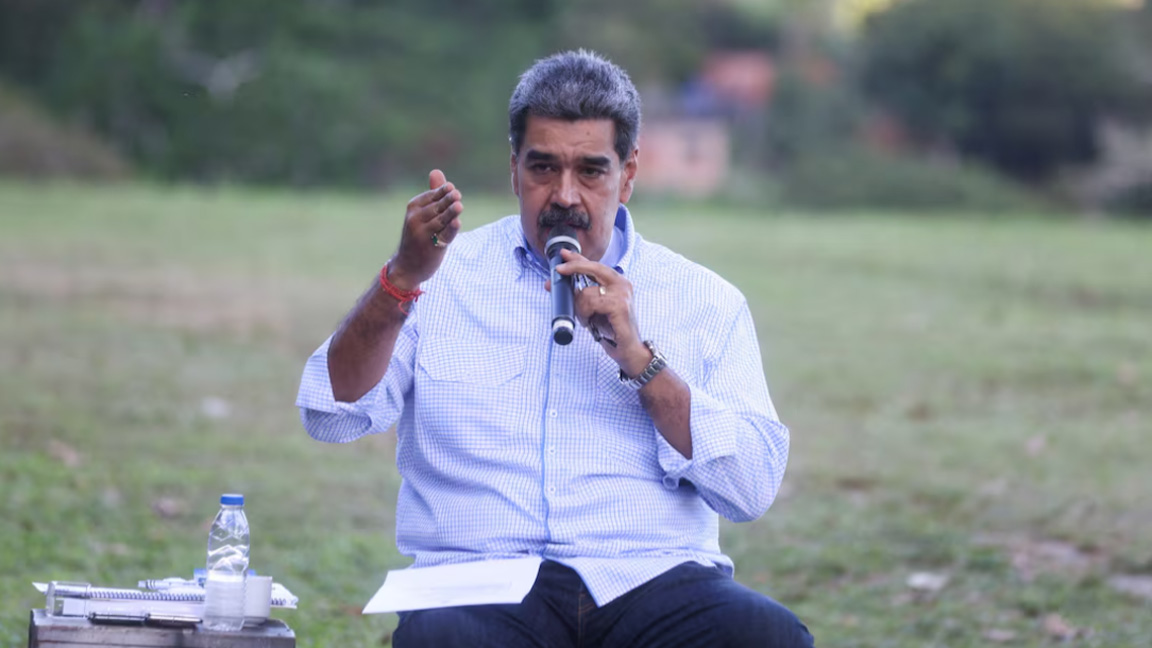
Even as he faces mounting pressure, Maduro has continued to appear in public. On Saturday night, the president, who turns 63 on Sunday, attended the premiere of a television series about his life at Caracas’ main theater, projecting an image of business as usual.
A volatile mix of pressure, options and uncertainty
The next steps in US Venezuela operations remain uncertain, even as planning deepens and assets are moved into place.
What is clear from officials’ comments is that the Trump administration is building a broader toolkit: covert measures, expanded counter-narcotics missions, a terrorist designation for the Cartel de los Soles, financial rewards and a growing military footprint.
At the same time, quiet contacts between Washington and Caracas, and Trump’s stated openness to possible talks, point to a parallel diplomatic track. How these military, legal and diplomatic elements interact — and which path the White House ultimately chooses — will shape Venezuela’s trajectory and regional stability in the weeks ahead.
For now, both governments appear to be preparing for a more confrontational period. The United States is readying a dramatic new phase of US Venezuela operations, while Maduro’s team publicly embraces the idea of “prolonged resistance,” underscoring just how high the stakes have become.
FAQ’s
What are US Venezuela operations?
US Venezuela operations refer to U.S. military, intelligence and legal actions tied to Venezuela, including counter-narcotics strikes, a major naval build-up in the Caribbean and authorized covert CIA activity. Officials say a “new phase” of these operations is now being prepared.
Why is the United States escalating US Venezuela operations?
The Trump administration portrays the campaign as a response to President Nicolas Maduro’s alleged role in the illegal drug trade, which he denies. Officials say the goal is to stop drugs entering the U.S. and increase pressure on Maduro’s government.
What is the Cartel de los Soles in the context of US Venezuela operations?
The Cartel de los Soles is a group U.S. officials accuse of importing illegal drugs into the United States, allegedly led by Maduro, which he rejects. Washington plans to designate it a foreign terrorist organization, opening new options for targeting assets and infrastructure.
How does Venezuela plan to respond to expanded US Venezuela operations?
Facing a far stronger U.S. military, Venezuela has explored a “prolonged resistance” strategy. Planning documents and broadcasts describe small units at more than 280 locations preparing for guerrilla-style tactics and sabotage in case of a U.S. invasion.