

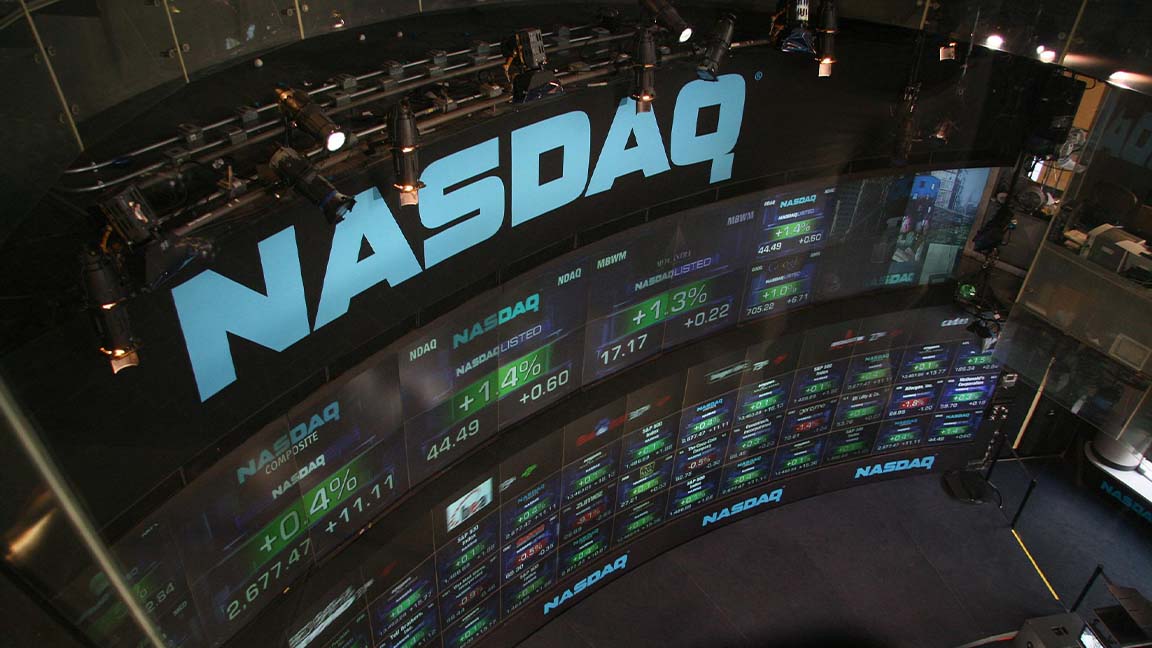
Teamshares SPAC deal headlines returned to Wall Street on Friday as the buyer of small- and mid‑sized enterprises said it will go public through a $746 million merger with Live Oak Acquisition Corp., a blank‑check company backed by accounts advised by T. Rowe Price. The transaction positions Teamshares to list on Nasdaq under the ticker TMS and to channel fresh capital into acquisitions and its technology platform.
Key Points
The announcement arrives amid a broader 2025 rebound in blank‑check activity. An index tracking SPACs has outpaced the S&P 500 this year, underscoring renewed investor interest in the route to public markets after a long lull.
Inside the Teamshares SPAC deal
The Teamshares SPAC deal is expected to generate up to $333 million in gross proceeds. That figure includes a $126 million private investment in public equity anchored by T. Rowe Price, alongside cash held in Live Oak’s trust account. After closing, the combined company will operate as Teamshares Inc. and is slated to trade on Nasdaq as TMS.
Management says the capital will support more acquisitions and continuous development of the firm’s tech stack—two legs of a flywheel that the company believes can compound over time.
How the Teamshares SPAC deal fits the 2025 SPAC rebound
Special‑purpose acquisition companies have staged a comeback in 2025. The IPOX SPAC Index, which tracks the aftermarket performance of deSPACs, has outperformed the broader equities benchmark year‑to‑date—27.1 versus 14.55 for the S&P 500, according to LSEG Workspace data. Against that backdrop, the Teamshares SPAC deal reflects how capital is again flowing to operating businesses that can show scale, profitability potential, and a clear use of proceeds.
A SPAC is a shell company that raises money in an IPO and later merges with a private business, allowing the target to list without a traditional IPO. Completion of the merger is referred to as a deSPAC.
What Teamshares does
Teamshares buys small and mid‑sized enterprises and integrates them through its technology platform. The company describes itself as part fintech and part holding company. Its subsidiaries have generated consolidated revenues of more than $400 million across 40 industries in 30 states, offering diversified exposure to Main Street businesses.
Co‑founder and CEO Michael Brown framed the opportunity set in demographic terms: “About 3 million companies have owners aged 55+ and likely need to sell over the next decade, given family succession has become rare.” That generational turnover is core to the pipeline Teamshares aims to serve—acquiring businesses and scaling them with shared systems and services.
Proceeds and financing priorities
The Teamshares SPAC deal is up to $333 million in proceeds, which will be directed toward two priorities:
- Investing in additional acquisitions of small- and mid‑sized companies
- Accelerating the development of the firm’s technology platform that supports those businesses
Brown said the combination of ongoing M&A and platform investment “drives Teamshares’ flywheel,” implying that each successful acquisition adds data, operating leverage, and network effects that can benefit subsequent deals.
CEO perspective on the deSPAC route
In discussing the go‑public path, Brown pointed to operating performance as a key determinant of outcomes. “The data we’ve seen around stock price performance for deSPACs with at least $25 million of EBITDA is about the same performance as conventional IPOs, so if you can predictably grow earnings, the SPAC is a great way to go public,” he told Reuters.
That view dovetails with the 2025 resurgence in SPACs: investors have shown more willingness to finance deals where near‑term profitability and scale are visible and proceeds are tied to specific, disciplined growth plans. For Teamshares, the pipeline of aging‑owner businesses and the goal to standardize operations via technology form the core of that thesis.
Listing details and investor lineup
Upon completion of the Teamshares SPAC deal:
- The combined company will be named Teamshares Inc.
- Shares are expected to trade on Nasdaq under the ticker TMS.
- The transaction is backed by a $126 million PIPE anchored by T. Rowe Price and participation from other institutional investors, plus SPAC trust cash.
- Existing backers include Khosla Ventures, USV, QED Investors, Slow Ventures, Inspired Capital, and Spark Capital.
Those investors add a mix of growth, fintech, and venture pedigrees that align with Teamshares’ hybrid model as a technology‑enabled acquirer.
Why the Teamshares SPAC deal matters now
- Demographic catalyst: A large cohort of U.S. small‑business owners is approaching retirement, creating supply for ownership transitions over the next decade.
- Platform leverage: Consolidated systems across finance, operations, and data can support scale and cross‑business learnings.
- Public‑market access: Listing via a SPAC can provide flexible capital to fund acquisitions and platform investments while offering liquidity and visibility.
In short, the Teamshares SPAC deal seeks to match a long runway of potential sellers with a standardized operating model and the public‑market capital needed to execute at pace.
Market backdrop: performance and sentiment
While SPACs experienced a retrenchment in prior years, 2025 has brought a measured return. The IPOX SPAC Index has outperformed the S&P 500 year‑to‑date—27.1 versus 14.55—suggesting investors are differentiating among deals and rewarding those with clearer earnings paths. The Teamshares SPAC deal arrives in that context, with proceeds earmarked for identifiable growth initiatives.
What comes next
- Shareholder approvals and closing conditions: The transaction will proceed through the standard SPAC process before Teamshares begins trading as TMS on Nasdaq.
- Capital deployment: Management plans to reinvest in acquisitions and technology, aiming to expand its portfolio across industries and states.
- Integration focus: As new subsidiaries join the platform, execution will center on harmonizing operations and leveraging shared systems to improve performance.
The company says the combination with Live Oak allows it to keep scaling its acquisition engine while continually upgrading the tech that supports its network of operating companies.
Reactions and updates
- Management: Brown emphasized that predictable earnings growth is the critical determinant of deSPAC performance and said the public listing will help fund continued M&A.
- SPAC market watchers: The outperformance of the IPOX SPAC Index versus the S&P 500 this year has reinforced the idea that selective, fundamentals‑driven deals can compete with traditional IPOs.
- Investors: The anchor role played by T. Rowe Price in the PIPE signals institutional support for the Teamshares SPAC deal and its deployment plan.
Conclusion
The Teamshares SPAC deal advances a straightforward proposition: use the public markets to fund a pipeline of small‑ and mid‑sized business acquisitions, integrate them via a shared technology platform, and compound gains across an expanding portfolio. With up to $333 million in proceeds—including a $126 million PIPE anchored by T. Rowe Price—the merger with Live Oak aims to supply the capital needed to accelerate that strategy.
As SPACs regain traction in 2025 and the IPOX SPAC Index outpaces the S&P 500 year‑to‑date, Teamshares’ pending Nasdaq debut under the ticker TMS will test whether a focused acquisition engine paired with platform leverage can deliver public‑market results comparable to conventional IPOs. For now, the company’s message is clear: reinvest, integrate, and scale.
FAQ’s
What is Teamshares, and how does it operate?
Teamshares acquires small‑ to mid‑sized businesses and scales them through a tech platform. Its subsidiaries generate $400M+ in consolidated revenue across 40 industries and 30 states.
What are the key terms of the Teamshares SPAC deal?
It’s a $746M merger with Live Oak Acquisition Corp. Expected proceeds are up to $333M, including a $126M PIPE led by T. Rowe Price, plus SPAC trust cash.
When and where will Teamshares trade after the merger?
After shareholder approvals and closing, the combined company will be named Teamshares Inc. and is expected to list on Nasdaq under the ticker TMS.
How will the proceeds be used, and why choose a SPAC?
Management plans to fund more acquisitions and invest in its tech platform. The CEO says deSPACs with ≥$25M EBITDA can perform comparably to IPOs if earnings growth is predictable.
Image Source: bfishadow on Flickr, CC BY 2.0, via Wikimedia Commons