

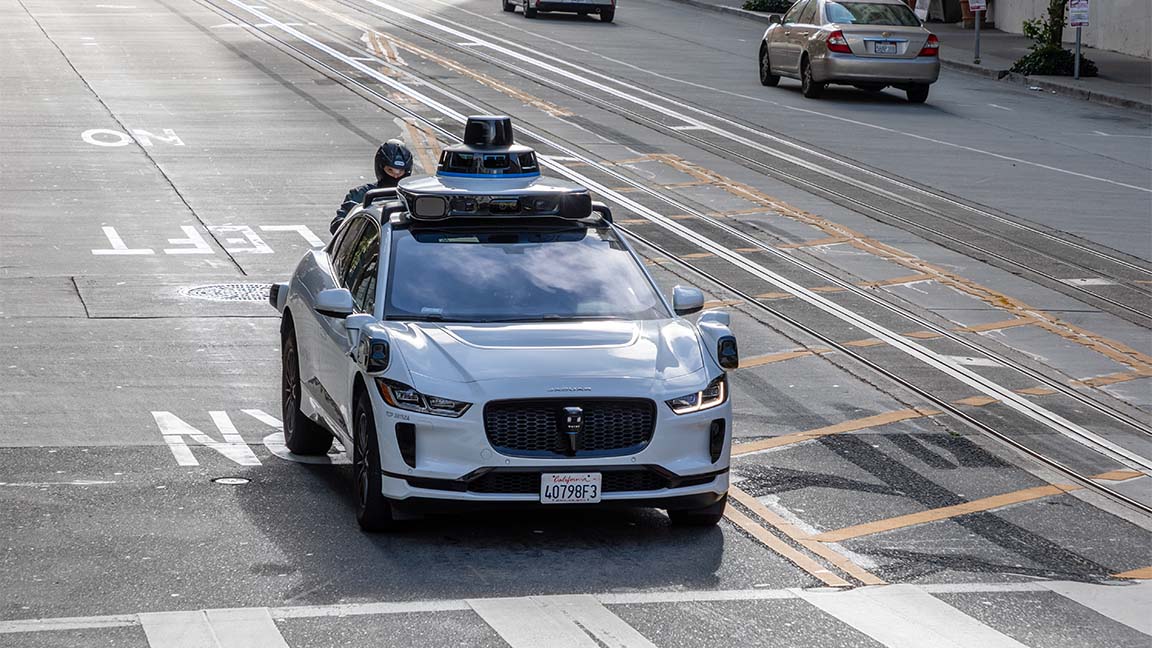
Waymo driverless robotaxis are moving onto U.S. freeways, a first for any robotaxi provider in the country and a step that could reshape how riders think about autonomous trips.
Key Points
Beginning Wednesday, the Alphabet Inc. unit will start offering some riders routes that include highways in San Francisco, Phoenix, and Los Angeles. Freeway service will be available 24 hours a day. Users who have opted in to Waymo’s new services and features will be the first to try these trips.
Waymo plans to open access more broadly over time, but it hasn’t shared a timeline for expanding freeway routes to other markets where it operates.
How Waymo driverless robotaxis add on freeways
For riders, the shift is straightforward: Waymo driverless robotaxis can now take the freeway when that’s the most direct or fastest path. That eliminates the need to plan detours on surface streets just to avoid highways, potentially cutting trip times and making the service more competitive with rideshares and traditional taxis.
Waymo said its freeway operations draw on the same software stack and sensor suite it uses for urban roads. To adapt to motorway conditions, the company combined closed-course trials with simulation testing and trained the system to handle both “rare” and “inevitable” driving scenarios.
According to Waymo, the cars are designed to keep up with traffic and travel up to the speed limit on highways. If they need to pull over, the vehicles aim to exit the freeway and find a safe spot on a nearby road.
Where will Waymo driverless robotaxis launch first
- San Francisco
- Phoenix
- Los Angeles
Freeway service begins in these cities on a 24/7 basis for opt-in users. Waymo said additional users will gain access over time. The company declined to provide a timeline for expanding highway routes to other markets.
Bay Area expansion: San Jose and the airport
Alongside the freeway rollout, Waymo is expanding its Bay Area coverage zone to San Jose. That expansion includes new access to San Jose International Airport, where Waymo cars will charge the same airport access fee as other taxis.
The company said it is also working with San Francisco International Airport, where it’s currently permitted for testing.
Why this matters for adoption
Waymo driverless robotaxis have been active in dense city environments, but freeway capability has been a missing link for many common trips. Highways are integral to metropolitan travel, and avoiding them can add time and complexity. By opening 24/7 freeway routes, Waymo positions its service closer to feature parity with conventional taxis and ride-hailing drivers, who aren’t restricted from freeway use.
The company said it does not expect the freeway service to add meaningfully to local congestion.
How Waymo driverless robotaxis compare with rivals
Waymo’s U.S. rivals are testing highway driving and, in some cases, charging customers—but with humans still present. Tesla recently launched self-driving cab services in Austin and offers some highway rides with a safety monitor in the driver’s seat. It also uses human monitors for non‑highway trips, seated in the passenger seat. Separately, Tesla is testing a purpose‑built “Cybercab,” which CEO Elon Musk said is slated for production in April.
Outside the U.S., Chinese robotaxi company WeRide offers some highway rides in Abu Dhabi, also with safety drivers.
By contrast, Waymo driverless robotaxis are launching freeway trips without a human in the vehicle, marking a U.S. first for the category.
Safety training and system readiness
Waymo emphasized that the freeway rollout leverages years of urban driving data and the same core hardware and software, augmented for higher-speed environments. The company used closed-course evaluations and extensive simulations to prepare for highway-specific edge cases, aiming to bolster confidence that driverless vehicles can handle a wide spectrum of conditions.
The freeway-capable vehicles are designed to:
- Maintain speeds up to posted limits.
- Keep pace with surrounding traffic.
- Exit the freeway to a safe location if they need to pull over.
Access, availability, and who gets it first
Waymo driverless robotaxis on freeways will be available first to users who opt into the company’s new services and features program. That early-access model is consistent with how the company has rolled out capabilities in the past, starting with a smaller pool of riders, monitoring performance and feedback, and then widening availability.
The company hasn’t set public dates for adding more users or extending freeway routes to new markets beyond San Francisco, Los Angeles, and Phoenix.
Coverage and fleet snapshot
Waymo’s fleet currently includes:
- 1,000 cars in the San Francisco Bay Area service area
- 700 in Los Angeles
- 500 in Phoenix
- 200 in Austin
- 100 in Atlanta
As coverage expands to San Jose and airport access grows, the company will be able to test demand patterns across commuter corridors, airport runs, and longer cross-town trips that benefit from highway routing.
Competitive implications for ride-hailing and taxis
Waymo driverless robotaxis on freeways bring the service closer to the use cases where ride-hailing and taxis have long been strong. Highway access can shorten trip times, improve reliability during off‑peak hours, and make airport transfers more consistent.
With 24/7 availability, riders who previously avoided autonomous options for longer or time-sensitive trips may revisit the service now that freeway segments are in play.
Market positioning and the path forward
Waymo’s commercial freeway service marks a turning point for the company’s U.S. robotaxi leadership. While other players are refining highway operations with safety drivers, Waymo driverless robotaxis are moving into full driverless mode on motorways in three major markets.
The company will gradually expand access, monitor performance, and continue working with local stakeholders, including airport authorities, as it builds out coverage.
What to watch next
- User rollout cadence: How quickly Waymo invites additional riders to try freeway trips.
- Route breadth: The range of freeway segments available in each city and how those expand.
- Airport usage: Adoption of San Jose International Airport trips under the standard access fee.
- Rival milestones: Progress by U.S. competitors using safety drivers and any shifts toward driverless highway operations.
- Safety updates: Additional details from Waymo on freeway performance and system behavior in “rare” and “inevitable” conditions.
Conclusion
Waymo driverless robotaxis are entering the fast lane—literally. With 24/7 freeway trips starting in San Francisco, Los Angeles, and Phoenix, the company has crossed a key threshold that could make autonomous rides more practical and competitive for everyday travel.
By using its established software and sensor stack, training for highway scenarios, and expanding Bay Area coverage to San Jose and its airport, Waymo is positioning its service for broader, time-saving journeys. The rollout begins with opted‑in users and will widen over time, marking a milestone moment for U.S. robotaxis and a new chapter in autonomous mobility.
FAQ’s
Where are Waymo driverless freeway rides available?
Waymo is offering 24/7 driverless freeway routes in San Francisco, Los Angeles, and Phoenix. Early access goes to users who opt in to new services; Bay Area coverage is expanding to San Jose and SJC.
Are Waymo’s freeway rides fully driverless?
Yes. No safety driver is present. Waymo uses its urban software stack and sensor suite, augmented by closed-course and simulation testing, and travels up to posted speed limits.
How can riders get access to Waymo freeway trips?
Opt in to Waymo’s “new services and features” in the app. Access will widen over time, but the company hasn’t shared a timeline for additional markets.
How does Waymo compare with rivals on highways?
U.S. rivals are testing highway rides with safety drivers (e.g., Tesla in Austin). Waymo is the first in the U.S. to offer fully driverless freeway trips; WeRide offers some highway rides in Abu Dhabi with safety drivers.